AI Tool Supports Drug Selection for Clinicians
In Novosibirsk, researchers have developed a program that supports part of a physician’s workflow. It focuses on therapy selection when patients have multiple conditions or require several medications at once. Previously, clinicians had to assess this manually or rely on reference materials. Now artificial intelligence performs this task.
The service is called Bezopasnye lekarstva (Safe Medications), developed at a research center of Novosibirsk State University. The program analyzes how different drugs interact, what side effects may occur, and how medications affect patient outcomes.
Safer Treatment Decisions
Many conditions involve combination therapy with two, three, or more drugs at the same time. Calculating all interactions manually is challenging for clinicians. This is especially true when patients have liver or kidney impairment or other chronic conditions. A single inappropriate drug can negate the effect of others or cause harm. The new system selects medications so they do not worsen existing conditions and remain compatible with the patient’s overall health status.
No comparable solutions previously existed. Automating this analysis helps avoid missing critical details and reduces the risk of clinical error. Treatment is safer and more effective.

Clinical Decision Support Platform “Doctor Pirogov”
The solution is part of a broader clinical decision support system called Doktor Pirogov (Doctor Pirogov), also developed by the Novosibirsk team.
The system covers 20 medical specialties and includes data on more than 250 diseases. AI analyzes medical records, laboratory results, and imaging studies. The system then generates a list of probable diagnoses and recommends treatment options. It also accounts for potential drug interactions, which is the function handled by Bezopasnye lekarstva.
The system reduces patient visit time without compromising quality, and the number of diagnostic and treatment errors declines. It can also audit existing diagnoses and prescriptions automatically and generate reports. This supports frontline clinicians, department heads, and insurance providers.

Adoption Pathways
Private clinics have shown interest in the technology and are ready to integrate it into their medical information systems. The research center has also agreed with the regional Ministry of Health to introduce certain modules into the public healthcare system. A pilot rollout could take place within the next two years.
Konstantin Khalzov, Deputy Governor of the Novosibirsk Region, said cooperation with Novosibirsk State University helps address complex healthcare challenges. The university has built a strong research base and developed a portfolio of ready-to-use prototypes and solutions in smart healthcare.
Related AI Developments
AI research in Novosibirsk is also conducted outside Novosibirsk State University. At Novosibirsk State Technical University, researchers have developed an AI-based method that detects inflammatory bowel diseases. The system can also identify the specific type of disease.
Irina Yakovina, Associate Professor in the Department of Computer Engineering at NSTU, explained that the method helps clinicians plan treatment, select appropriate medications, and assess the need for surgical intervention.
Another NSU development is an AI service for automated analysis of MRI scans. The neural network reviews images and helps clinicians identify pathologies faster. The team is developing a hardware-software system called Intellektualny pomoshchnik dlya slepykh II-Povodyr (AI Guide Dog), designed to assist visually impaired individuals.
Fewer Errors, More Effective Care
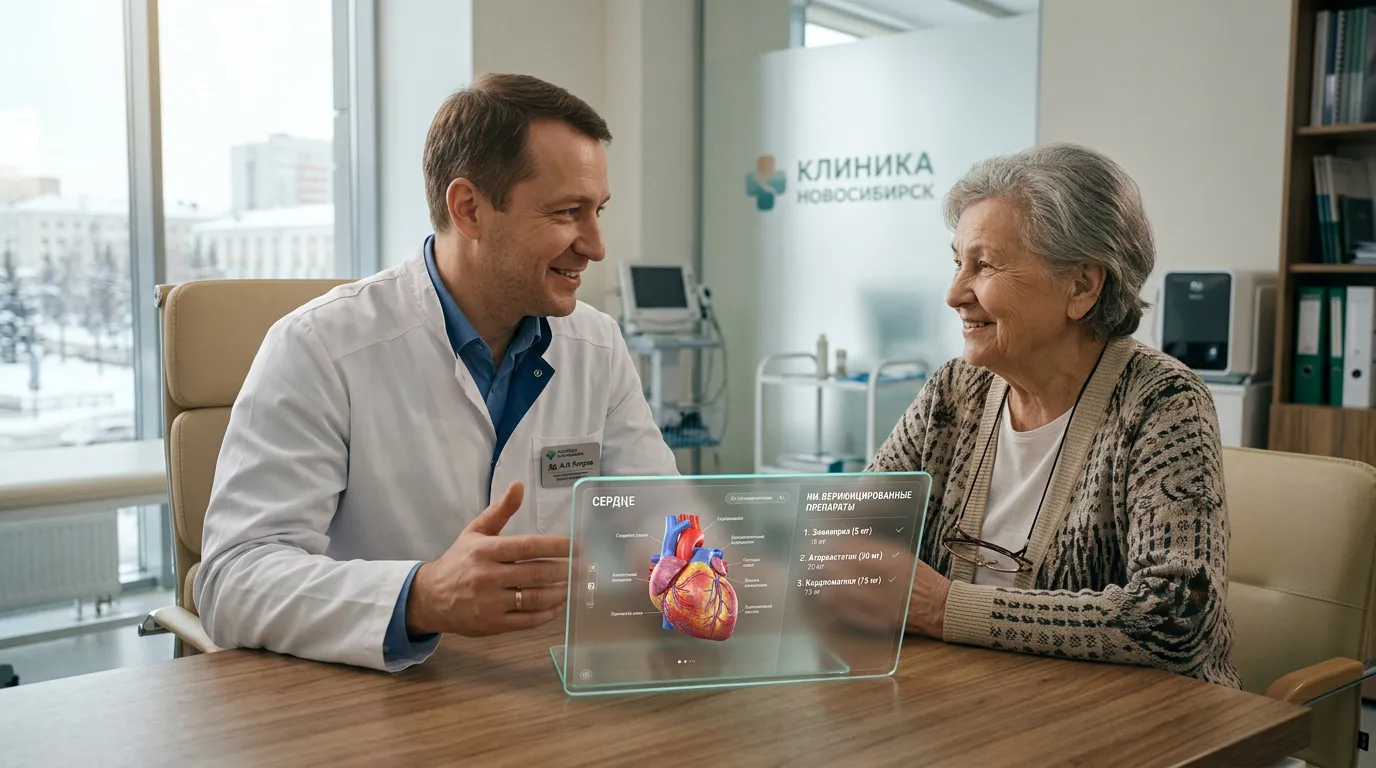
For hospitals and outpatient clinics, the system reduces medical errors, which results in fewer patient complaints and fewer repeat hospitalizations due to incorrect treatment. Automated auditing of diagnoses and prescriptions helps healthcare providers monitor quality without additional manual checks.
The system can be integrated into existing medical information systems without replacing equipment or extensive staff retraining.
For regional health authorities, it gives a tool to manage care quality. Administrators can quickly generate reports, identify issues, and adjust treatment standards.
These technologies are relevant not only for Russia. Healthcare systems worldwide face similar challenges, including aging populations, increasing numbers of patients with multiple conditions, and limited consultation time. Clinical decision support systems based on Russian-developed technologies are likely to be in demand in Europe, Asia, and the Middle East.