

Airport Eyes Get Sharper
Beeline has unveiled a technology that could reshape how airports operate: a computer vision system designed to automatically monitor aircraft ground handling.
Smart Oversight
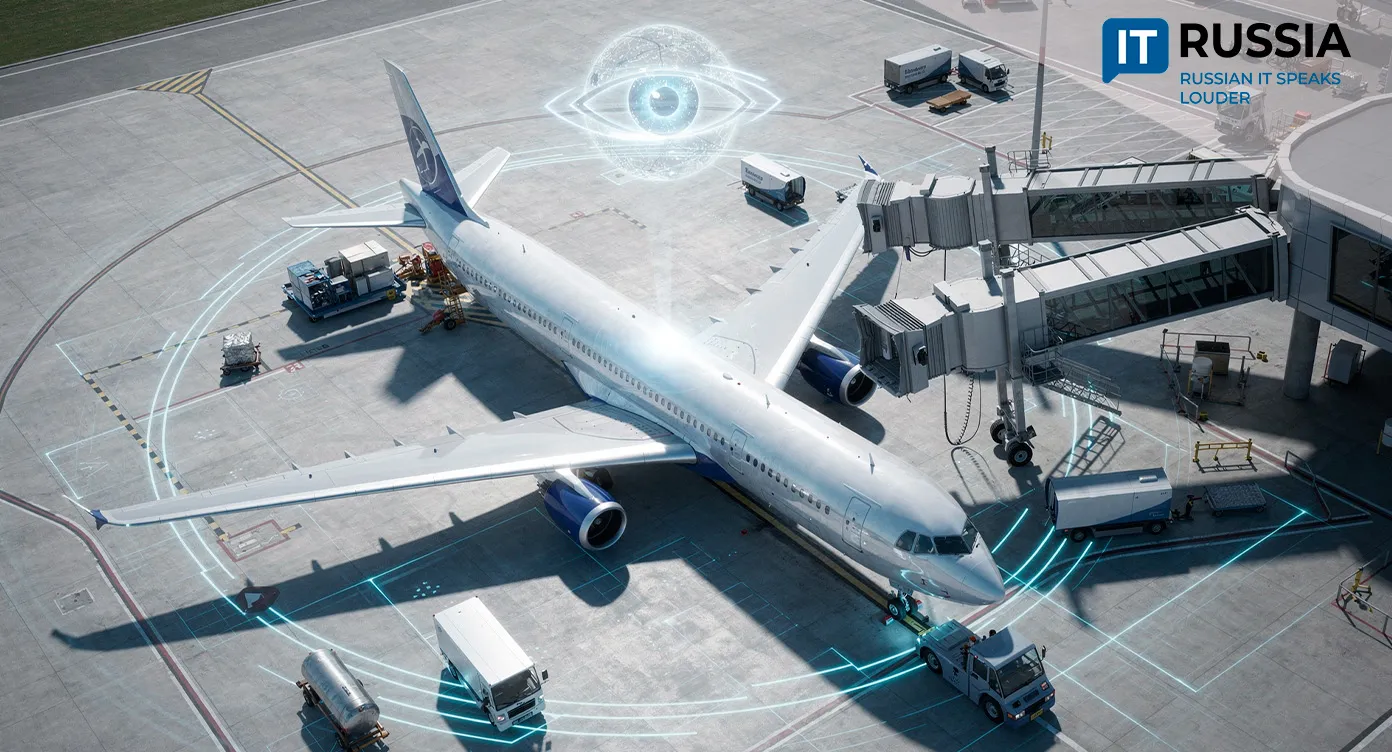
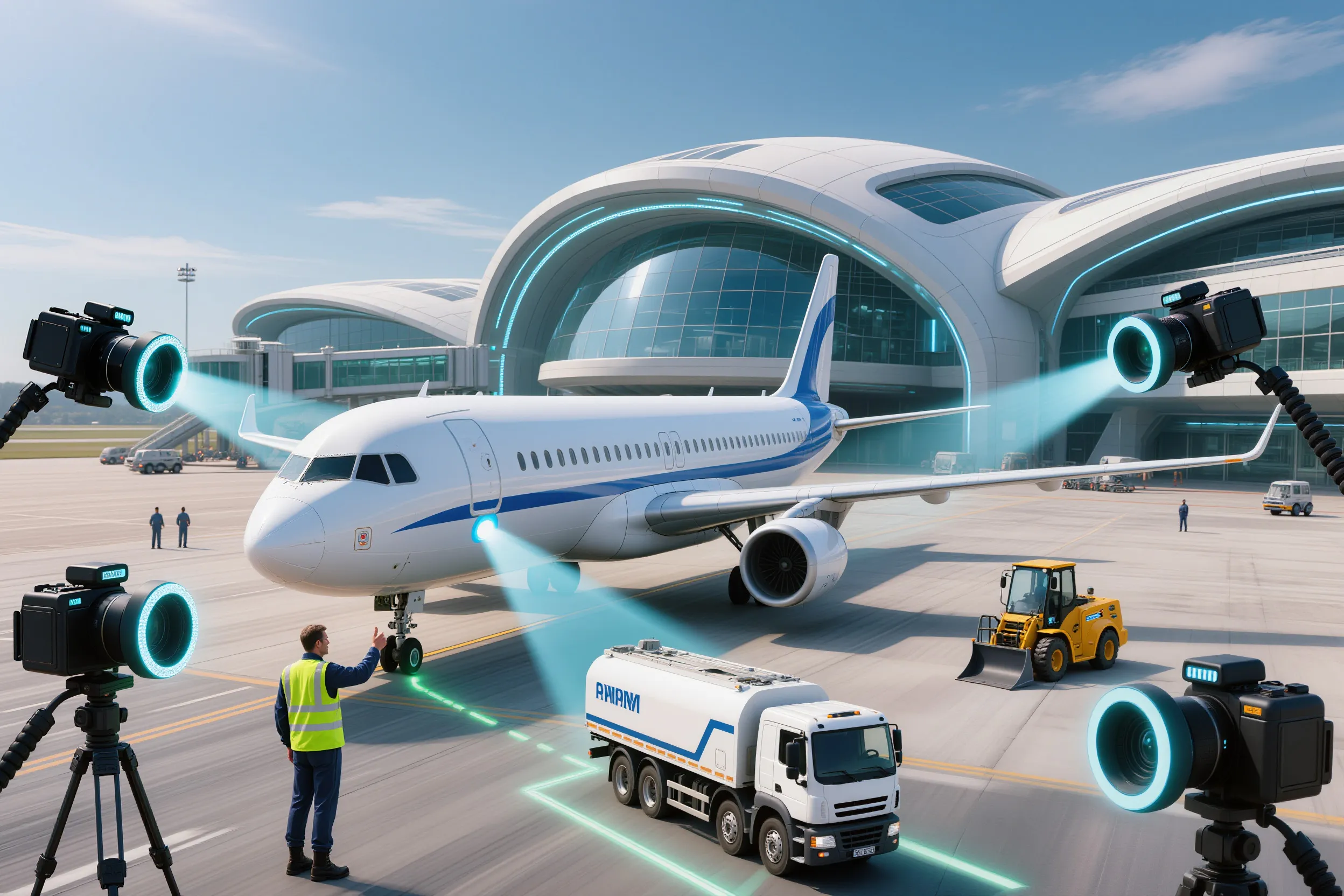
Beeline’s Big Data & AI team has developed a system that analyzes live video streams from airport cameras in real time. Its purpose is to track and assess compliance with regulated ground handling procedures – from aircraft arrival at the stand through preflight preparation.
The technology recognizes the actions of personnel and specialized vehicles, records the start and completion of each servicing stage, checks compliance with established procedures, and measures task execution times. This represents a fundamentally new level of oversight: instead of manual monitoring, airports gain an automated system that observes and documents nearly every operation.
The importance of this development is difficult to overstate. Ground handling is a critical factor in both aviation safety and on-time performance. Human factors – fatigue, inattention, and time estimation errors – inevitably introduce risk. Beeline’s system is designed to reduce these risks by improving operational efficiency and enforcing stricter procedural compliance. For Russia’s aviation sector, this marks a step toward higher safety standards and more efficient airport operations. For the IT industry, it is a clear example of how computer vision and AI can be applied to mission-critical infrastructure. For passengers, the long-term benefit is more reliable and predictable flights.
Deployment Prospects
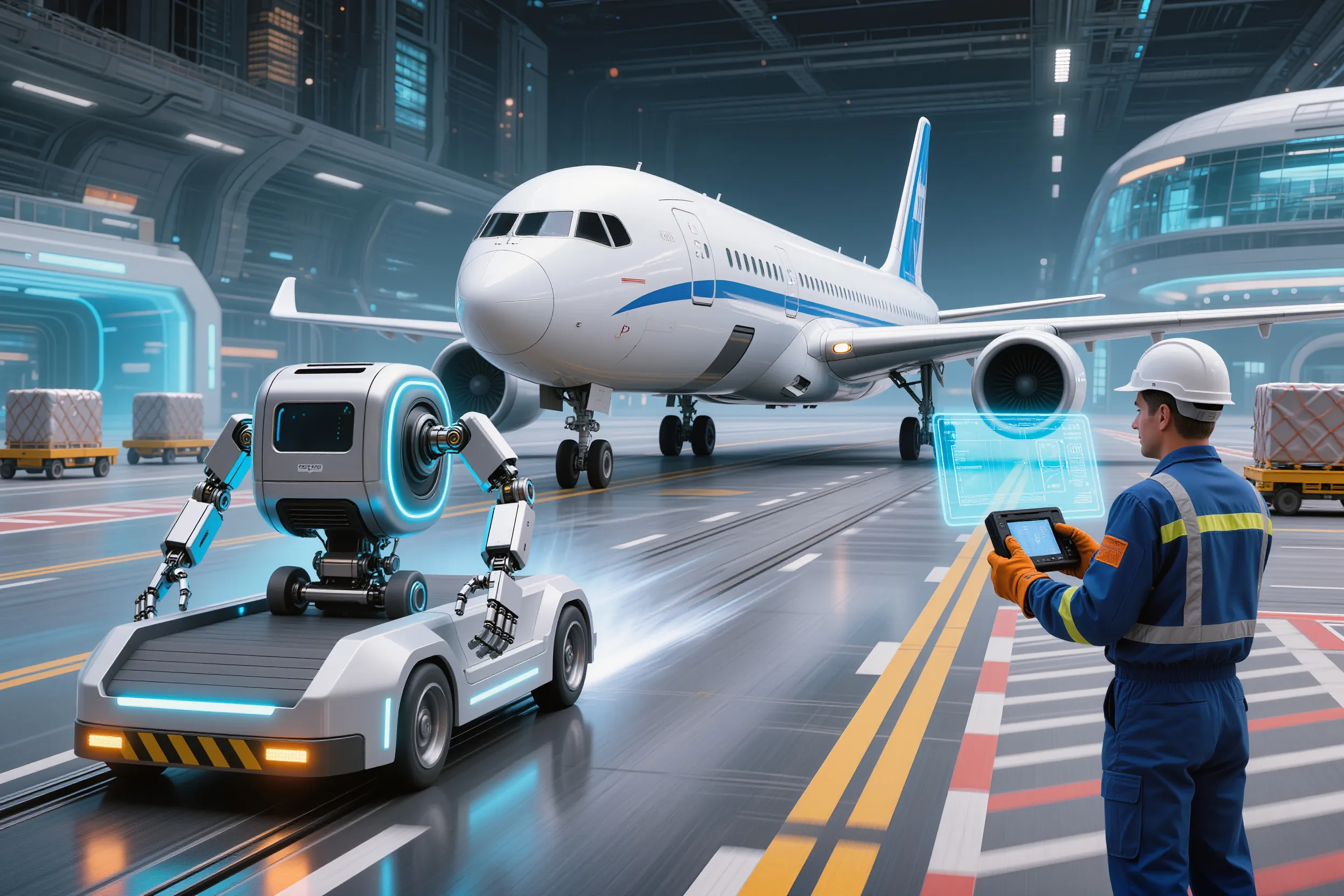
The solution developed by Beeline is built on globally in-demand technologies – computer vision and machine learning. This opens the door not only to domestic adoption but also to international markets. Successful deployment at Russian airports could become a compelling export case, particularly for regions with developing aviation infrastructure.


Within Russia, the system could become part of the broader “smart airport” concept. It can be integrated into a distributed control and management infrastructure, linked with other video analytics and Big Data solutions. Over time, this combination could enable service quality forecasting, schedule optimization, and more efficient resource management – from personnel to ground equipment.
There are, however, challenges to address. Standards and certification requirements for AI solutions used at critical facilities remain unresolved. Regulatory constraints related to video analytics are also possible, including personal data protection requirements and rules governing camera use in high-security zones. Overcoming these barriers will require structured dialogue with regulators and the establishment of clear rules for AI deployment in aviation.
From Retail Checkouts to Airport Aprons
Video analytics has long moved beyond laboratory experiments and is now widely adopted in business processes. Just a few years ago, it was used primarily in retail – to analyze customer behavior, manage queues, and prevent theft. Gradually, its application expanded into industry for quality control, logistics for cargo tracking, and urban management for traffic monitoring.
AI solutions are also not new to aviation. Internationally, systems are already in use for perimeter security monitoring, automated threat detection, and aircraft servicing optimization. Algorithms help track vehicle movements on the apron, identify potential conflicts between equipment and personnel, and forecast stand utilization.
For Beeline, developing a system to monitor ground handling is a logical extension of its AI expertise. The company previously implemented machine learning solutions for customer data analysis and enterprise use cases, building deep experience in processing large-scale datasets. That expertise is now being applied to critical infrastructure, moving beyond the boundaries of the traditional telecom market.
Interest in airport digitalization is growing in Russia. Projects involving runway automation, AI-based security systems, and robotic process automation are under discussion. Beeline’s development aligns with this trend, offering a ready-made solution for one of the most sensitive stages of air transport operations.

A Future Under AI Supervision
Beeline’s aircraft servicing control system is more than a technological novelty – it signals a transition to a new era of aviation logistics. Its deployment shows that AI is ready to take on tasks previously handled exclusively by humans – with greater accuracy, speed, and predictability.
In the coming years, the system could be rolled out at major Russian transport hubs and scaled to adjacent areas, including cargo terminals, logistics centers, and ground operations in other transport sectors, such as rail or maritime services.
In the long term, Russia could position this platform for export, offering it to countries with expanding aircraft fleets and a growing need for automation. This is particularly relevant for regions where staff shortages or the high cost of manual oversight make AI-driven solutions economically attractive.
The key is steady, iterative development. To unlock the technology’s full potential, algorithms must continue to be refined, adapted to different airport types and climatic conditions, and supported by trust from regulators and operators. If that happens, AI-powered “smart eyes” may become a standard element of aviation infrastructure, making flights safer and airport operations more efficient.