Tavros Digitalizes Pig Farming Operations
The Tavros Group is rolling out the Russian-built digital platform Puls.TsSS (Pulse.CSS livestock management platform) to manage production processes and animal records across its pig farming complexes.
End-to-End Tracking and Control
At the AGRAVIA and iAGRI international exhibitions in Moscow, the Tavros Group – one of Russia’s leading food producers – presented Puls.TsSS, a domestic digital platform designed to manage production processes in pig farming.
Puls.TsSS is a Russian IT system developed by Smart Technologies Invest JSC (STI) at the request of Bashkir Meat Company (BMC), which is part of the Tavros Group. The project was created as part of the development of Industrial Centers of Competence (ICC) in the agro-industrial sector and is being advanced with support from the Russian Ministry of Agriculture and the Russian Fund for Information Technology Development (RFTID).
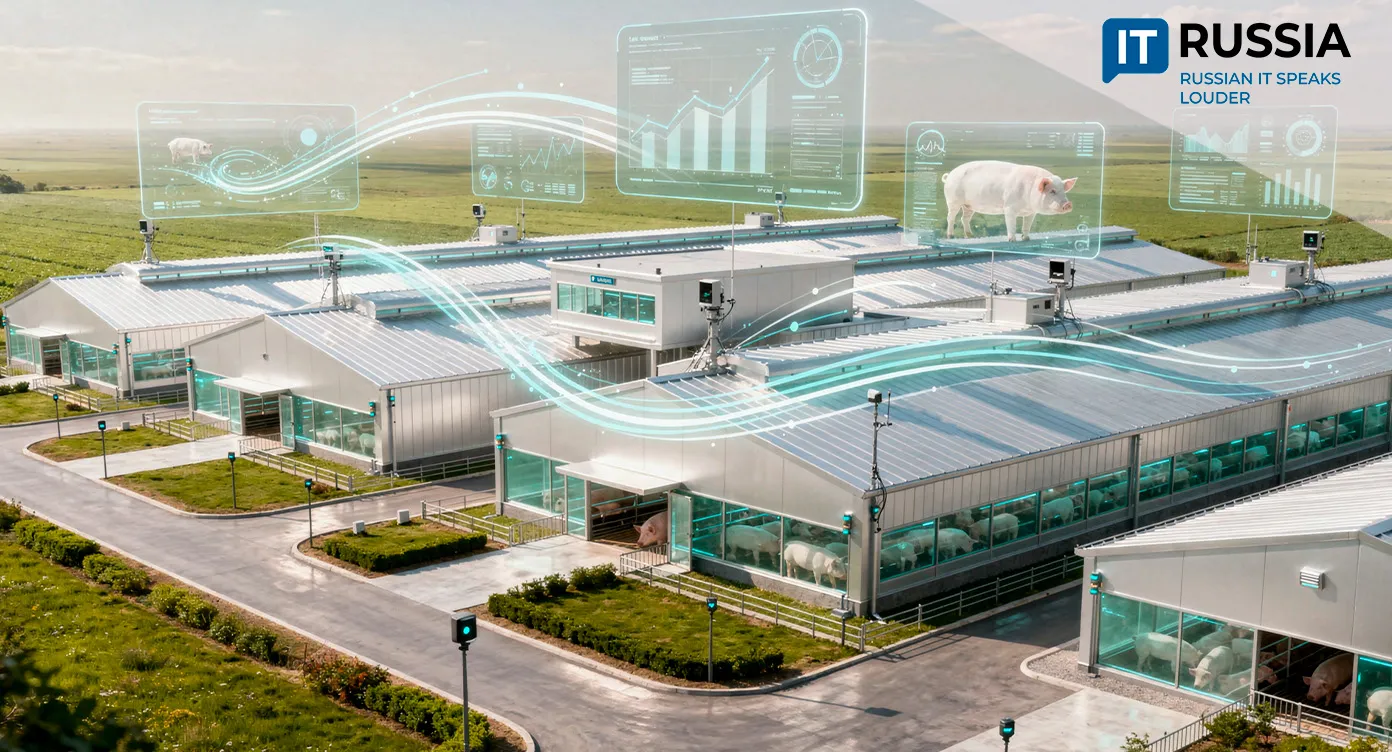
The system includes a web platform, a mobile application, an open API, and integration modules. Puls.TsSS connects directly to pig farm equipment, including microclimate control systems and feed bin sensors, providing full oversight of animal housing conditions.

The platform aggregates data around the clock and delivers detailed management metrics – from animal-level events to comprehensive analytics for entire sites. As a result, it enables operators to manage key production processes, monitor staff performance, and analyze operational indicators both at individual facilities and across the entire holding within a single system. The ultimate goal is to improve record accuracy, reduce production losses, and accelerate decision-making.


Practical Deployment
Puls.TsSS has already been put into operation and is being actively deployed across Tavros Group production sites. The company’s large pig farming cluster includes nine complexes with capacity for more than 29,500 sows, operating at Level IV biosecurity. In 2024, the group produced over 125,000 tonnes of pork (live weight) while simultaneously developing its own genetic capabilities.
Other large agricultural holdings operating in the pig farming sector have also expressed interest in the platform. According to Tavros, by 2025 Puls.TsSS already covered around 40% of Russia’s sow population. The main driver is the platform’s ability to significantly reduce production losses through higher-quality data and rapid analysis.

Puls.TsSS fills the niche previously occupied by imported solutions, including Cloudfarms. Its deployment represents a shift away from foreign products at the end-solution level. For the pig farming industry as a whole, this marks a move toward technological sovereignty and data-driven production standards, including unified record-keeping, integration with genetic centers and LIMS/ERP systems, and compliance with biosecurity requirements.
Meat Exports and Digital Solutions
The Russian Fund for Information Technology Development classifies Puls.TsSS as a “particularly significant project” slated for wide replication across the industry, with a focus on integration with equipment, genetic centers, and external IT systems. For the market, this signals the establishment of Russian software as the priority choice in pig farming.
These developments improve sector efficiency, reduce technological risks, strengthen national food security, and bolster Russia’s position in global food markets.
Russia has long ranked among the world’s leading meat producers. According to Rosselkhoznadzor, in 2025 Russia exported more than 911,000 tonnes of meat and meat products – a 10.6% increase compared with 2024 (824,100 tonnes). Pork exports alone exceeded 270,500 tonnes, up 22.7% from 220,500 tonnes in 2024.

The Puls.TsSS platform is expected to help increase meat production in Russia and, consequently, expand the country’s share of the global market. Optimistic forecasts suggest the world’s population will exceed 9.7 billion by 2050, implying sustained growth in demand for meat products.
In the longer term, the Russian-built Puls.TsSS platform could become an export-ready product, sought after in countries developing their own meat production and pursuing digital transformation of the agricultural sector – primarily across the CIS, Africa, and Latin America.