

Nontoxic Quantum Sensors in Russia Aim to Detect Cancer
Researchers in Russia are developing a new breast-cancer diagnostic method based on next-generation quantum sensors that promise higher sensitivity without the toxicity of classic semiconductor probes.
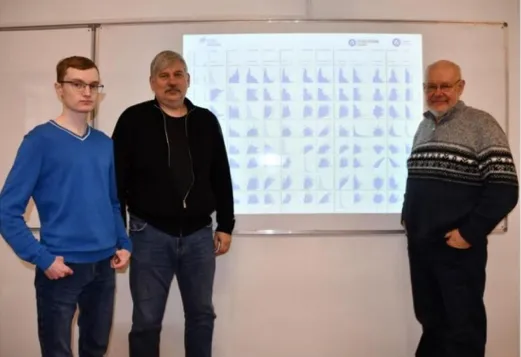
The OncoSENS project is led by Igor Nabiev, head of the Nano-Photon Research Center at the National Research Nuclear University MEPhI, and Sergey Maskevich, chief researcher at the Sakharov International Environmental Institute of Belarusian State University.
According to Nabiev, the team is working with a new generation of quantum sensors—plasmonic nanorods made from a gold–silver alloy. They are unique not only in their optical properties but also in the fact that they are nontoxic.
Nontoxicity and Effectiveness
The new quantum sensors, which generate giant Raman-scattering signals, will be specifically bound to recognition molecules that detect molecular biomarkers of breast cancer.
Compared with conventional optical methods, these quantum sensors are expected to increase the sensitivity of cancer biomarker detection by tens of times. They may also make it possible to identify breast-cancer subtypes that produce only low levels of biomarkers.
Taking preclinical testing of the prototype diagnostic system into account, the project is planned to be completed within three years. In the future, this giant-Raman-scattering–based diagnostic approach could be adapted to other types of malignant tumors as well.