

AI Against Grid Instability: Russian Algorithm Aims to Protect the Power Networks of the Future
Developed by Russian researchers, a new artificial intelligence algorithm addresses one of renewable energy's most persistent challenges. The software can instantly identify hazardous operating conditions and automatically trigger protective control actions.
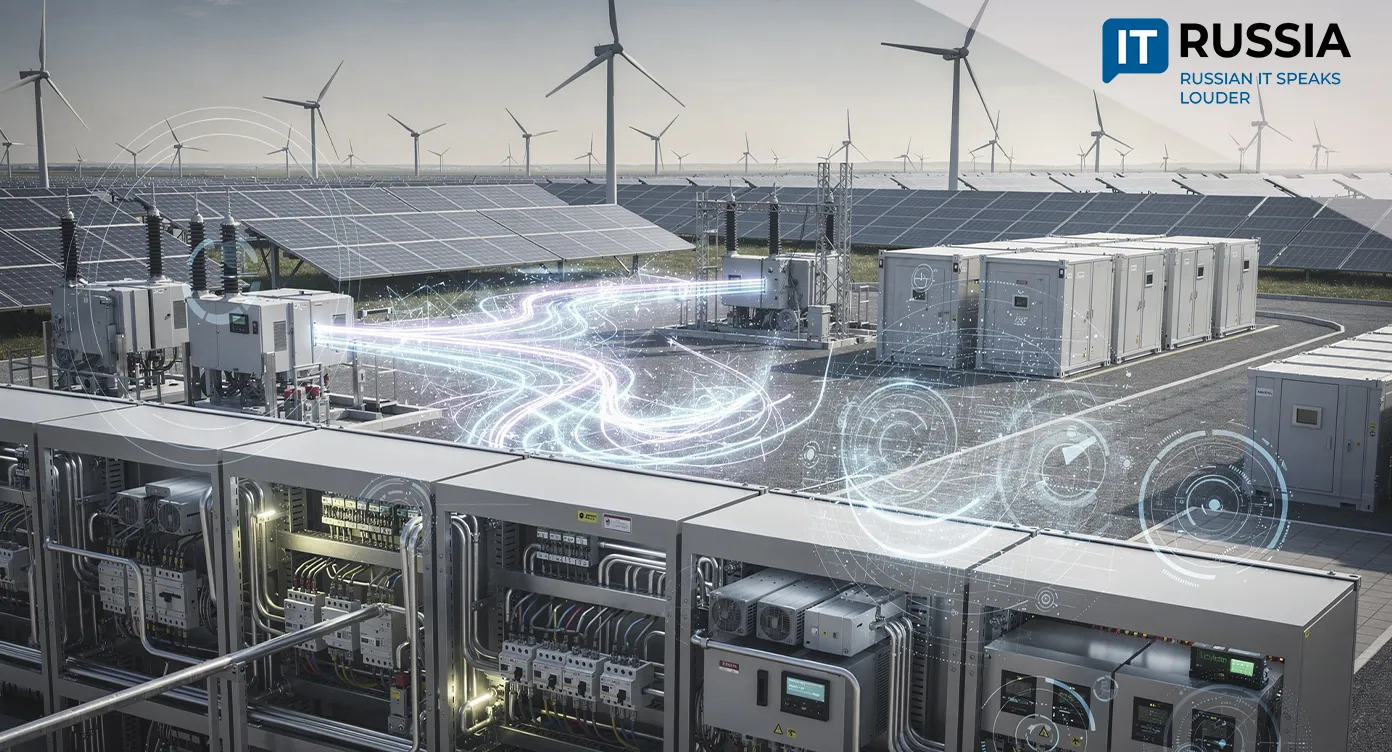
A team of researchers from Skoltech (Skolkovo Institute of Science and Technology), M. K. Ammosov North-Eastern Federal University, and Sber's Center for Practical Artificial Intelligence has developed the "smart" algorithm. According to the researchers, it functions as an AI-based safety fuse that continuously monitors equipment performance. When it detects abrupt changes in critical operating parameters, it immediately initiates an emergency response sequence.
In practice, the software module serves as an intelligent sensor that issues commands to control mechanisms whenever necessary, switching equipment into a safe operating mode. Once system parameters stabilize, the AI safety fuse determines the optimal moment for a controlled return to normal operation, preventing repeated fluctuations and equipment overloads.
According to the developers, the algorithm is particularly well suited for power systems integrating renewable energy sources, energy storage systems, and EV charging infrastructure. Conventional power plants naturally dampen fluctuations through the physical inertia of their rotating equipment. Renewable generation, by contrast, can respond to even minor weather variations, where a passing cloud or sudden wind gust may create significant grid disturbances capable of forcing equipment offline.
One of the AI safety fuse's key advantages is that it is entirely software-based. It requires no additional hardware installation and can instead be integrated directly into an existing power system control architecture.
From Computer Simulation to Industrial Deployment
So far, the technology has been validated only through computer simulations rather than on physical equipment. Following real-world testing, the developers plan to refine the software further to adapt it to specific operating environments.
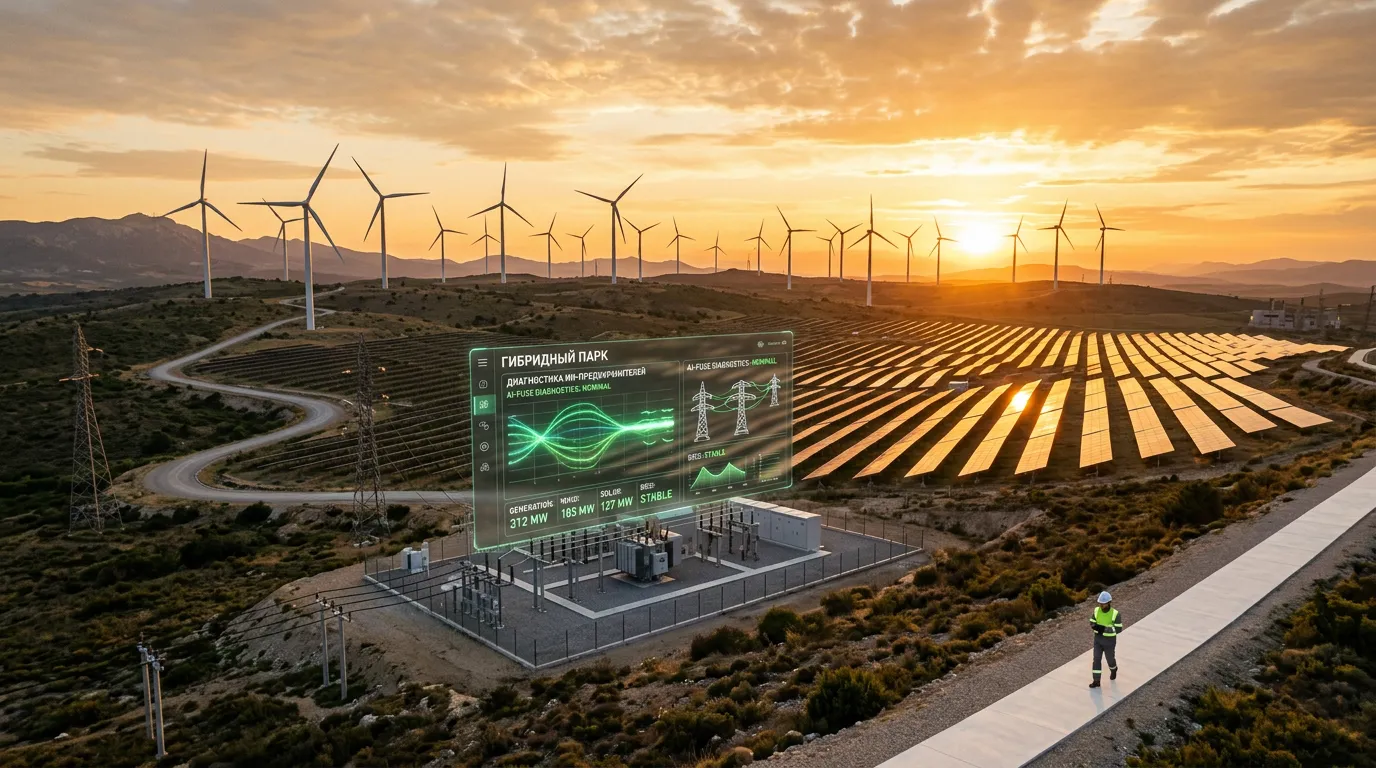
The long-term objective is not to introduce a standalone device but to integrate the algorithm into existing automated process control systems, SCADA platforms, protective relay systems, and microgrid controllers. Within Russia, the technology could be piloted in local power systems incorporating solar and wind generation, isolated power systems across the Arctic and Far East, industrial microgrids, and southern regions where renewable energy penetration is relatively high.
Solutions of this kind are also attracting growing international interest. After successful field validation, the Russian technology could become an export product for markets across the CIS, Asia, the Middle East, and Africa.
The Road Toward Intelligent Grid Protection
The new development builds on several years of related research. In 2022, one of the algorithm's authors participated in creating reference real-time digital models of microgrids using the RTDS simulator. Those algorithms are intended to support future power system monitoring. In 2023, researchers at AIRI (Artificial Intelligence Research Institute) developed a software platform for detecting manufacturing defects in solar panels. Meanwhile, in 2024, Russia's System Operator announced that it was actively deploying AI-based systems to forecast electricity generation from wind and solar power plants. At the time, its Solntse ("Sun") and Veter ("Wind") information systems were already operating at several dozen generating facilities.
Intelligent Control Instead of Reactive Protection
The new algorithm reflects the broader industry trend toward autonomous intelligent systems capable of managing renewable energy assets while recognizing emerging threats early enough to activate protective control strategies before failures occur.
The project's significance lies in its ability to introduce AI-driven analytics into existing infrastructure rather than requiring utilities to replace their current automation systems. Over time, it is expected to function as an additional intelligent software layer operating alongside existing control systems.
As green energy projects continue to expand in Russia and around the world, demand for technologies capable of improving the reliability of electricity supply across entire regions is expected to remain strong.