

Rosatom Completes Construction of SKIF Photon Facility in Novosibirsk Region
Russian President Vladimir Putin has officially opened the new megascience facility in the science town of Koltsovo. The complex will become Russia’s first generation 4+ synchrotron radiation source.

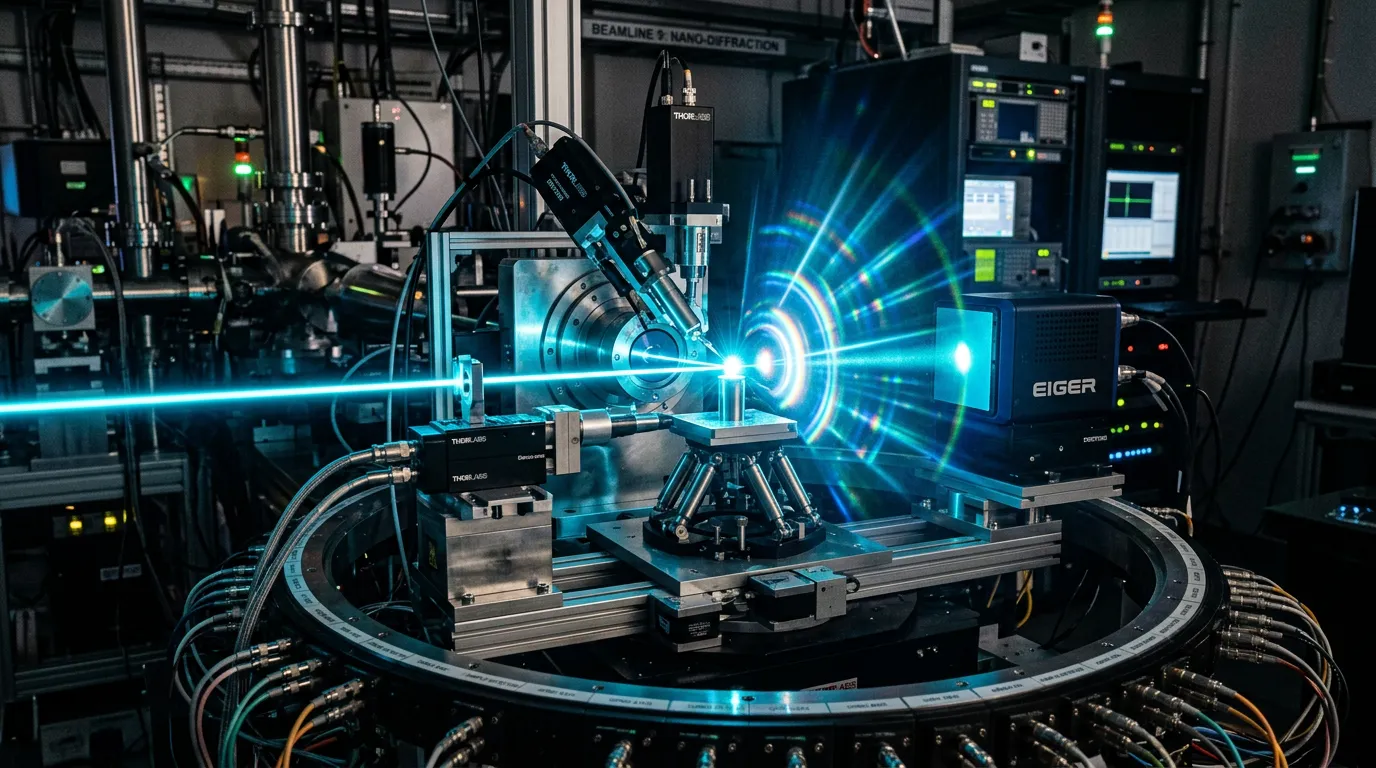
SKIF is an accelerator complex that generates high-intensity synchrotron radiation. In essence, it is a giant X-ray microscope that allows researchers to study the structure of substances and materials at the atomic and molecular levels. The facility itself has no counterparts worldwide in several key physical parameters.
Synchrotron radiation allows scientists to conduct research across fields ranging from materials science and chemistry to biology and pharmaceuticals. The facility can be used to analyze the structure of new drugs, develop advanced composite materials and study chemical reactions in real time.
The facility will also be important for the nuclear industry and the broader energy sector. Researchers will be able to study how different materials behave under radiation and high temperatures, helping accelerate the development of new alloys. Rosatom plans to make extensive use of SKIF for its own applied research.
Digital Design and Construction
The megascience facility was built using advanced digital technologies. Designers and construction teams used building information modeling, or BIM, to create a unified digital environment. Three-dimensional models of buildings and utility networks allowed teams to identify clashes in advance and optimize the routing of complex infrastructure. During construction, teams worked with a digital twin of the future research complex.
Specialized software was used to manage engineering data, bringing together information from contractors and other project participants. This allowed teams to continuously monitor construction progress and compliance with the tolerances required for precision scientific equipment.
Virtual reality and augmented reality tools were also extensively used during construction. Engineers employed VR and AR to visualize complex assemblies and train installation crews. Specialized software helped verify the geometry of foundations for heavy accelerator equipment, where installation tolerances had to remain within fractions of a millimeter.
Some critical equipment was designed and manufactured by Russian engineers while construction was underway. Domestic companies developed unique vacuum systems, magnetic components and accelerator control systems. Digital test benches also allowed teams to test particle-beam control algorithms before the equipment was physically installed.
Infrastructure for Scientific Research
The shared research facility includes not only the accelerator itself but also extensive supporting infrastructure. Up to 30 experimental stations are planned around the main ring, with each specializing in particular types of research.
Buildings for six experimental stations have already been completed. Researchers now have modern laboratories, sample-preparation facilities and centers for processing large volumes of data. Synchrotron experiments generate terabytes of information, so the site has been equipped with powerful computing infrastructure and data links connecting it to supercomputers.
Training proceeded alongside construction, with about 1,000 professionals prepared to work at the synchrotron. Engineers and physicists completed internships and took part in commissioning work in Koltsovo. SKIF has been integrated into the development program of the Novosibirsk Scientific Center of the Russian Academy of Sciences and will become its new technological core.

Moving Toward Scientific Operations
Completion of construction clears the way for scientific experiments to begin. SKIF’s injection complex, which includes a linear accelerator and booster synchrotron, has already moved to round-the-clock operation. Engineering teams are conducting final calibration of the magnetic systems and vacuum chambers.
The facility is scheduled to enter operation at the end of August, when Novosibirsk will host a major international conference on synchrotron radiation. The first research groups are expected to gain access to the experimental stations this fall.
The creation of SKIF addresses Russian science’s need for advanced research tools. Russia now has its own generation 4+ megascience facility, providing domestic research capabilities for both fundamental and applied science and strengthening the country’s technological independence in these fields.