3D Models Unlock the Mystery of an Ancient Rus’ Fortress
Additive manufacturing technologies have helped answer a question that had puzzled archaeologists for decades.
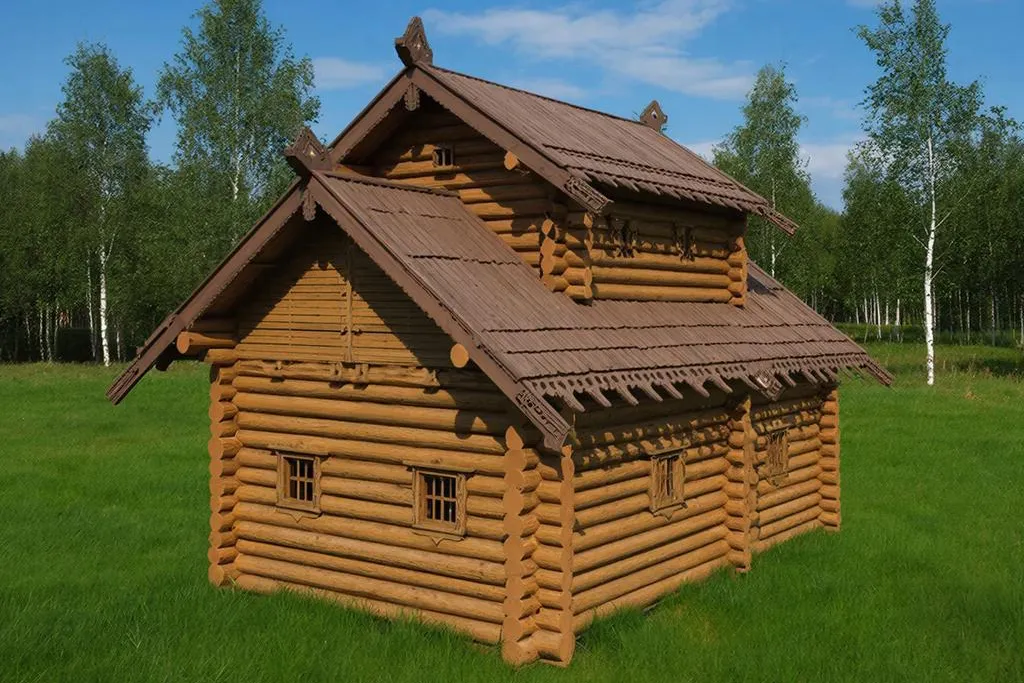
A long-standing mystery surrounding the Titchikha fortified settlement in Russia’s Voronezh region has received an unexpected explanation. Researchers at Novgorod State University have effectively “looked inside” 9th-century Slavic dwellings using 3D modeling.
Moreover, additive technologies have confirmed a hypothesis that two houses, built at different times using different construction techniques, may have existed on the same site.
Traces of Different Eras in One Place
During excavations carried out in the 20th century, archaeologists uncovered a 16-square-meter residential pit and were left perplexed. Six post holes around the perimeter pointed to a post-and-frame structure. Yet cladding remains found in the same layer indicated a log house. The contradiction seemed insoluble: a post frame and log cladding are mutually exclusive concepts. For decades, specialists struggled to explain this puzzle without success.
Additive technologies ultimately shed light on the issue. By analyzing 3D models of the site, researchers concluded that a post-and-frame house originally stood there, leaving behind the post holes. As the structure deteriorated naturally, it was dismantled. Later, a log house was built on the same spot, in the same pit – and its cladding is what survived. In other words, traces of two structures from different periods were found at a single location.
This hypothesis, in turn, helps explain the dynamics of life in a frontier fortress. Lightweight frame buildings can be erected quickly. Such dwellings for warriors were likely built during the initial phase of settling the promontory. Later, as settlements became more established and crafts developed, people began constructing more permanent houses – such as log buildings.
As the university explained, this conclusion finds indirect support in an intriguing hypothesis that the settlement may have originated much earlier, in the 2nd–3rd centuries, as a major trading center known as Bogaty. Legend has it that the site was destroyed after a campaign by Prince Sviatoslav in 962.
Archaeological Data in a ‘Visual’ Language
The hypothesis is supported by observations that had previously gone unnoticed.
The 3D model revealed the log house from all sides. It was a tall, 3.5-meter-high dwelling made of oak logs, partially sunk into the ground. The roof was built without nails: beams were fitted into the gable, with planks laid on top. The entire roof was then covered with earth for insulation. The door measured just one meter in height and 70 centimeters in width – a practical choice given the harsh climate and the need to retain heat.
The resulting 3D model has also proven to be an effective tool for public outreach. It translates complex archaeological data into a visual language, making historical heritage accessible to a broad audience. Founded in the 9th century on the Truden promontory, the Titchikha settlement was an example of military-engineering thought. Naturally steep slopes made it almost impregnable. The only vulnerable isthmus was protected by a powerful timber-and-earth wall of oak log frames more than three meters high, along with a deep moat lined with a palisade of sharpened logs.