A Double Impact: MISIS Launches a Course at the Intersection of Two Major Digital Trends in Construction
The first cohort able to apply the new skills directly in industry consists of senior executives from SUEK, one of Russia’s largest coal and energy companies.
Managing the Full Lifecycle
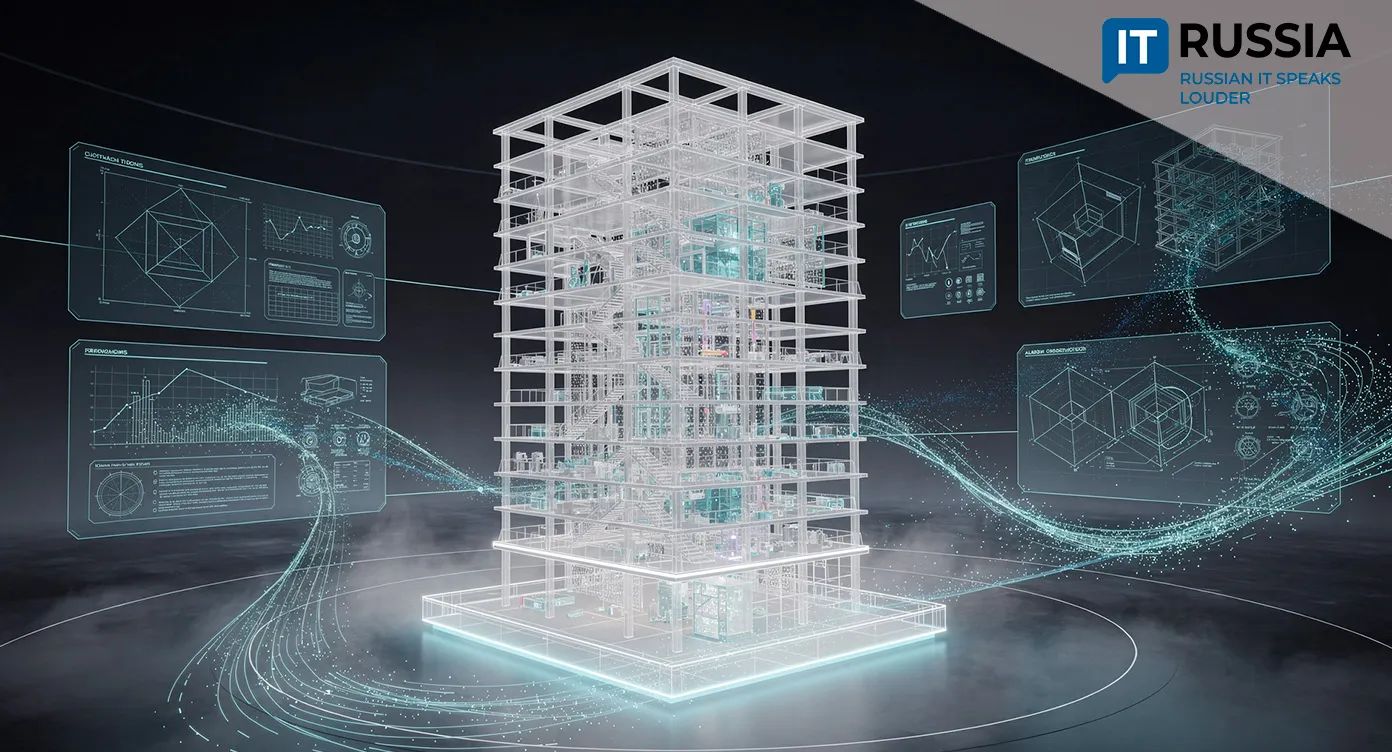
The launch at NUST MISIS of Russia’s first educational course focused on applying artificial intelligence to BIM design (BIM – Building Information Modeling) goes well beyond a routine academic announcement. This is not simply a new class but an attempt to rethink how digital design itself is taught and practiced. In the program, BIM is treated not as a 3D visualization tool but as a living digital model of an asset’s full lifecycle – from early concept through construction and long-term operation.
Integrating AI into this process makes it possible to work with large volumes of design data faster, more deeply, and with greater accuracy. AI tools can automate repetitive tasks, surface more optimal design options, and reduce the risk of costly errors at early stages. As a result, the course, delivered as part of the university’s MBA Mining & Metals program with contributions from experts at the Department of Underground Construction and Mining Enterprises, focuses less on technology for its own sake and more on how complex engineering systems can be managed in practice.
Education for Decision-Makers
It is telling that the first participants are top managers from a major mining company – SUEK. This choice immediately sets a high applied bar for the program. The course is not designed for traditional students but for executives responsible for strategy, budgets, and timelines in large-scale industrial projects.
That audience choice sends a clear signal. AI in BIM is no longer an experimental topic confined to research labs. It is becoming a management tool. In this model, the university acts as a mediator between science and industry, translating advanced technologies into a language business leaders can use. For Russian engineering education, this marks an important shift away from abstract competencies toward skills directly tied to real production and investment decisions.
Where Trends Converge
The emergence of the MISIS course builds on developments that have been taking shape in Russia for several years. Expanding mandatory use of BIM in public construction has created sustained demand for digital models as an industry standard. At the same time, international developers of engineering platforms have been embedding AI algorithms into tools for design analysis and parameter optimization.

Abroad, universities have also shown growing interest in AI for engineering, but that work has often remained fragmented, without a strong focus on BIM as a unified digital environment. In parallel, the mining sector has pursued its own digital transformation, applying AI to process analysis and efficiency gains. In Russia, these trends coincided with the expansion of professional retraining programs and demand for applied digital skills. The MISIS course sits precisely at this intersection.
“We have already rolled out BIM. The next step is TIM,” said Mikhail Bocharov, Executive Director at SiSoft Development, speaking at the CIPR conference. In the Russian context, BIM is now evolving into TIM – information modeling technologies. Industry forecasts suggest that these approaches will become a standard part of Russia’s construction sector as early as this year.


Bringing AI to the Jobsite
The most important effect of launching the course is the creation of a new educational niche. AI and BIM stop being parallel topics and instead function as an integrated toolkit. That integration increases the practical value of learning and positions the university as an active participant in the digital transformation of industry.
Looking ahead, the program has room to scale. It could expand to broader audiences, become part of continuing professional education, and eventually move into international formats. This also lays the groundwork for a new cohort of Russian AI-BIM specialists capable of working not only in the domestic market but also on international digital construction projects.
The MISIS course brings together several critical elements at once. BIM is taught as a full-lifecycle model, AI is framed as a way to accelerate analysis and optimize decisions, and the target audience is corporate leaders focused on outcomes. The emphasis is on reducing costs, shortening timelines, and improving design quality in capital-intensive sectors.
Taken together, this positions the program not as a one-off initiative but as part of a broader strategy to train professionals who can manage complex digital systems. In an economy where design-stage mistakes are increasingly expensive, such specialists are becoming critically important.