No More Paperwork: How Digital Technologies in Russia Are Simplifying Life for Patients and Clinicians
Russian IT integrator Pervy Bit has consolidated the branches of the Yekaterinburg Medical Center into a single digital system. Previously, its clinics, inpatient unit, emergency trauma center and laboratory operated independently. Now their data is unified – and patient care is faster, more coordinated and easier to manage.
Now Unified Under One System
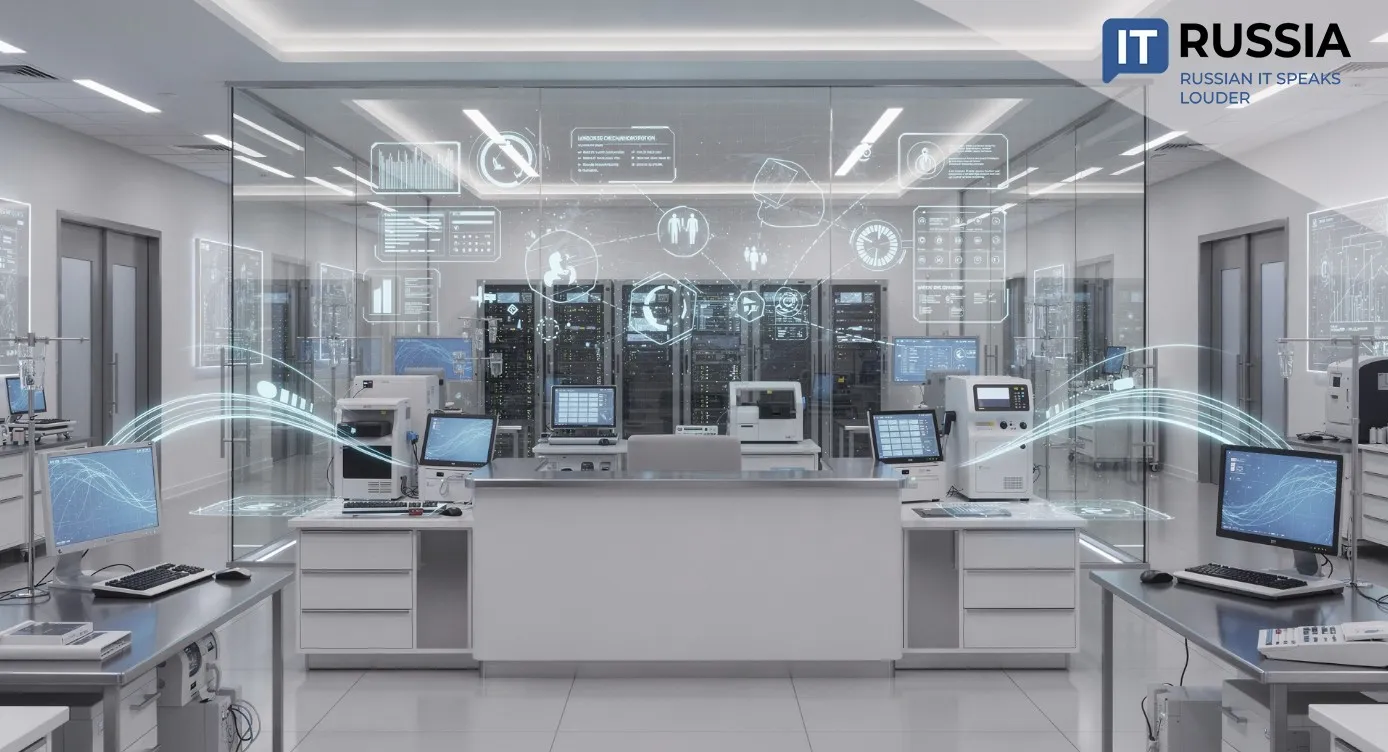
Russian IT solutions integrator Pervy Bit has completed a large-scale digital transformation project at the Yekaterinburg Medical Center, one of the oldest private healthcare networks in the Ural region. Three outpatient branches, an inpatient facility, a trauma center and a laboratory are now connected within a single information system. The transition to new software was carried out simultaneously across all divisions. That synchronized rollout preserved unified reporting and eliminated discrepancies in clinical and administrative data.
Previously, the medical center relied on a different, relatively basic, custom-built program. Staff were accustomed to it, but it significantly slowed operations. For example, it could not support modern services such as online appointment scheduling. The legacy system also struggled with growing data volumes, including the mandatory transmission of information to the Unified State Health Information System (EGISZ).
A Strategic Step Forward
After analyzing the market, the clinic’s leadership selected Pervy Bit as its IT partner. The team demonstrated its “BIT. Medical Center Management” platform directly on site, allowing executives to evaluate how the system performs under real clinical conditions.
The defining feature of the project was its synchronized launch across all units. Staff underwent training in advance, and a vast volume of historical data was migrated to the new platform accurately, quickly and without loss.

How It Works in Practice
The transformation has reshaped daily workflows. Patient medical histories are now accessible to physicians at any branch by entering the patient’s full name. Scheduling across the entire network is centrally managed, and a color-coded master calendar allows staff to instantly see where appointments are being booked and which doctors are available. Patients receive automated notifications on their smartphones.


The laboratory, a critical component of the center’s operations, is fully integrated into the unified system. Test results and diagnostic findings are uploaded directly into the patient’s electronic record without manual data entry. If a patient’s indicators are critical, the physician sees this immediately and can initiate urgent hospitalization without delay.
The platform also automates financial and operational reporting. It generates reports on the cost of initial consultations – a task previously handled manually by front-desk staff – and tracks treatment effectiveness as well as patient movement between specialists. Importantly, the system is configured for automatic data transmission to EGISZ. Compliance with state reporting requirements is mandatory for medical organizations. Now, data is sent without staff intervention, reducing workload and minimizing the risk of technical errors.
Why It Matters for Healthcare IT
For the clinic, the operational benefits are tangible. Management efficiency increases: physicians spend less time on documentation, front-desk workflows accelerate, and scheduling conflicts are reduced. Executives gain real-time visibility into patient volumes and financial performance.

Patients also experience direct improvements. Booking an appointment is easier, including through online services and messaging platforms. Medical histories no longer become fragmented across branches. Lab results are available digitally rather than on paper. The result is time savings and higher quality of care.
At the national level, projects like this support the development of a unified digital healthcare environment. EGISZ shifts from being a formal compliance burden to becoming part of routine clinical operations. As more providers connect to integrated systems, the healthcare sector becomes more transparent and resilient.
Implications for Russia and Beyond
For Russia’s IT sector, the project signals technological maturity. Healthcare IT implementations are among the most complex: they require strict data protection standards, seamless integration with government platforms and uninterrupted system performance. Successfully delivering such projects demonstrates that domestic companies can build scalable, reliable solutions for socially critical industries.

In the long term, the digitalization of private healthcare intensifies competition and raises service standards. Both patients and medical staff benefit from streamlined workflows and improved access to information.
Digital Platforms With Export Potential
Solutions of this kind also have export potential. The platform can be adapted to regulatory requirements in CIS countries and other markets where national electronic health data systems are developing.
In the coming years, similar projects are expected to accelerate. Requirements for data security and government system integration will continue to tighten. At the same time, the role of IT integrators will expand. They are increasingly shaping the digital infrastructure on which modern healthcare systems depend.