

Russia Unveils VR-Controlled Humanoid Robot Technology
Technology company IT Imperial, which works in robotics and AI-driven automation, has demonstrated a VR-based system for controlling a humanoid robot. The robot mirrored the operator’s movements in real time while the operator used a virtual reality headset.
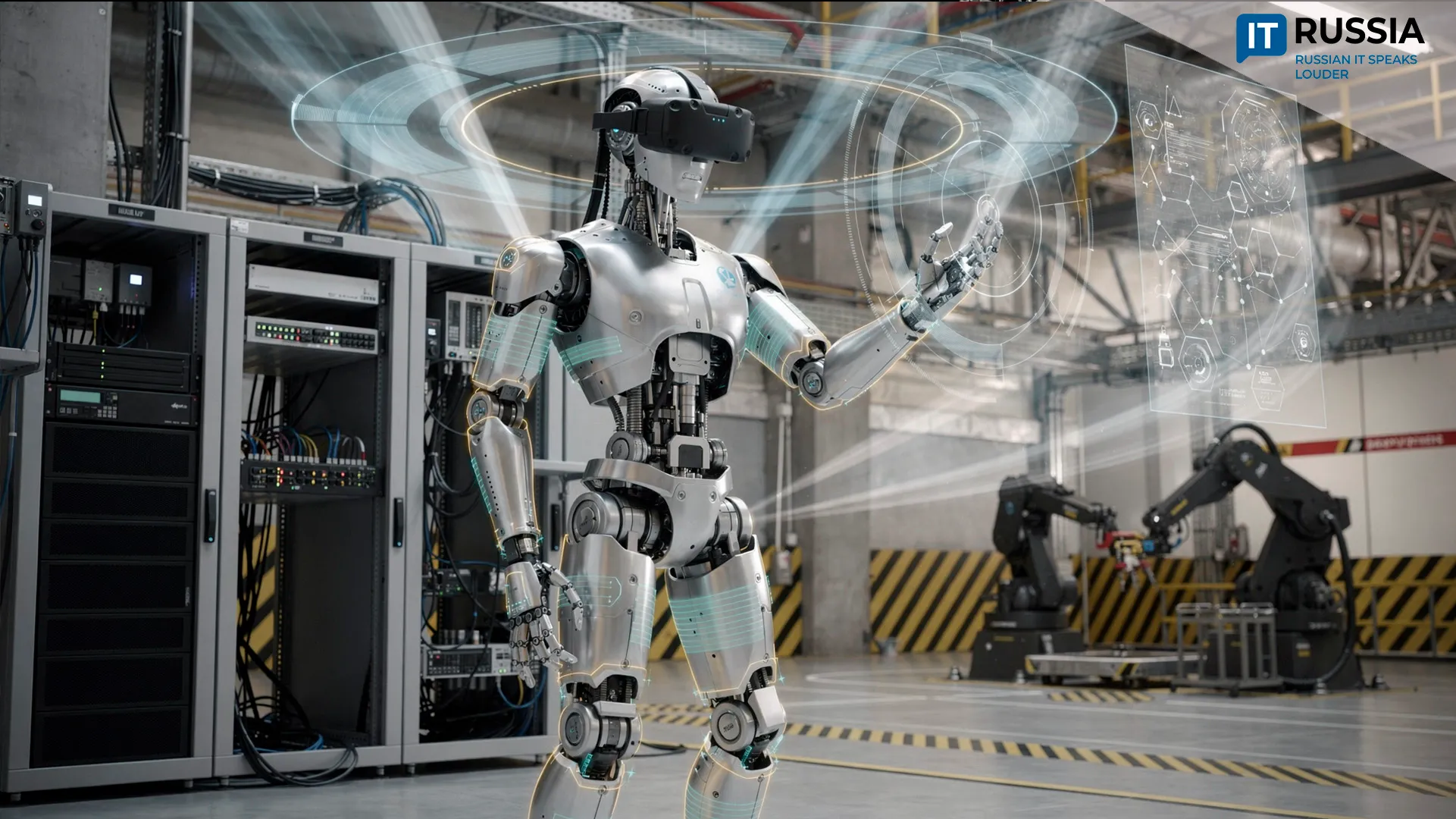
The VR control system for a humanoid robot has been publicly demonstrated in Russia for the first time. It brings together VR, telemetry, and a 360° video stream with a humanoid platform in a single product, showing how multiple technologies can be combined into a practical solution.
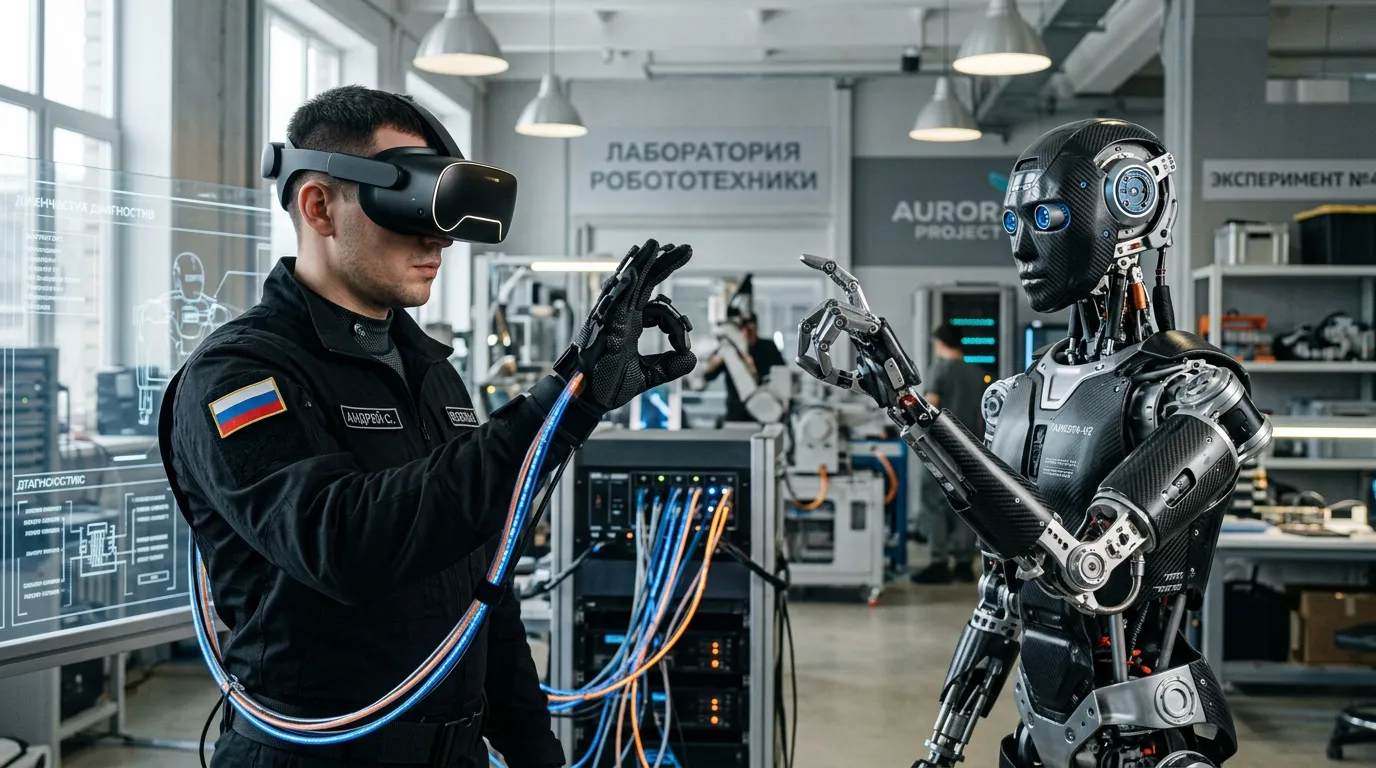
As the developer explains, the robot replicates the operator’s movements in real time. During the demonstration, the system showed no visible delay – the robot waved to the audience, moved its arms, and turned its head and body in sync with the operator. At the same time, the robot streamed a live panoramic video feed back to the operator, giving a full view of the surroundings through the VR headset.
A distinct feature of IT Imperial’s approach is that the system is linked to autonomous navigation and can be used in industrial settings, for patrols with behavior analysis, and for monitoring hard-to-reach areas. According to the developers, this is not just a demo unit, but a platform that combines teleoperation with elements of autonomous movement.
Moves on Its Own
According to IT specialists, the robot can move independently. To prevent damage and incidents, it is equipped with collision avoidance, supports control over Wi-Fi and mobile networks, and operates with robots based on ROS2.
The system can also integrate with autonomous navigation. Such a humanoid can be deployed to patrol facilities or work in hazardous environments, for example to measure radiation levels. If something goes wrong during routine operations, a human operator can take over and resolve the situation. Another key advantage is that the system uses hardware not subject to sanctions restrictions, giving it strong potential for adoption in the public sector and large enterprises.
From Pilot Demos to Real Deployment
The development of such systems reflects a broader shift toward bringing digital platforms and AI into real-world environments across industries. Russia is currently implementing a national project, Sredstva proizvodstva i avtomatizatsii (Means of Production and Automation), aimed at equipping industry with modern domestic machinery and increasing the level of robotization. Experts expect that developers will soon move from pilot demonstrations of IT products to full-scale deployment in industry, monitoring systems, and service environments, with robots taking over part of everyday tasks.
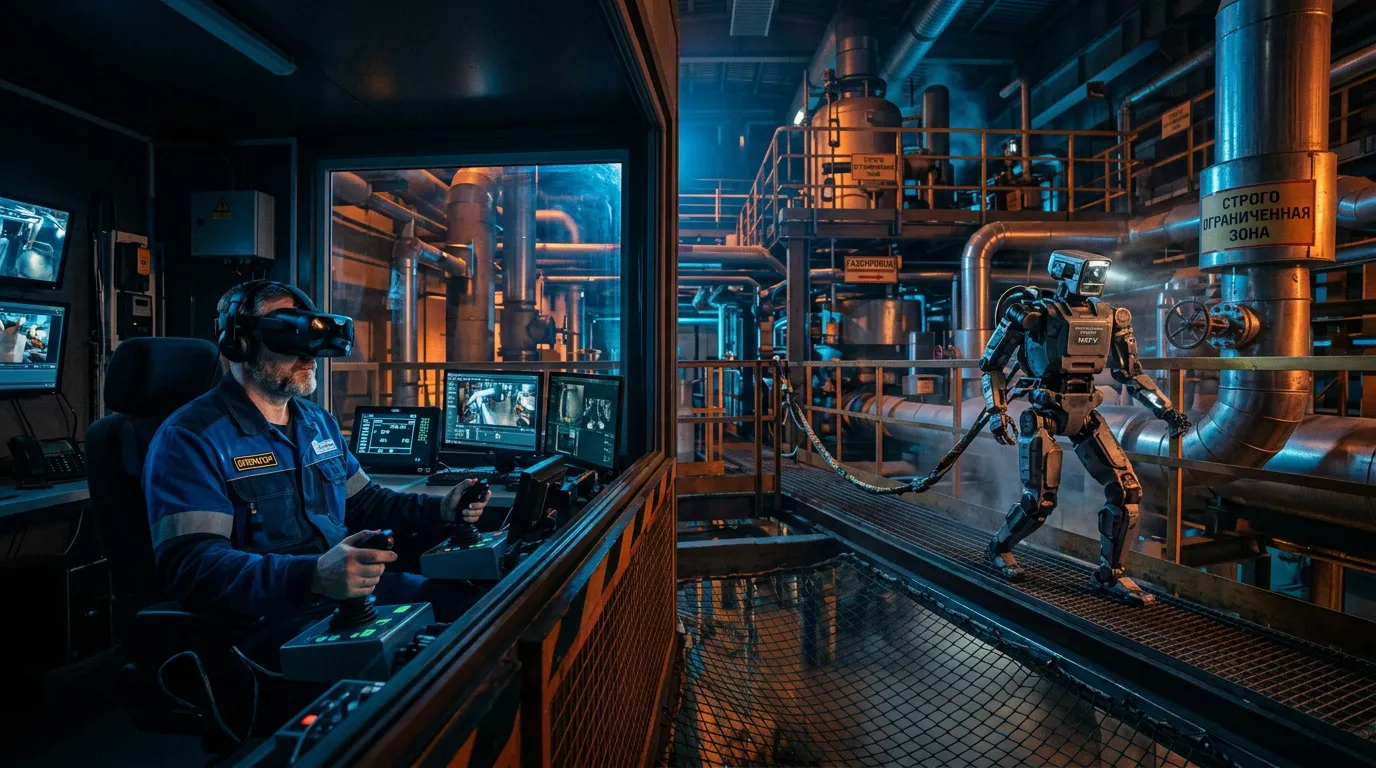
This could make it possible to send robotic assistants into places that are difficult or unsafe for humans – for inspections at hazardous sites or in environments where human presence is undesirable. Robots could also handle routine tasks in healthcare, education, services, logistics, and urban infrastructure.
The IT Imperial project shows that Russian developers are moving toward import-independent solutions in industrial and service robotics. Such technologies are expected to support the growth of a domestic robotics ecosystem and, over time, contribute to technological sovereignty.