What Will LIS See? MEPhI Develops AI System to Read Ancient Manuscripts
The Laboratory of Digital Technologies in the Humanities is developing a linguistic intelligent environment (LIS) called Rukopisnoe nasledie Drevnei Rusi (Manuscript Heritage of Old Rus’).
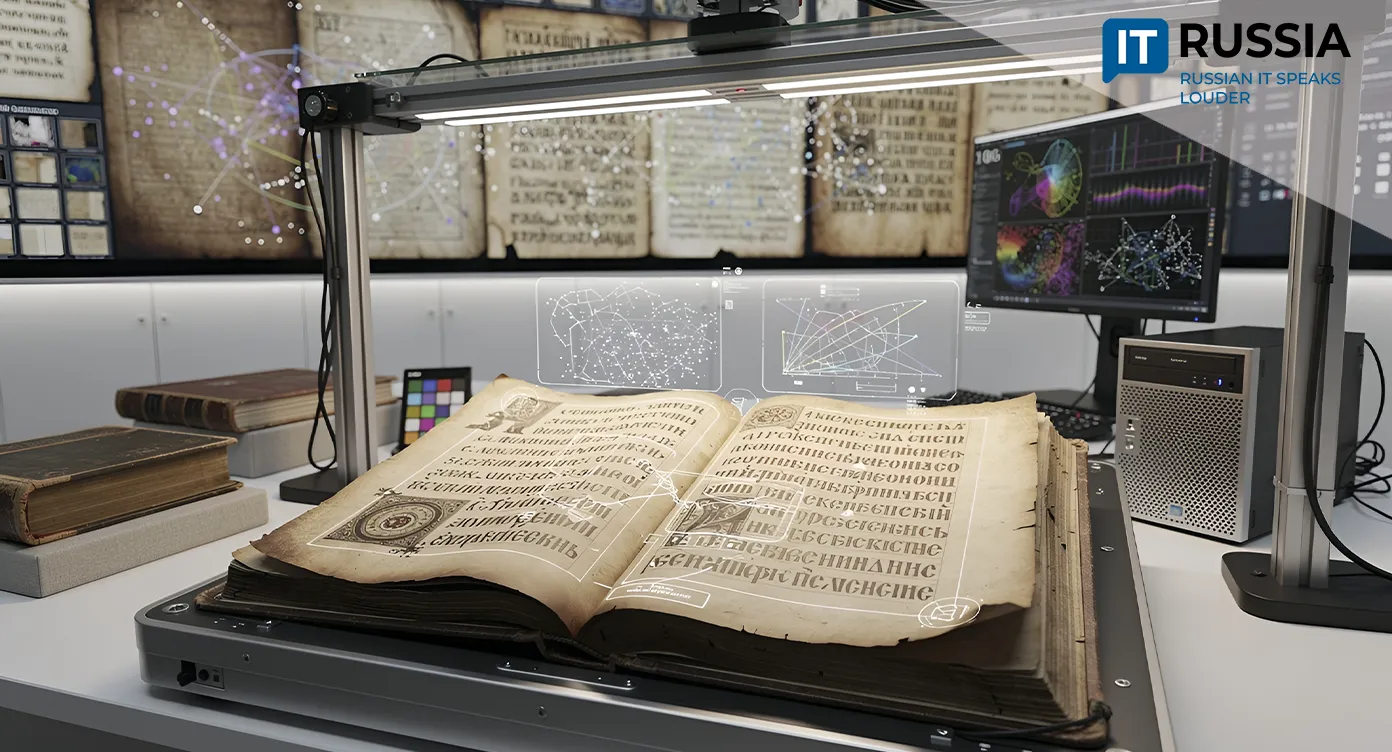
Since 2022, the National Research Nuclear University MEPhI has been developing an unusual digital tool. It brings together two seemingly incompatible worlds: the rigorous mathematics of artificial intelligence and the delicate subject matter of Old Russian philology. The project has the working name Rabochee mesto filologa-drevnika (Old Russian Philologist’s Workstation). It is designed to become a reliable assistant for researchers who spend years painstakingly studying ancient liturgical books. The online publication Creative Industries of Russia reports on the project.
A Digital Bridge to Old Rus’
The idea for the project came from the researchers themselves. As Alexander Kravetsky, a leading expert at the laboratory and a leading researcher at the Vinogradov Russian Language Institute of the Russian Academy of Sciences, explains, it began with Hieromonk Rodion, director of the Institute of Fundamental Problems of Social Sciences and Humanities at MEPhI. Several years ago, he began looking for an IT tool that could genuinely make philologists’ work easier. That led to the idea of giving each researcher a personal workspace where artificial intelligence could take over repetitive but highly labor-intensive work.
The material they have to work with is extraordinarily complex, with no exaggeration. The researchers chose the Service Menaia for analysis – 12 large volumes containing the services for each day of the liturgical year. These texts were copied and edited over many centuries. Local traditions and different dialects became intertwined in them. For a person studying them, they are a living record of history. For a machine, they are almost an impenetrable maze.
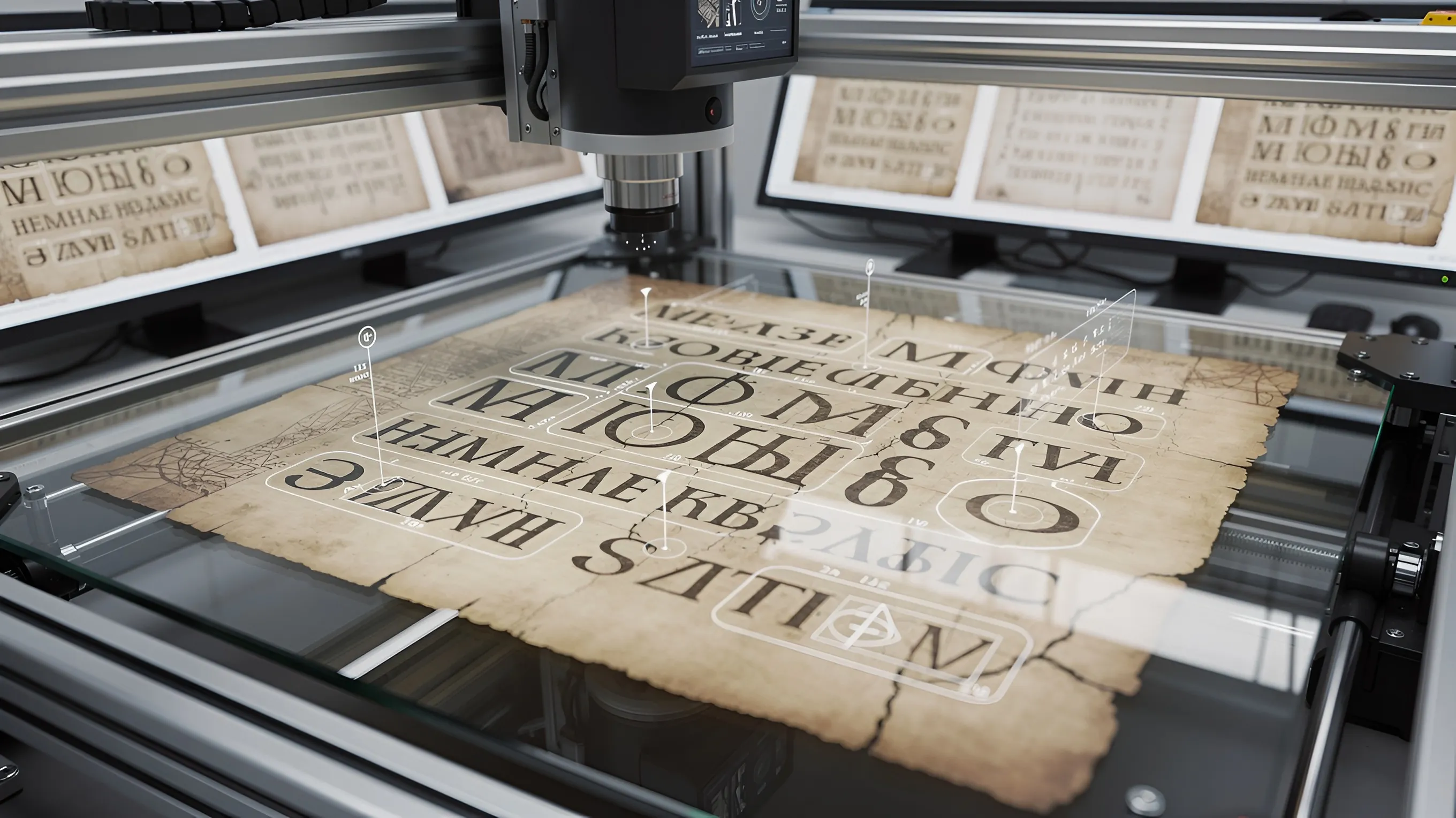
Kravetsky gives some telling examples. There are numerous ways of writing letters, abbreviations known as titlos, and superscript marks. Even something as seemingly minor as distinguishing between the Cyrillic letters “и” and “н” requires extreme precision from the algorithms. And what about the letter “К”? One scribe drew it as a vertical stroke on the left with two diagonals extending from the center; another wrote a vertical stroke with a curved stroke on the right. There are thousands of such variations. The machine must learn not only to recognize individual signs but also to understand their meaning. For example, a text may suddenly end with an incipit – the first two or three words of a hymn. The assumption was that the continuation would be obvious to the reader. Now that convention has to be made intelligible to a machine as well.
Traditions Through the Centuries
A human simply cannot keep hundreds or thousands of books in mind and compare them simultaneously. That is exactly the kind of task AI can handle. A large-scale analysis could reveal major changes in the texts that were introduced not only under Patriarch Nikon in the 17th century but earlier as well. This could expose hidden revisions and show how the liturgical tradition changed over the centuries.
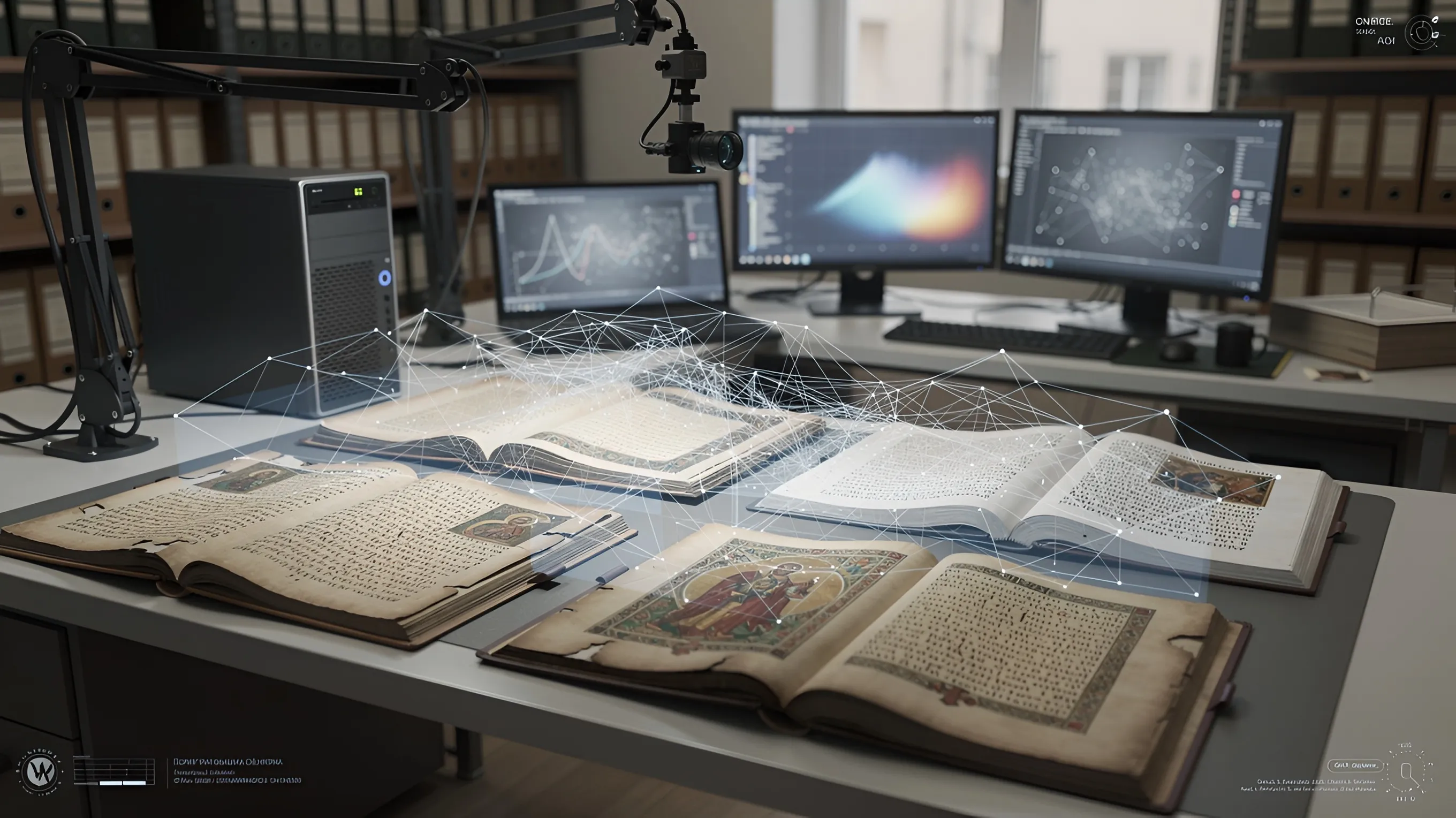
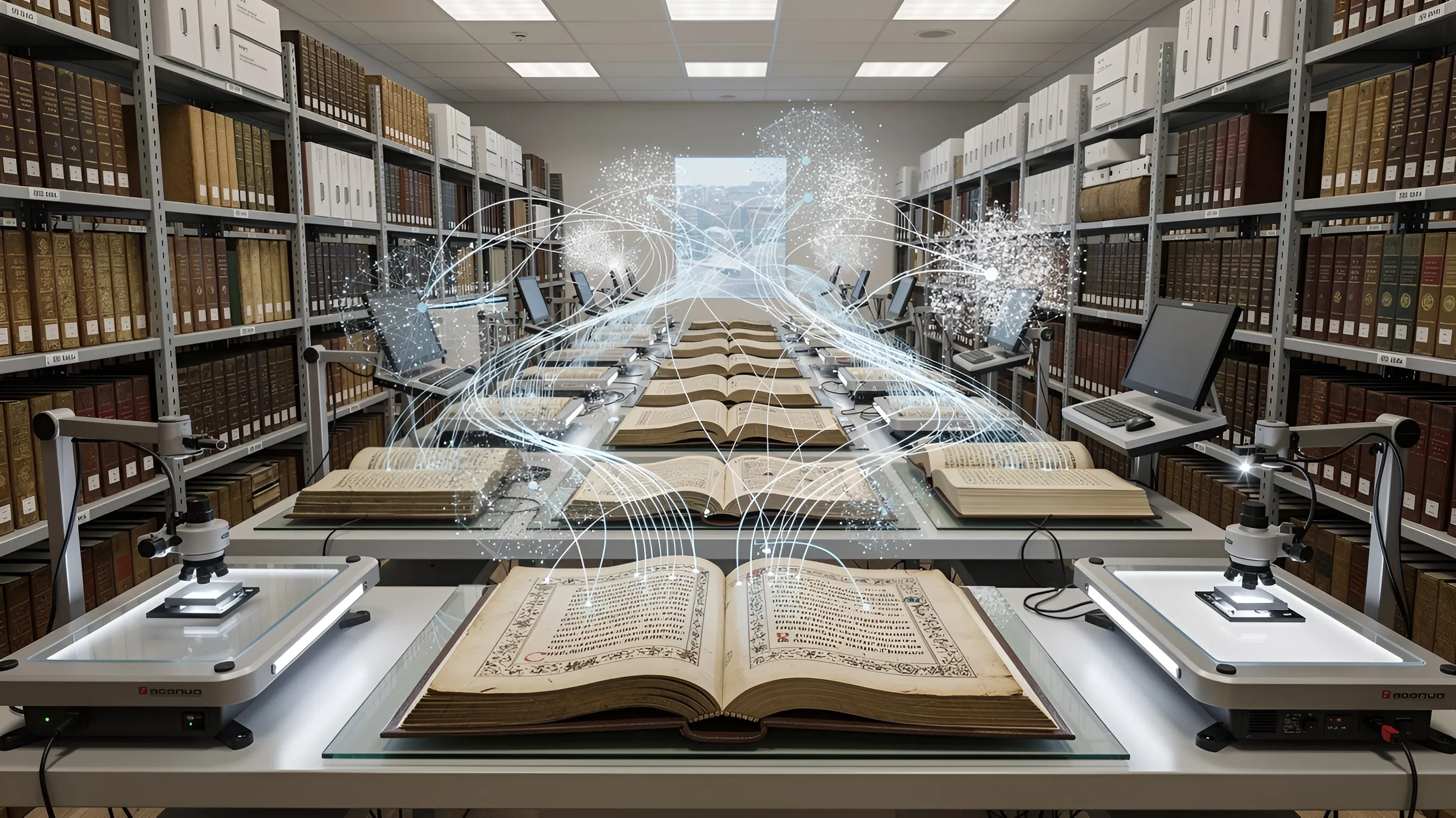
The project is still expanding its database. Researchers have already collected 247 digitized manuscripts, totaling more than 110,000 pages. At the same time, scientists are painstakingly compiling a handwriting catalog and cleaning up the images. Once that work is done, the accumulated data, as the researcher puts it, will be “fed” into different AI models developed at MEPhI.
How the “Tale” Echoes…
The project’s goals extend far beyond the study of the Service Menaia. Its authors plan to bring all written monuments into the system, including chronicles and rare texts. Kravetsky says that unique works have generally been studied quite well, while widely circulated texts have remained in the shadows. Yet these texts are closely interconnected. Rare manuscripts often contain numerous traces of the broader written tradition.
The researcher gives a revealing example. Even in a work as extensively studied as The Tale of Igor’s Campaign, researchers could probably identify around a dozen quotations from liturgical books. This makes it possible to look at familiar texts from a new perspective and place them in their historical context. It also offers a better understanding of which images and expressions were shared by the scribes of the period.
Manuscripts Will Not Burn
The MEPhI project is intended to make the study of Old Russian heritage deeper, more precise and, especially, accessible to a much wider community of philologists. Similar tools already exist abroad, including the German Transkribus system, but they operate on a commercial model and are too expensive for widespread use. The Russian project, by contrast, is being developed as an accessible tool. New manuscripts will be added regularly, and with each newly digitized text, the system will become better at understanding the liturgical traditions of Old Rus’.