

Seconds, Not Hours: Russian Scientists Train AI to Detect Heart Disease
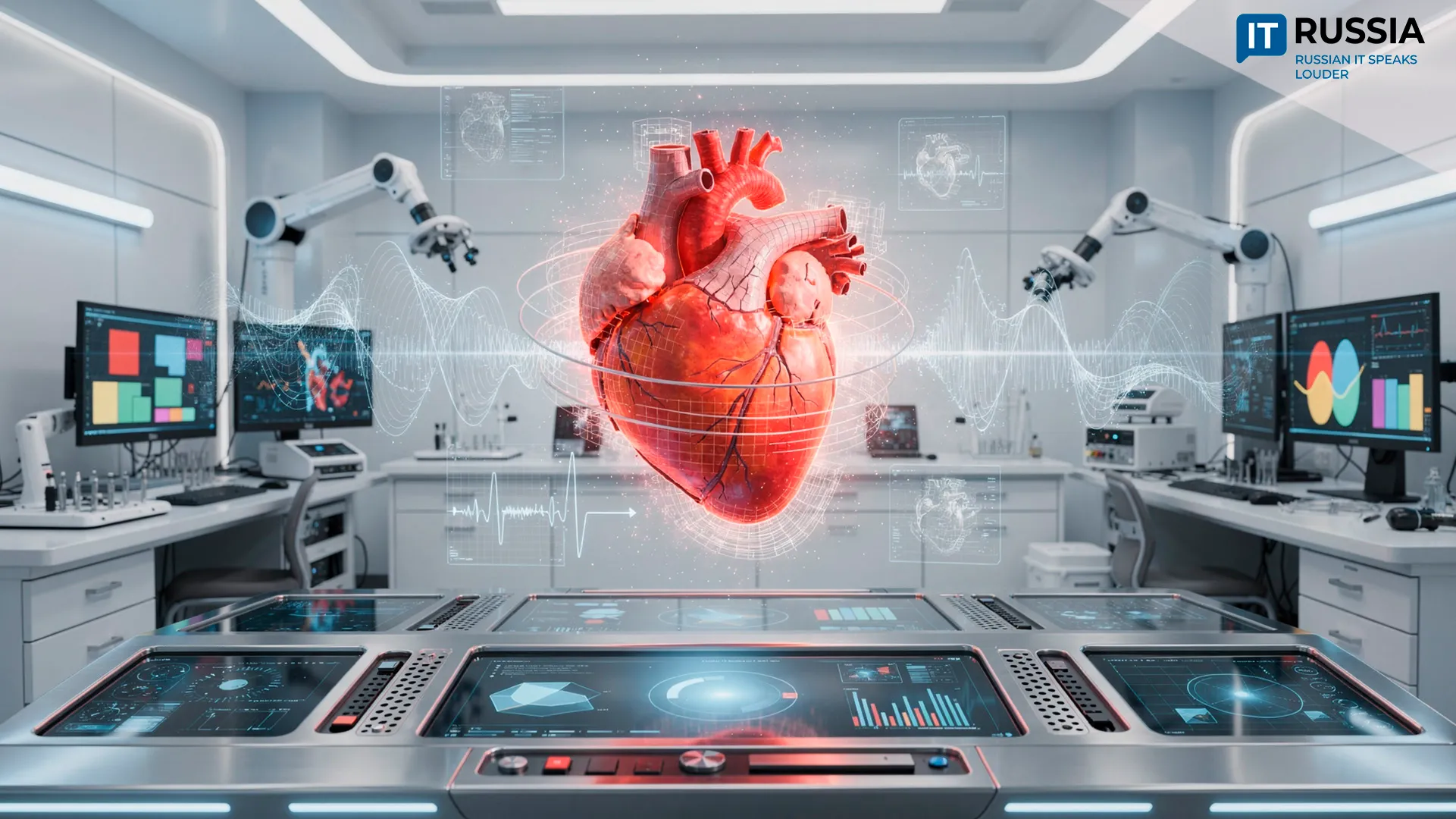
Researchers at Penza State University have developed an AI system for diagnosing cardiomyopathy using data from electrocardiography, echocardiography and chest fluorography. The neural network analyzes heart parameters within seconds and provides a preliminary diagnosis, helping physicians avoid missing a dangerous disease at an early stage.
Cardiomyopathy is one of the most insidious forms of heart disease. It can affect anyone – men, women and children of all ages, including athletes and people with no obvious health problems. Those at risk include people with a hereditary predisposition, patients with hypertension, diabetes and coronary artery disease, as well as people who abuse alcohol or have had viral myocarditis. In its early stages, the disease can be completely asymptomatic. A person may have no idea that anything is wrong, and when the first symptoms appear – shortness of breath, chest pain and a rapid heartbeat – they are often mistaken for signs of other conditions. Because the symptoms are so nonspecific, cardiomyopathy can be misdiagnosed as a pre-heart-attack condition.
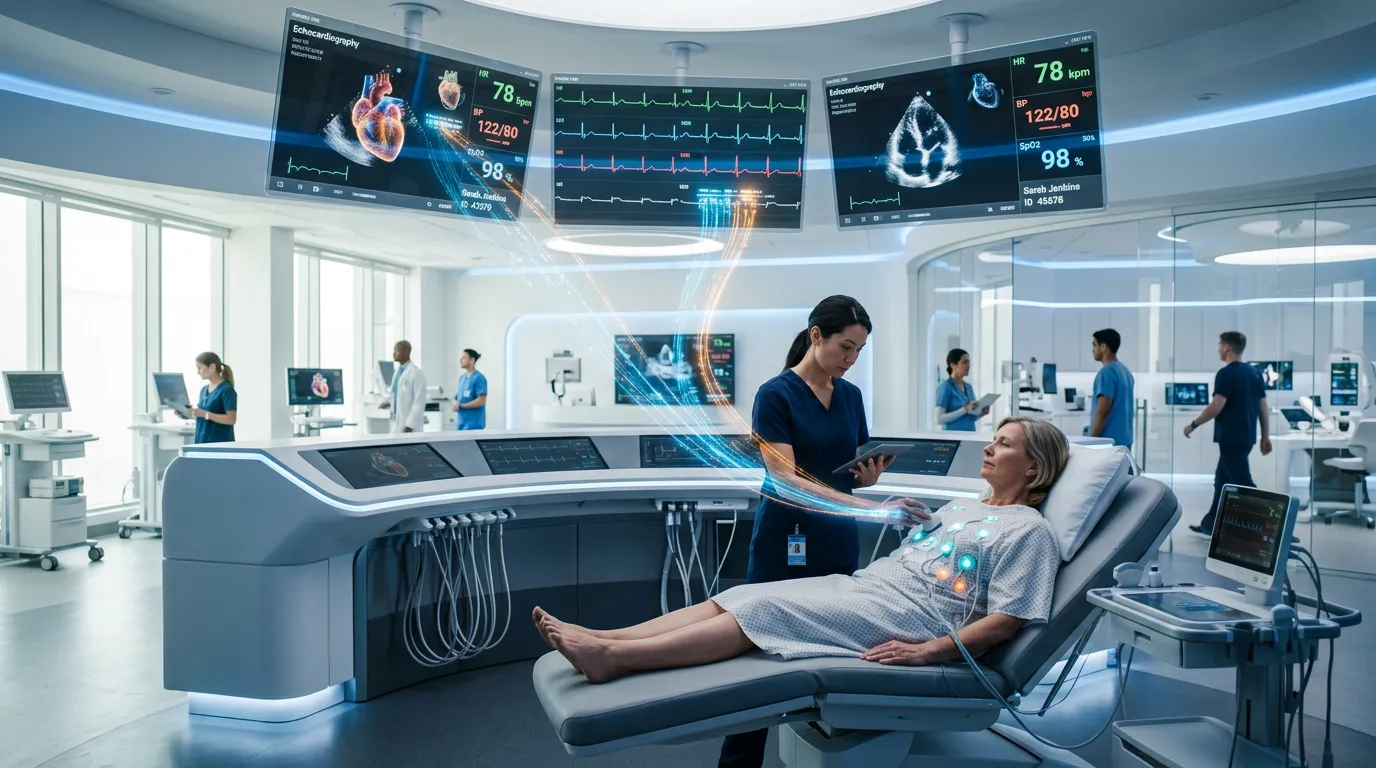
The Avtomatizirovannaya sistema neyrosetevogo analiza sostoyaniya serdtsa (Automated Neural Network System for Heart Condition Analysis) is designed to shorten the path from symptoms to diagnosis. The AI analyzes three types of examinations – ECG, echocardiography and fluorography – and produces a preliminary diagnosis within seconds. The physician receives a ready-made report identifying the most likely pathologies. The final decision always remains with the clinician, but the AI serves as an attentive assistant.
From Medicine to Mathematics
The software developed by the Penza researchers features an intuitive interface. Data from a patient’s electronic outpatient medical record are uploaded into the system. The physician enters the basic parameters: name, sex, height, weight and body mass index. The system calculates the rest automatically.
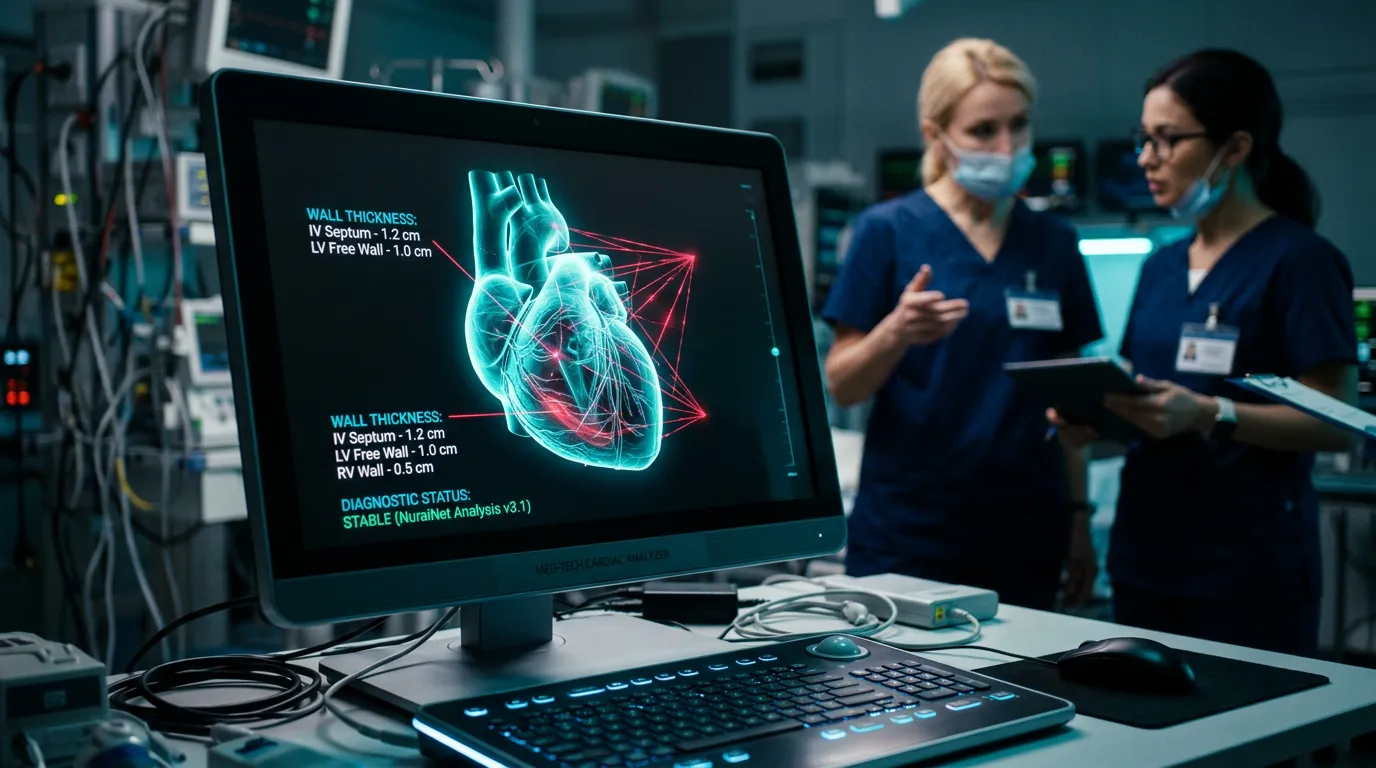
Like a magnifying glass, the neural network examines the thickness of the heart walls, the dimensions of its chambers and the characteristics of ECG waveforms. Its operation is based on equations derived for the first time by the Penza researchers. They translated established clinical criteria into mathematics, systematized known patterns and converted them into formulas. Those formulas then became the foundation for the neural network’s architecture.
As a result, with a single click, the software determines ECG wave and peak values, ventricular contractility, ejection fraction, electrical-axis deviation and other key parameters.
What Can the Algorithm Do?
The neural network can identify different forms of cardiomyopathy: hypertrophic, dilated and restrictive cardiomyopathy, as well as takotsubo syndrome – stress-induced cardiomyopathy, also known as “broken heart syndrome.”
For a cardiologist, the software is a practical clinical tool. It ranks possible diagnoses, compares parameters from different examinations and, within seconds, performs calculations that could otherwise take a physician hours. The doctor ultimately receives a structured report that can be used to make a decision about the patient’s condition.
Early diagnosis of cardiomyopathy offers a major opportunity to stop the disease from progressing before it leads to heart failure. Instead of spending years being treated for unexplained shortness of breath, a patient can be referred to the right specialist and receive appropriate therapy at an early stage.
Patent Application
The researchers have filed a patent application. They next plan to collaborate with cardiologists at Zakharyin Clinical Hospital No. 6 in Penza, where the system will be tested with patients in real-world clinical practice.
So far, the software has been tested on retrospective data – 75 cases drawn from open databases. The reported error rate was just 1%. The researchers say accuracy depends heavily on the quality of the source examinations, but the result is already promising. Yet Russian researchers believe the system could become a useful tool for cardiologists across the country, particularly in regional hospitals where subspecialists are in short supply.
Cardiology AI in Russia
This project is far from an isolated example of the successful convergence of science, medicine and artificial intelligence in Russia. Since 2022, digital electrocardiographs have been deployed in all adult outpatient clinics in Moscow, while the number of automatically interpreted ECGs has surpassed 12 million.
In 2024, Penza researchers unveiled a neural network for determining the type and stage of a heart attack, and in 2025, Sechenov University registered a portable AI-enabled electrocardiograph for remote ECG analysis.