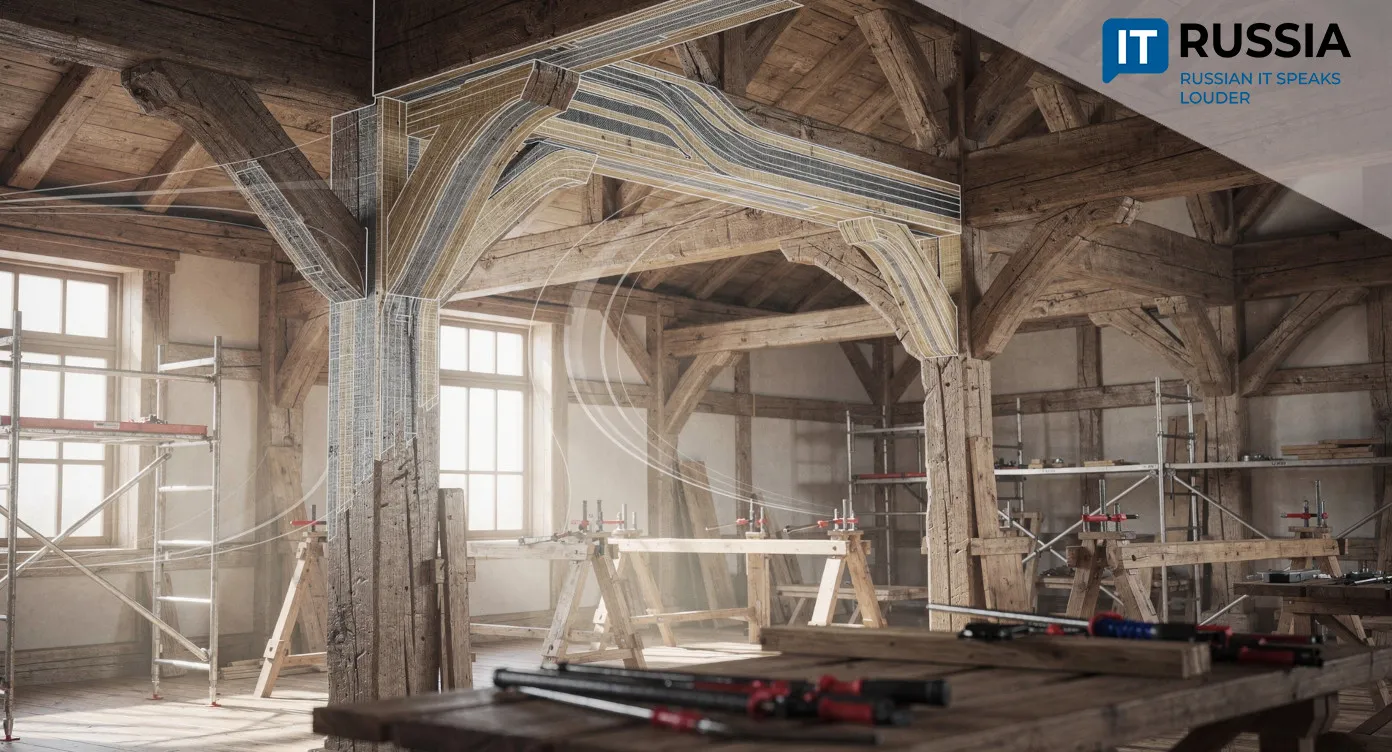
Digitizing the Foundations: How Russia’s Construction Sector Is Being Rebuilt
Individual housing construction is entering an era of digital transparency. Escrow accounts, mandatory digital reporting, and platforms for managing residential communities are no longer experimental tools – they are becoming the new normal.

Build First, Get Paid Later
The key driver of change has been the law introducing escrow accounts for individual housing construction, in force since March 2025. Under the new rules, a customer’s funds are frozen in a dedicated bank account, and contractors receive payment only after the house is completed and delivered.
“This approach brings transparency and financial security, which benefits both developers and clients,” says Dmitry Svetashov, CEO of Dom Yug.
Opening an escrow account is now mandatory when applying for subsidized mortgages for private homes. For citizens, this means clearer transactions, lower risks of unfinished construction or fraud, improved build quality, and stricter adherence to deadlines.
Digital Tools Catch Up
Large construction companies have been systematically using domestic IT solutions for years – from construction site monitoring systems and project documentation analysis to AI models that help calculate the profitability of commercial real estate at the residential planning stage.

Smaller and mid-sized developers are now following the same path. The requirement to obtain escrow accreditation has effectively forced the digitalization of the entire construction cycle – from contract execution to confirmation of completed work.
Russia’s Ministry of Construction expects 2026 to become a breakthrough year for the widespread adoption of machine-readable documentation and information modeling technologies in construction. The government is actively building digital platforms and standards to unify processes and simplify oversight, creating momentum for the domestic construction IT sector.


A Turnkey Ecosystem
Over the next two to three years, the market is likely to see rapid growth in specialized platforms for designing, building, and operating private homes. One example is Stroim.dom.rf, a digital super-service for private housing construction. The platform already hosts 10,173 registered construction companies and 40,269 ready-to-build projects, and allows users to select mortgage products from partner banks.

Another cornerstone initiative is expected to be a national library of standard design solutions – a structured data repository covering projects, materials, and technologies. Even first-time developers will be able to rely on it when planning construction.
At the same time, integration with government services such as Rosreestr is expanding. This will make it possible to automatically verify project compliance with regulations and speed up approval procedures.
From Law to Practice
Escrow accounts were first introduced in Russia’s multi-apartment residential construction sector in 2019, where they proved effective in addressing the long-standing problem of defrauded buyers. In 2024, the mechanism was extended by law to individual housing construction and formally took effect on March 1, 2025.
In 2026, construction companies focused on individual housing are expected to see higher workloads. “The conditions are already in place – throughout 2025, contractor interest in escrow mechanisms and the volume of financing attracted for projects grew significantly,” Anna Kornelyuk, Vice President and Head of Transaction Business at Dom.RF Bank, told RBC.

Digitalization of individual housing construction has become a structural necessity, driven both by regulation and by citizens’ demand for safety and convenience. Russia’s digital economy is no longer confined to major cities. It is steadily expanding into suburban and rural areas – and doing so on a solid digital foundation.