

Smart Pipes for Russia’s Nuclear City: Desnogorsk Modernizes Its District Heating Network
Desnogorsk, a satellite city of the Smolensk Nuclear Power Plant, has launched a large-scale modernization of its district heating network. One of the project’s key features is the use of pre-insulated pipes with an integrated remote monitoring system.

AtomTeploElektroSet, part of Rosatom’s electric power division, is modernizing Desnogorsk’s heating network. Work has already begun in the city’s first and third residential districts. The 15-year program calls for replacing more than 30 kilometers of heating mains – nearly one-third of the city’s entire district heating infrastructure. The upgrades are long overdue, with some sections of pipe more than half a century old.
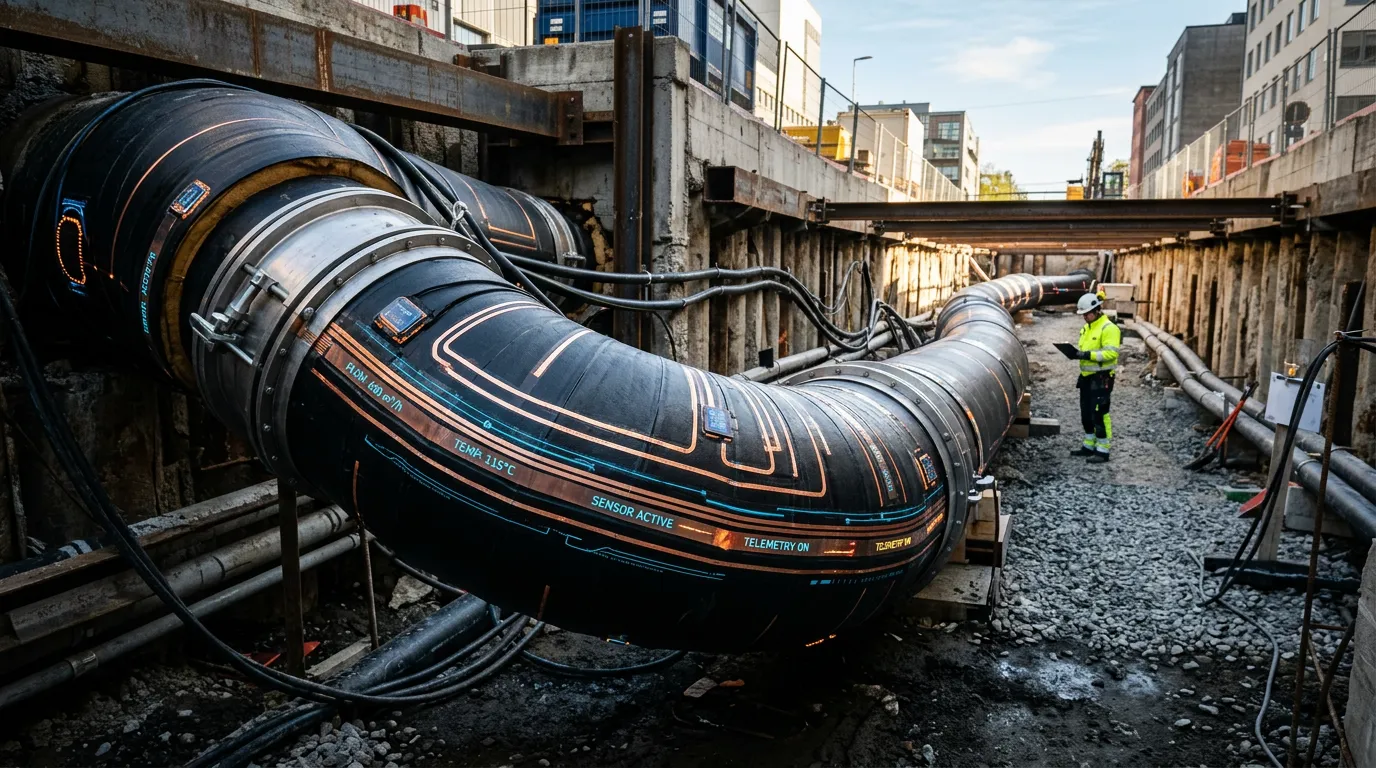
One of the project’s main technological features is the use of modern pre-insulated pipes equipped with a remote leak-monitoring system. Unlike older methods, in which a steel pipe is covered with conventional insulation, often directly at the installation site, a pre-insulated pipe is manufactured under factory conditions with both thermal insulation and a waterproof outer jacket built into its structure. In Desnogorsk, leak-detection sensors are integrated directly into this three-layer assembly.
The system detects changes in the electrical resistance of the signal conductor’s insulation when moisture enters. The sensors are connected into a single network with built-in diagnostic tools, allowing operators to monitor pipeline insulation in real time. If a leak is detected, the dispatcher receives an alert, can pinpoint the location of the damage and send an emergency repair crew directly to the site.
Modernizing Desnogorsk’s network this way will make heating more reliable for homes and public facilities while minimizing damage when heating mains fail.
Toward Digital District Heating
Over time, Desnogorsk’s modernized heating system is expected to bring sensors, dispatch operations and analytics together within a single digital management environment. Rosatom already has experience with this approach: in July 2026, its subsidiary Rosatom Infrastructure Solutions began deploying the Tsifrovoe teplosnabzhenie (Digital District Heating) automated information system in Oryol. The system will monitor more than 317 kilometers of heating networks and 60 central heating substations. Moving from localized pipeline diagnostics to centralized digital management of a city’s district heating infrastructure would be a logical next stage of the modernization.
Desnogorsk’s experience could be replicated in other Russian cities, particularly municipalities with heavily deteriorated utility infrastructure. Although replacing networks this way requires higher upfront spending, those costs can pay off over time through fewer failures and lower losses.

From Early Pilots to Systemwide Solutions
The Desnogorsk project is part of Rosatom’s strategy for communities where the corporation operates. In 2022, Rosatom Infrastructure Solutions began deploying the Tsifrovoe teplosnabzhenie hardware-software platform in Voronezh and Glazov. In 2023, it was rolled out in Lipetsk, Kurchatov and Obninsk.
Tsifrovoe teplosnabzhenie makes it possible to build a unified database of heat-consuming facilities, create digital records for heating units in apartment buildings and public facilities, and automate adjustments to district heating operating parameters.

The Future of Utilities Is Digital
Desnogorsk’s district heating modernization illustrates the direction in which Russia’s housing and utility sector is moving. Utility providers are rapidly adopting digital technologies to remotely monitor and manage their infrastructure.
Over the next several years, automated dispatch systems are expected to be introduced gradually across district heating networks in Russian cities, working alongside digital network models and neural-network algorithms for predictive analytics. In effect, Rosatom and other large companies are already laying the groundwork for their widespread adoption. For residents, that should mean more reliable heating; for heat producers and network operators, lower costs. For Russia, deploying domestically developed software and hardware in critical infrastructure also means further strengthening its technological sovereignty.