

Energy-Efficient Test Bench for Traction Motors Developed in Russia
Russian traction motor manufacturers now have a reliable tool for quality control.
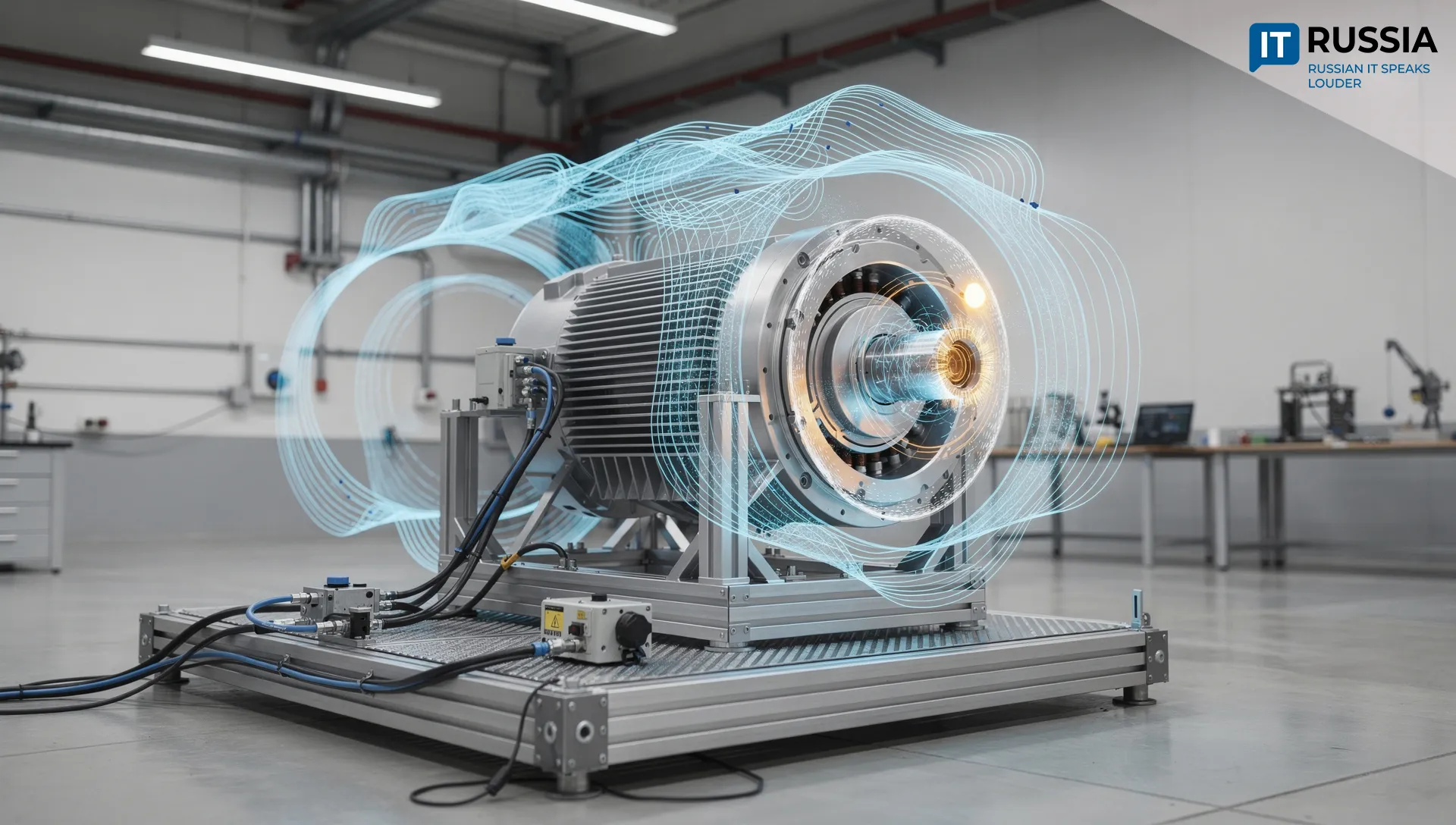
Russkoe elektrotekhnicheskoe obshchestvo (Russian Electrotechnical Society, REO) has completed production of an automated test bench for acceptance testing of traction induction motors. The company specializes in advanced technologies for generating, converting, distributing and storing electrical energy for shipbuilding, automotive manufacturing, power generation, oil and gas, and other industries. The new technology significantly reduces substation capacity requirements and electricity costs when testing motors, giving the industry an accessible, cost-efficient tool to accelerate the production and repair of traction equipment.
Energy That Doesn't Go to Waste
At the heart of the system is equipment developed in-house by REO: a 600 kVA active rectifier based on the bidirectional Bereza (Birch) converter and a 1,370 kVA reversible three-level Podsolnukh (Sunflower) inverter.
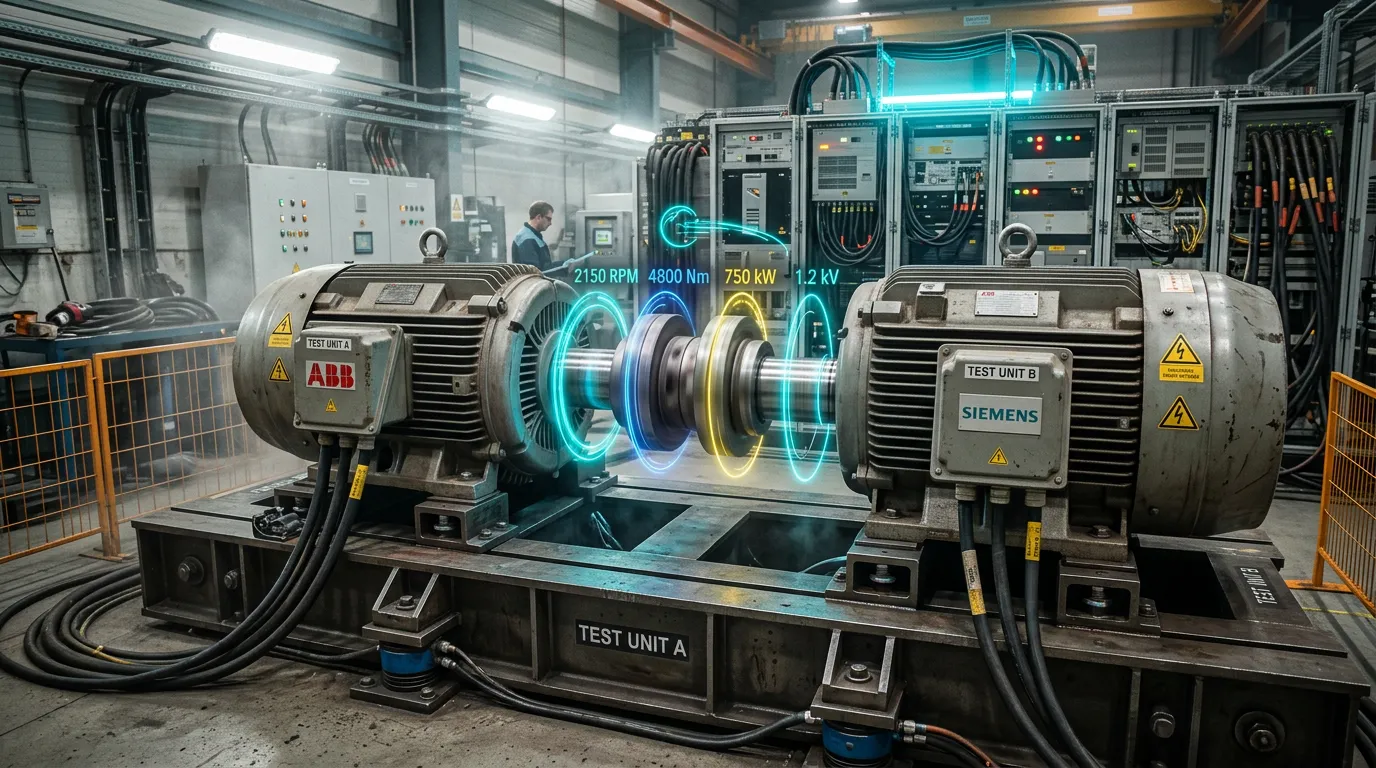
The test bench's key feature is a back-to-back loading method. The test motor and load machine are connected mechanically and electrically: one operates as a motor while the other works as a generator, recirculating the generated energy within the closed loop. As a result, the external power grid only has to make up for losses in the testing process. This approach substantially improves energy efficiency, reduces substation capacity requirements and enables precise control of supply frequency and voltage.
REO's Power Platform: Versatility and High Capacity
The active rectifier is based on REO's 600 kVA bidirectional Bereza converter using IGBT transistors. Beyond test benches, the platform is used in metallurgy, charging stations and energy-storage systems, where it serves as the main power module in industrial uninterruptible power supplies that protect servers and critical equipment from disruptions.
The second component is the 1,370 kVA reversible three-level Podsolnukh inverter. Originally developed for solar power plants, it converts 1,200-1,500 V DC into 550-600 V AC. The inverter uses an MPPT (Maximum Power Point Tracking) algorithm to extract peak power and implements model predictive control in real time, analyzing solar irradiance and photovoltaic module temperature. Its software architecture includes Q(U) functionality to automatically compensate for reactive power during voltage fluctuations and P(f) functionality to regulate active power and stabilize grid frequency. The inverter integrates with dispatch control systems and responds to commands faster than conventional generators.
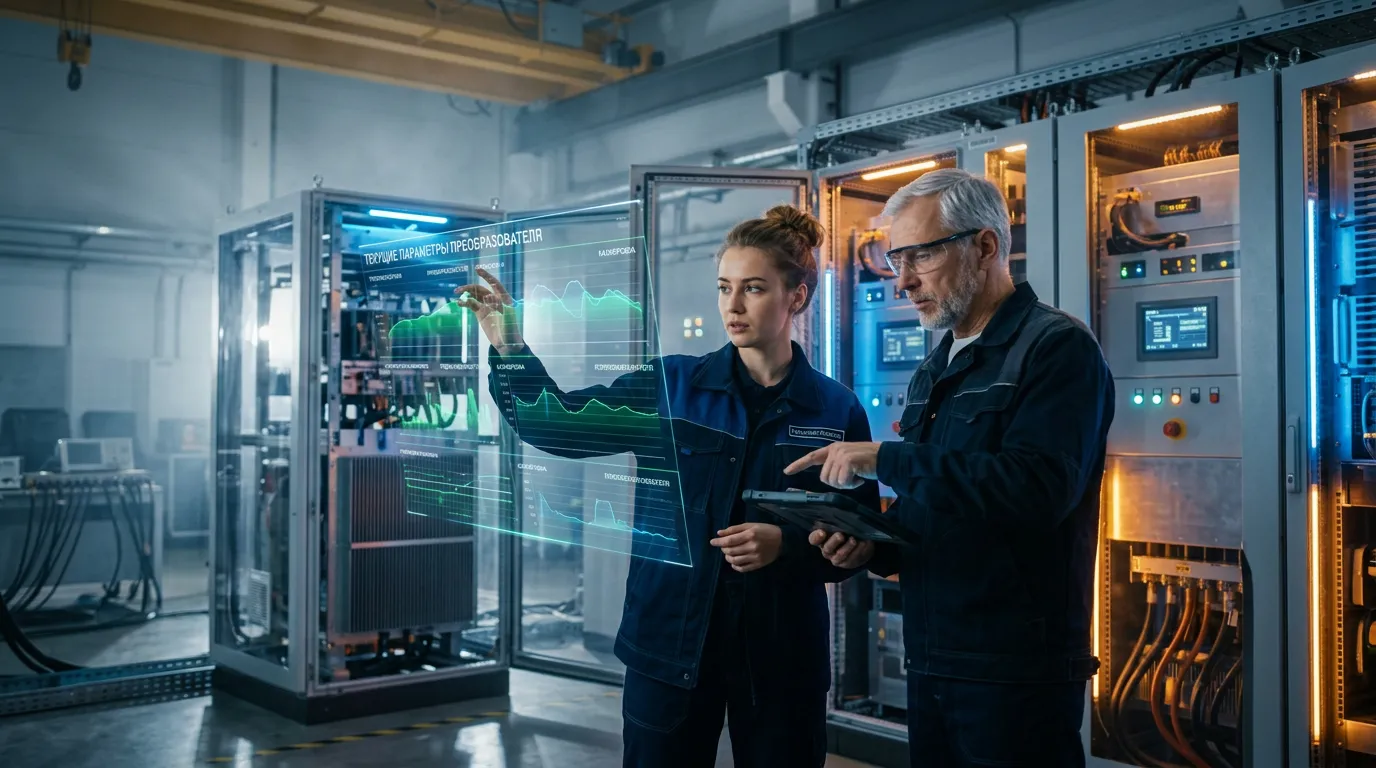
The same digital principles are built into the test bench itself: the system automatically records test results, generates digital test reports, maintains a history for each motor and supports remote diagnostics.
Infrastructure for a New Generation of Traction Motors
Global industry practice, including specialized validation centers operated by companies such as Siemens Mobility, demonstrates that advanced testing infrastructure is essential to producing modern rolling stock. In Russia, developing domestic testing equipment directly addresses the needs of the country's growing traction-equipment manufacturing market.
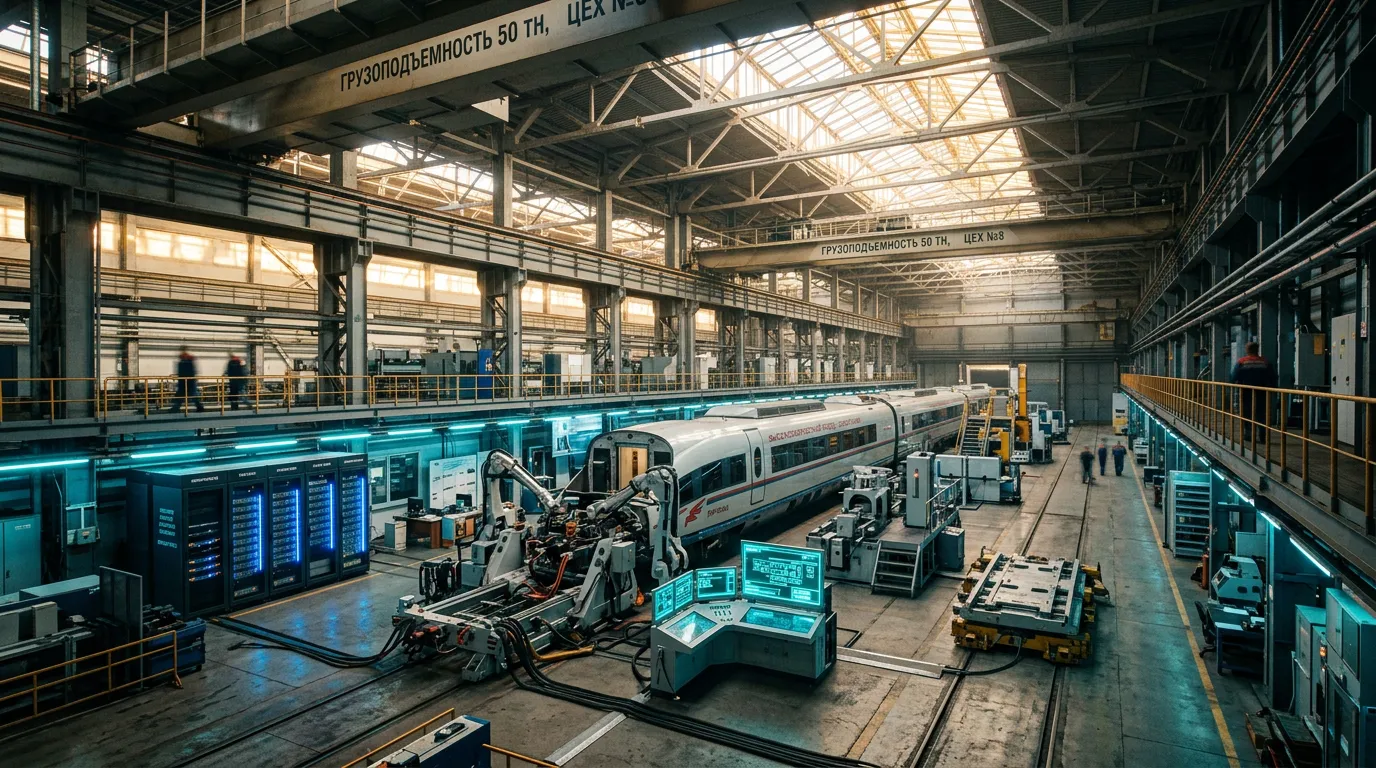
In recent years, Russian manufacturers have been rapidly expanding production of new motor types. TMH-Elektrotekh, part of Transmashholding, for example, has launched serial production of the DTA-380U1 induction motor for Ivolga 3.0 electric trains, tested the DTA-125 for the EMKA2 hybrid electric locomotive and the DTA-170 for the Moscow Metro. In 2026, the company submitted its new DTA-460T motor for certification for the future 3TE30 diesel locomotive.
Meanwhile, one of Russia's key traction electrical-equipment manufacturers, Russian Electric Motors (RED), is bringing the ATD-1000 induction motors for 2ES6A and Malakhit electric locomotives, as well as TAD-430 and TAD-650 motors, into production. The company, which is part of Transneft's asset portfolio, is also successfully adapting its experience in developing high-power electric drives for oil pipelines to the needs of railway engineering.
Closing the Technology Loop
REO's development not only completes a critical part of the industry's technology chain but also has export potential. Strong demand is expected in the countries of the Eurasian Economic Union and the Commonwealth of Independent States, where harmonized standards are in place and railways share a common track gauge, as well as in BRICS and Global South countries that are actively diversifying their sources of high-tech equipment.
REO engineers are currently carrying out a full range of commissioning work to prepare the test bench for full-scale operation. Its practical effectiveness will be demonstrated by real-world traction motor tests, measured energy savings and the arrival of its first customers.