

Yandex Expands Its Robotaxi Routes
Yandex’s robotaxi completed a continuous route through Moscow’s Ochakovo-Matveyevskoye, Khamovniki, Yasenevo and Maryino districts, demonstrating how artificial intelligence is learning to handle a wide range of situations in real-world urban environments.
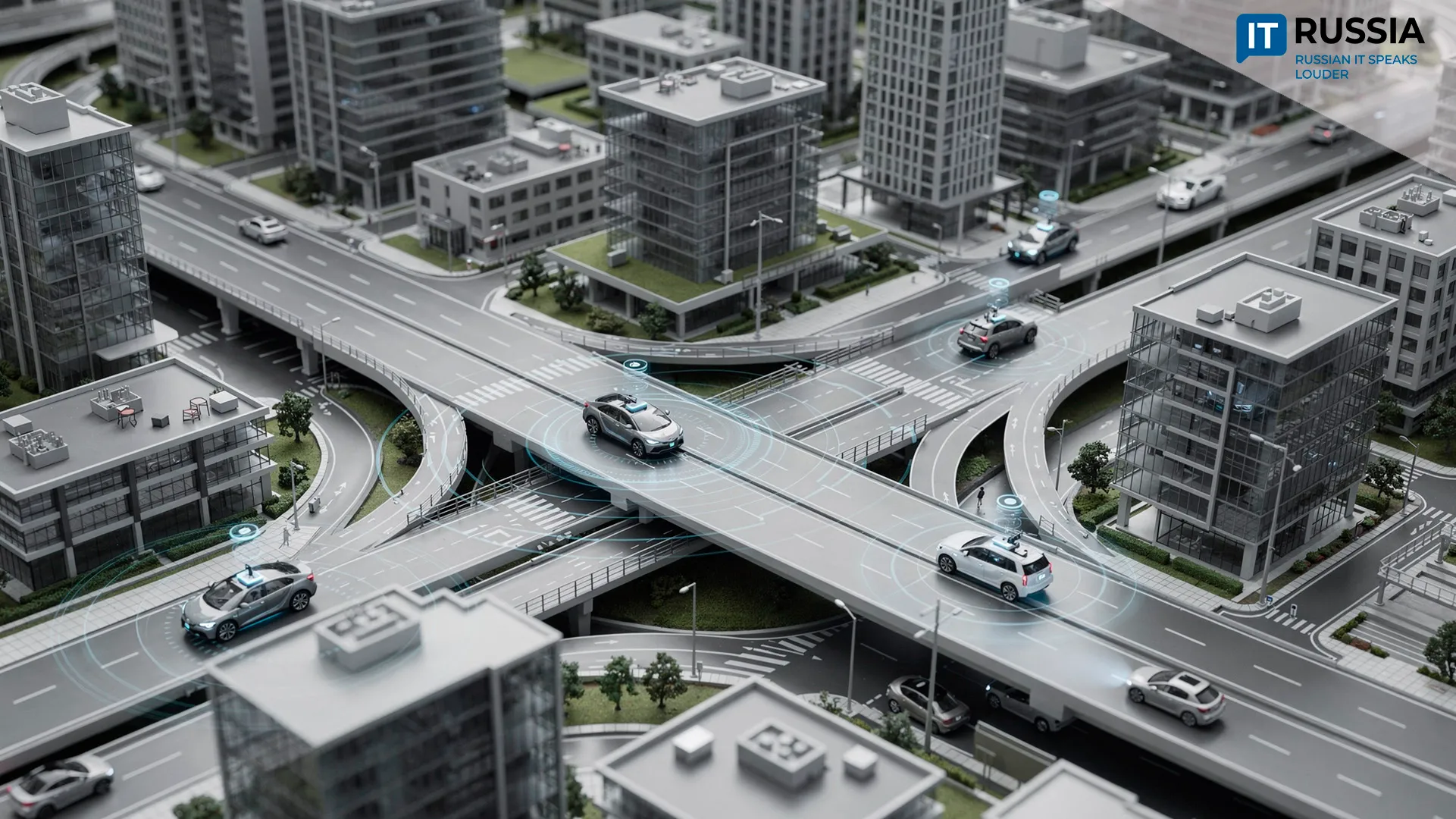
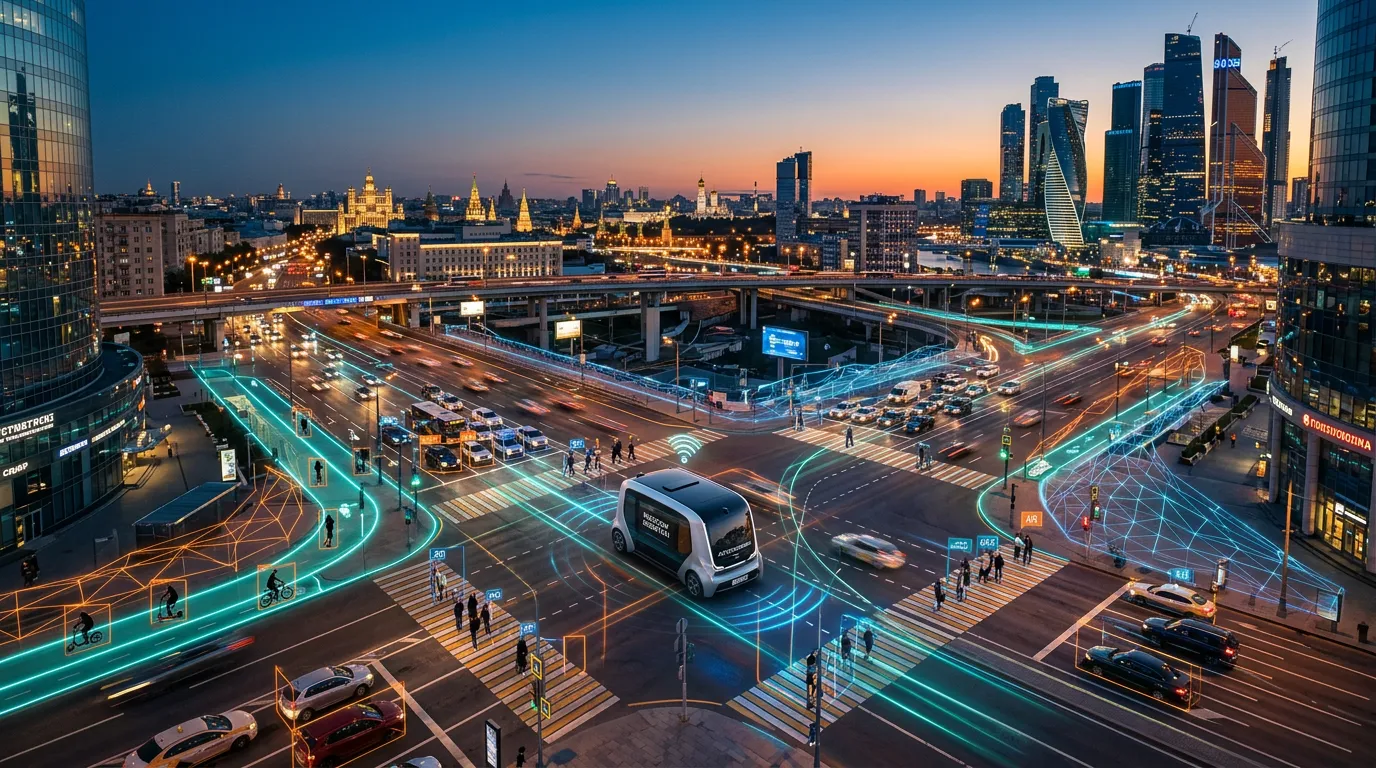
The company tested the autonomous vehicle’s ability to navigate confidently through fundamentally different traffic conditions. Along the route, the driverless taxi practiced navigating narrow streets and uncontrolled intersections and tested its capabilities on complex interchanges, high-speed thoroughfares and stretches with heavy pedestrian, bicycle and scooter traffic. That range of environments presents a serious challenge for an autonomous driving system.
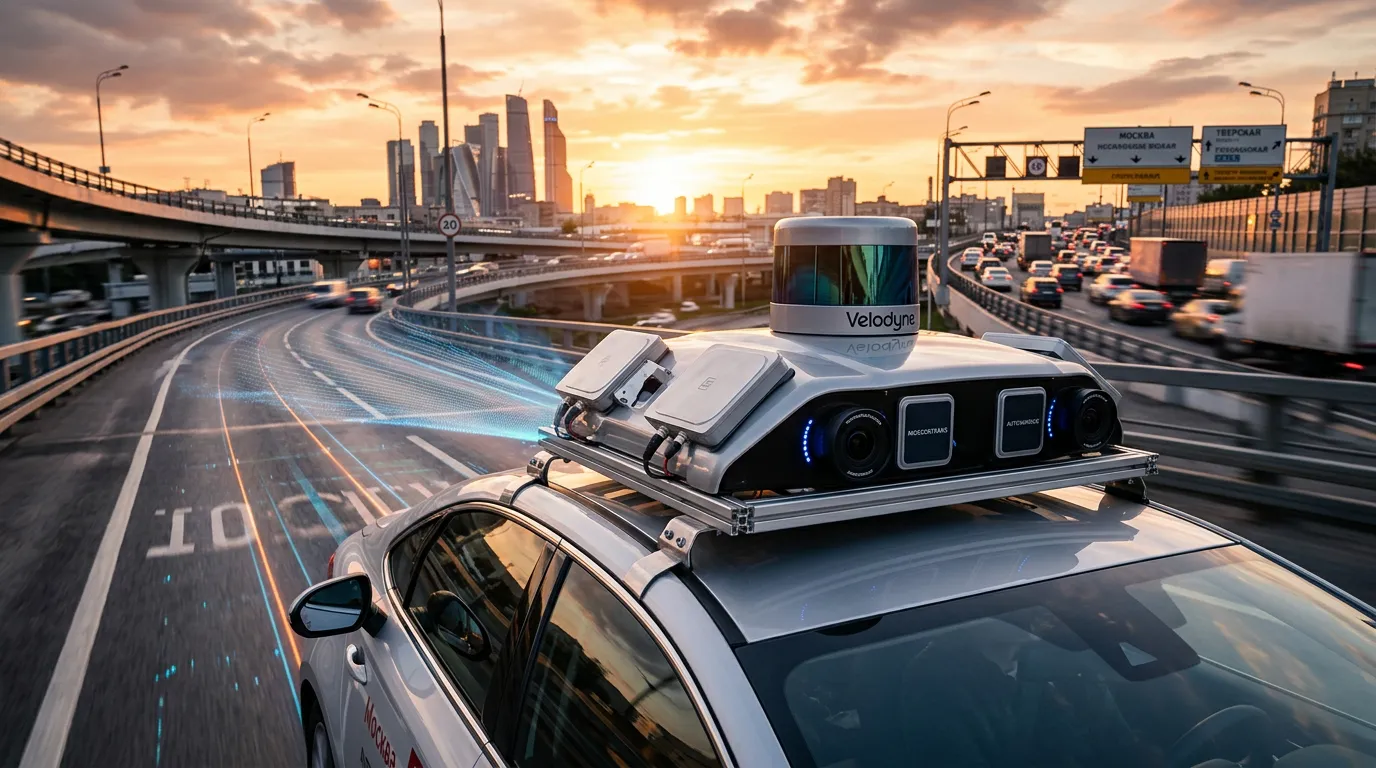
The robotaxi’s technology combines AI perception and planning models, high-definition maps, an array of sensors and radars, and a traffic-scenario simulator. On major roads, the system analyzes conditions up to 325 meters (about 1,066 feet) ahead, while training puts particular emphasis on rare and difficult situations, including roadwork, unexpected pedestrian behavior and unusual traffic configurations. The overall model is trained on data from millions of kilometers of real-world driving.
Yandex is moving beyond operating on limited routes to testing its robotaxi across a more diverse range of urban environments in Russia’s largest metropolis. For the Russian tech industry, the project provides a real-world proving ground for advances in computer vision, AI, sensor systems, digital mapping and autonomous transportation. The benefit for residents remains indirect for now: professionals are still inside the vehicles during testing, and large-scale operations have yet to begin, but successful trials will bring the prospect of using driverless taxis for everyday city travel closer.
Plans and Barriers
Yandex’s near-term goal is to put 100 robotaxis on the road by the end of 2026 and expand beta-testing zones through Yandex Go. The company previously launched a robotaxi service for employees traveling between its Krasnaya Roza (Red Rose) and Moscow City offices – a phase that was viewed as preparation for serving regular passengers.
Regulation remains a major constraint. Operations currently take place under experimental legal regimes. Russia’s Ministry of Transport is preparing federal regulations for highly automated vehicles that are expected to establish uniform rules for allowing driverless vehicles on public roads, along with requirements for operators, oversight systems and the allocation of liability. Without those rules, the pace of expansion will depend not only on the technology’s maturity but also on demonstrating the system’s reliability across a large number of real-world trips.

A Timeline of Robotaxis in Russia
Yandex’s pilot projects began in 2022, when an experimental legal regime was introduced to test highly automated vehicles. By March 2025, the experiment had been extended for another three years; by then, robotaxis had completed more than 100,000 trips, while autonomous-mode mileage had exceeded 8 million kilometers (about 5 million miles).
In June 2023, the robotaxi became available to users in Yasenevo. The service operated between a limited set of pickup and drop-off points, with a test driver inside the vehicle. About 50 trips were completed in just the first day and a half. That fall, the company began testing in the Sirius federal territory and continued developing the service in Innopolis.
During 2024 and 2025, Yandex actively collected data and prepared to scale the technology: its autonomous vehicles traveled about 25 million kilometers (15.5 million miles), more than 16 million kilometers (9.9 million miles) of them in Moscow. The latest drive through four Moscow districts marks the next stage – adapting a single system to fundamentally different types of urban environments. It shows the technology moving beyond localized routes and learning to operate across the conditions of a major metropolis.
The City as a Proving Ground, AI as the Driver
Yandex’s robotaxi is moving from localized demonstration routes toward preparations for large-scale urban operations. The most important technological result is the ability of a single AI system to adapt to different urban environments and use data from every new trip to improve the entire vehicle fleet.
The next major milestone will be making robotaxis available to regular Yandex Go users in several Moscow districts and expanding the fleet. The pace of that expansion will be shaped not only by the maturity of the AI and sensor platform, but also by changes in legislation, safety requirements and the accumulation of reliability data.