AI Helps Homebuyers Avoid Costly Mistakes
Choosing a dream apartment in a good neighborhood at a reasonable price is getting easier, as Yandex Realty has introduced Russia’s first AI assistant for searching and comparing housing.

It is notable that the system understands natural-language queries and evaluates all real estate segments at once – primary and secondary markets, as well as short-term and long-term rentals. The virtual assistant, Realty AI, is an in-house development equipped with both a chat interface and an interactive map.
According to the developer, the service covers not only Moscow but also other cities and regions across Russia. The AI can help users find residential properties, commercial spaces and even parking spots. It suggests options tailored to specific life scenarios, taking into account a buyer’s or renter’s full set of requirements.
Understands You Instantly
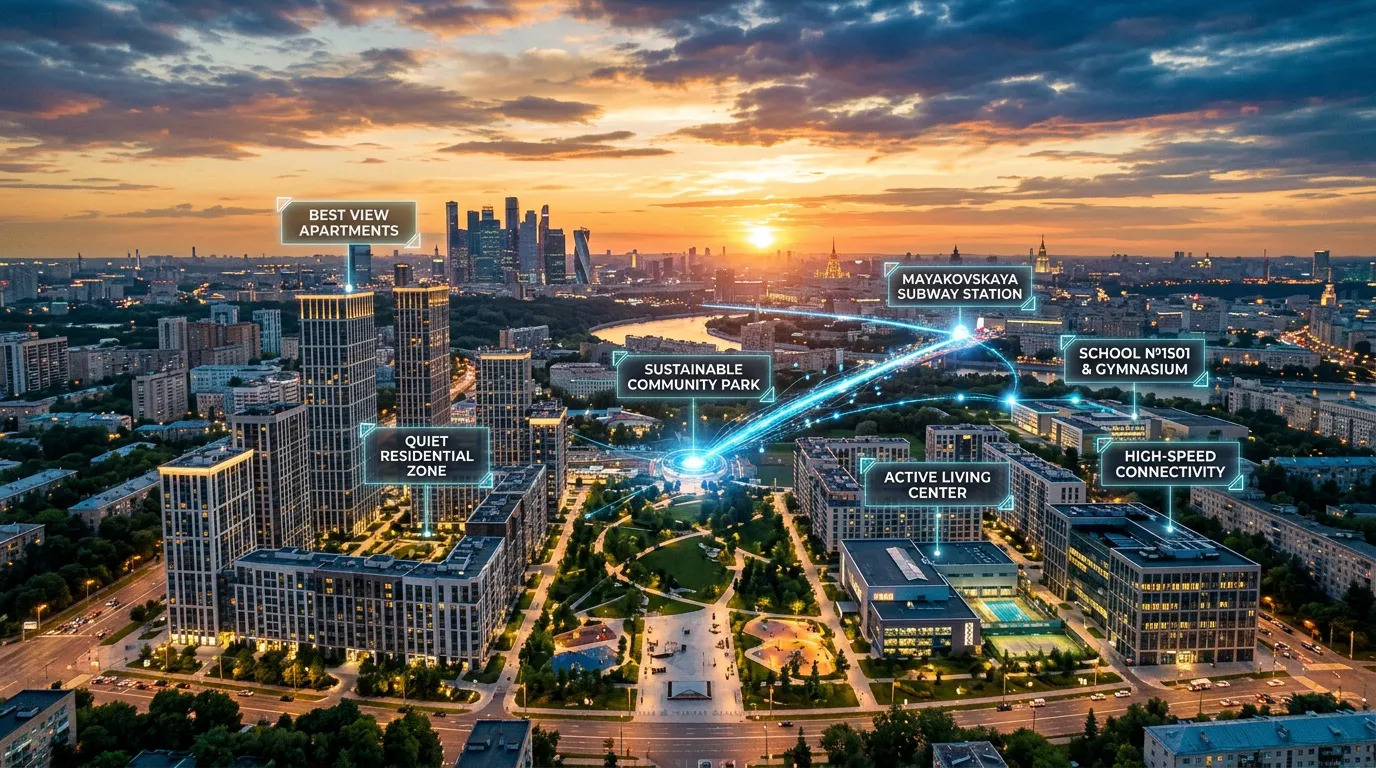
The assistant can process user requests submitted either in text or by voice. A user can simply say they want a larger apartment, with a nearby kindergarten and the ability to use maternity capital, and the system will generate a curated list of options and display them on a city map. Listings can be opened directly from the chat or via map markers. Comparative tables help users evaluate which option is best. Realty AI provides curated selections with analysis, highlights advantages and drawbacks, describes each option and delivers key conclusions. The assistant also accounts for regional nuances, recognizing not only official place names but also colloquial ones. For example, if a user asks for a one-bedroom apartment on the outskirts of the “purple line,” the system identifies the request as coming from Moscow and maps it to the Tagansko-Krasnopresnenskaya metro line.
In addition, the service analyzes and compares data by offering summary statistics for each selection. It shows which districts have more listings matching the criteria, the average price, construction periods and travel time to the nearest metro station. During the search, users can refine results with follow-up prompts such as “near parks” or “close to kindergartens and hospitals.”

AI as a Core Service Layer
The new Yandex Realty feature is not just a cosmetic update or a minor expansion of functionality – it effectively turns a listings platform into a digital advisor. The algorithms take on part of the analytical workload, delivering a distilled view of the available data.
With the assistant, all of Yandex’s comparison tools and AI/ML services for evaluating properties are integrated into a single user journey – from formulating a query to comparing options.
AI is becoming embedded in consumer services across Russia and is reshaping user experiences, especially in one of the most expensive spending categories – real estate. Users can search faster, review options more efficiently and make better-informed decisions. For the country’s IT sector, this represents a meaningful step forward, demonstrating how domestic AI solutions are being integrated into large-scale consumer services and delivering tangible value to users.

More Personalized Recommendations
The virtual assistant enables a more intuitive housing search without the need to manually combine dozens of filters. This saves time and provides a more complete view of the real estate market.
Looking ahead, these capabilities are expected to intensify competition among digital real estate platforms and accelerate the development of Russian AI assistants. The rollout aligns with a global trend, as the real estate market shifts from traditional filters toward conversational search, personalized recommendations and AI-driven analysis. Over time, the service could expand into full AI-assisted transaction support within Russia.
At present, Realty AI is tailored specifically to the Russian market, including its lending practices and regional geography. However, the underlying technology – combining conversational search, geocontext, comparative analysis and AI-driven insights – has export potential and could be applied across industries, from marketplaces to automotive and travel platforms.