

Plan for When Things Go Off Plan
AMT-GROUP, a Russian systems integrator and developer of IT solutions, has deployed local emergency warning systems at two hazardous production facilities of a major oil-producing enterprise.

A local emergency warning system (LEWS) is designed to automate alerts, coordinate response actions, and mitigate risks during industrial accidents and natural disasters. It delivers signals and emergency information to management, personnel, emergency response teams, municipal dispatch services, third-party organizations located within the system’s coverage area, and individuals present on site.
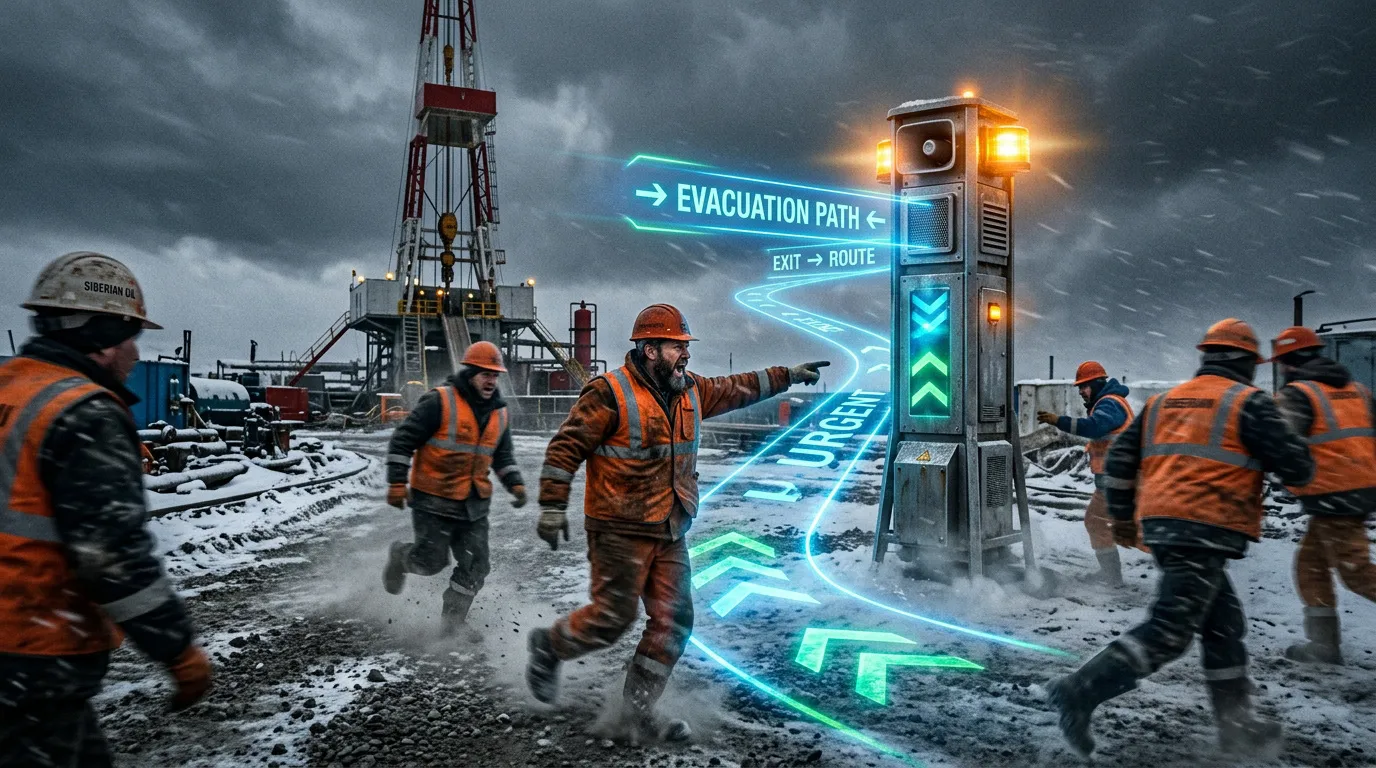
Unlike a traditional siren triggered by a single button, the digital industrial safety system combines a software and hardware platform, control subsystems, signal transmission channels, and integration with municipal public warning systems. The control subsystem is built on the P-166M solution developed by Azimut JSC. The system is integrated with municipal automated centralized warning systems across several territories in the region. Developers have also adapted it for use in noisy industrial environments, where explosion-proof visual and audible alert devices are deployed.
Core Architecture
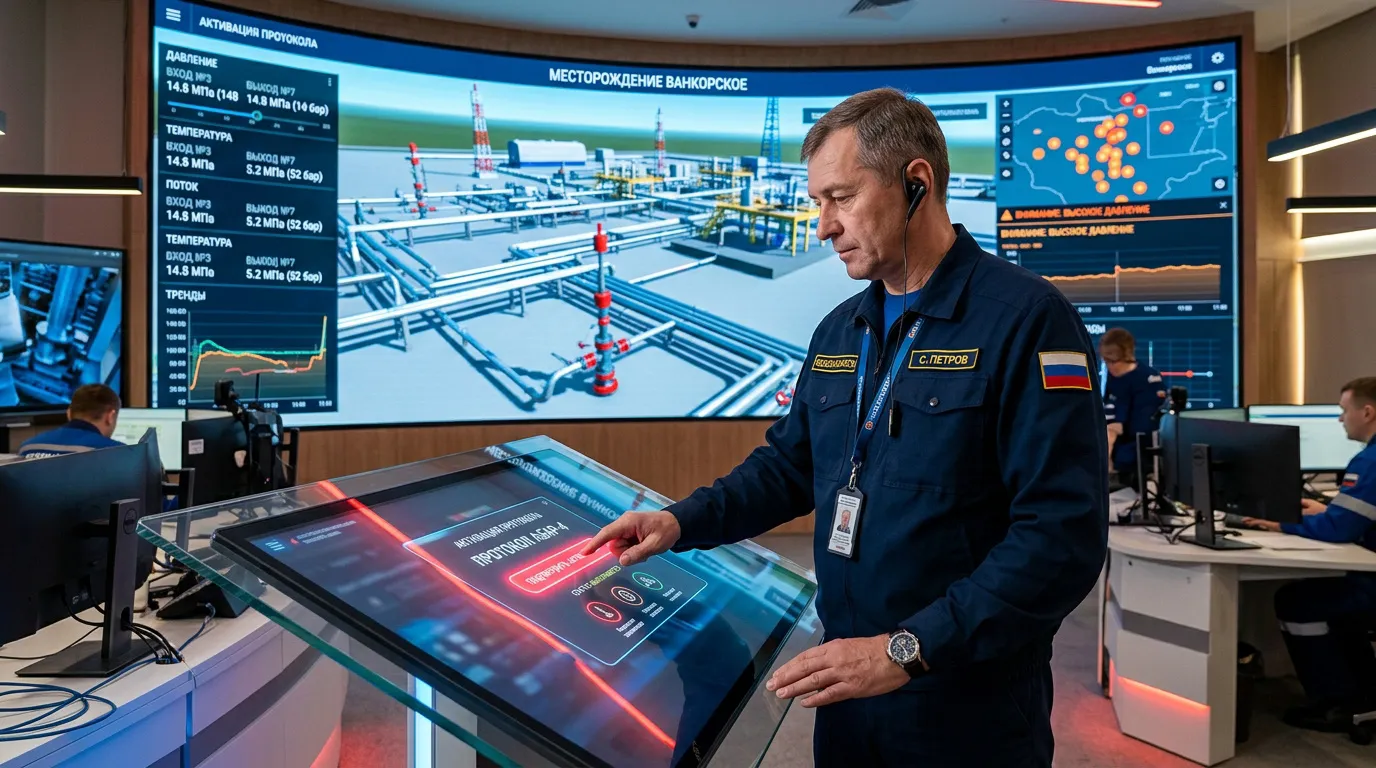
The LEWS consists of several infrastructure and application subsystems. The control subsystem, based on the P-166M solution, is developed by Azimut JSC. Importantly, the LEWS does not operate in isolation – it is integrated into the unified dispatch framework of municipal public alert systems. At the same time, the facilities covered by the LEWS are geographically dispersed.
In the near term, the system will operate in fully automated mode. At the customer’s request, the baseline configuration can be expanded with backup components and integrated with corporate communication systems. The system supports virtually unlimited scalability. Developers emphasize that the effectiveness of LEWS operation depends directly on the quality of design and deployment. Accordingly, projects are implemented in compliance with профиль standards and regulatory requirements.

Mandatory Deployment
The legal basis for implementing the system is defined by federal safety and civil defense regulations, a resolution of the Russian government, and directives from the Ministry of Emergency Situations and the Ministry of Digital Development.
Deployment spans multiple domains, including industrial software, telecommunications infrastructure, integration with state and municipal alerting systems, and specialized equipment for hazardous facilities. Against the backdrop of accelerating digitalization in the oil and gas sector and critical infrastructure, such projects are becoming a sustainable niche for domestic integrators and manufacturers.
Market prospects are driven by three key factors. First, more than 195,000 hazardous industrial facilities fall under the supervision of Rostekhnadzor, while accident rates and regulatory violations remain a persistent challenge. Second, the oil and gas sector and broader industry are accelerating the digitalization of production processes. Third, the regulatory environment is tightening, effectively driving companies to invest in alerting, monitoring, and resilience systems.
Precursors to LEWS
In 2024, Roselektronika delivered more than 10,000 digital emergency alert systems for centralized systems in Moscow, the Moscow region, and St. Petersburg. This indicates that the market for digital alerting systems in Russia has moved beyond isolated pilot projects. In the case of AMT-GROUP, solutions are tailored specifically for hazardous industrial sites.
Another relevant example is Messoyakhaneftegaz, which in 2024 digitalized downhole operations to enable remote monitoring. When deviations were detected, risk signals were immediately transmitted to a dispatch center, allowing specialists to remotely halt operations. The AMT-GROUP project further strengthens the digital safety perimeter.
In late 2024, Rostec State Corporation also reported supplying the Ministry of Emergency Situations with mobile communication units and public information systems, including for remote areas. This reflects a broader trend of increasing investment by both the state and industry in digital emergency communication channels.