

Digitalizing District Heating: IoT Sensors Are Reshaping Utilities in the Moscow Region
Housing and utilities are undergoing a quiet technological shift, with Internet of Things solutions emerging as a key driver. A prominent example is a large-scale project by MTS and the regional Agency for the Development of Utility Infrastructure (ARKI) to monitor district heating networks across the Moscow Region, which delivered tangible results in 2025.

Growth in Connections and Measurable Impact
Statistics for 2025 show surging interest in the technology. The number of heat and power utilities in the Moscow Region connected to MTS smart sensors rose by 23%, while the total number of deployed sensors increased by 70%. The system, now operating in 42 cities across the region, including Odintsovo and Serpukhov, tracks temperature and pressure in main pipelines in real time and transmits data to the regional ZhKKh-Kontur (Housing and Utilities Circuit) system.
The most measurable outcome has been a sharp reduction in emergency response times. Thanks to accurate telemetry and automated alerts, the time required for emergency crews to reach a failure site fell threefold, from 1.5 hours to 35 minutes. Average repair times also dropped by roughly one third, from six hours to four. This directly improves the reliability of heat supply for millions of residents during the cold season.
Development Pathways: From Data Analysis to Smart Networks
Future development of the project centers on deeper analytics and tighter integration. In the near term, coverage is expected to expand further, alongside enhancements to data analysis capabilities. Over the medium term, integration with predictive analytics systems and artificial intelligence is the logical next step, allowing operators not only to detect incidents but also to forecast failures and better balance loads across heating networks.
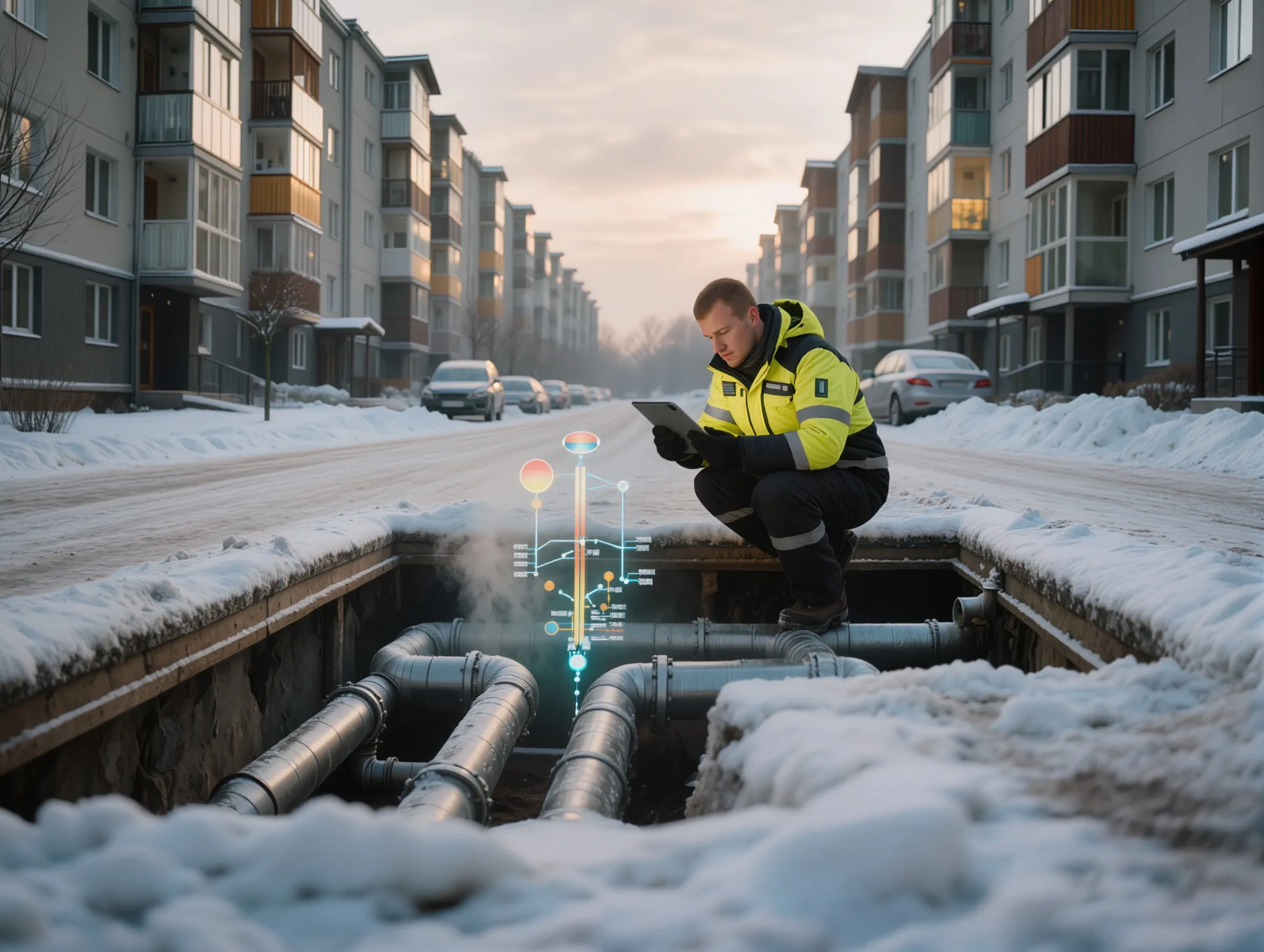
The very concept of building “smart” utility networks is part of the global Smart Grid trend in infrastructure digitalization. Successful implementation in the Moscow Region creates a reference model that can be replicated in other Russian regions.


Toward End-to-End Digitalization
The current results represent a natural stage in the multi-year evolution of IoT adoption in Russian utilities. As early as 2022, MTS reported a doubling of its sensor base in Moscow and the surrounding region, driven both by government-led regulatory initiatives for digital resource metering and by growing demand from industry and the energy sector.
Earlier pilot projects demonstrated the viability of the approach. One example is the network automation system deployed by Yantaryenergo in Kaliningrad in 2014, where the time required to eliminate outages fell from six hours to 49 minutes. Against this backdrop, the current program is not a one-off experiment but part of a consistent policy to roll out end-to-end digitalization in a sector that is critical to urban comfort and public welfare.

The Shift Toward Predictive Maintenance
The project has clearly moved from a pilot phase into a stage of sustained growth, delivering measurable operational and financial benefits. Key drivers of further adoption include savings on emergency repairs, higher service quality for residents, and continued regulatory support.
At the same time, several barriers remain. These include the need for deep integration with existing, often outdated, utility systems, dependence on the reliability of communications networks, and the requirement for substantial upfront investment. Even so, over the long term, IoT-based solutions have strong potential to become the standard for municipal infrastructure in Russian cities, evolving from basic monitoring toward predictive maintenance and comprehensive demand management.