Russian Scientists Develop Smart Algorithm for Mineral Exploration
The tool helps mining companies cut costs by improving the accuracy of geological forecasts.
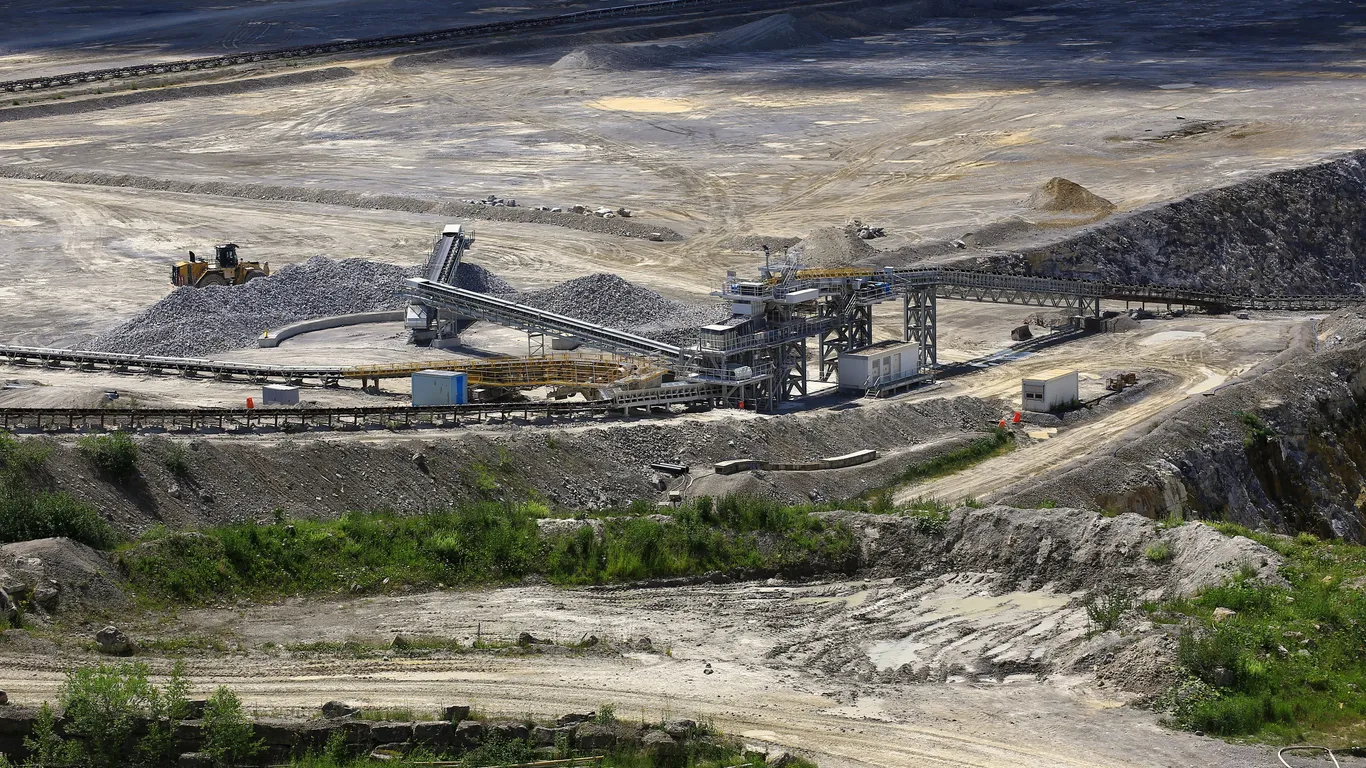
Researchers at the Kola Science Center of the Russian Academy of Sciences, together with colleagues from Murmansk Arctic University, have developed a mathematical algorithm that helps mining companies choose more effective exploration strategies. The approach could save companies millions by delivering more reliable forecasts, according to Kommersant.
The Information Triangle
A key challenge in resource exploration is what researchers describe as an “information triangle”: it is difficult to obtain data that is simultaneously highly accurate, comprehensive, and low-cost. A standard chemical analysis costs about 1,000 rubles ($~11) but provides only a general view of rock composition. A full technological study, by contrast, can cost around 650,000 rubles ($~7,100) per sample, making large-scale projects economically challenging.
The researchers identified four main strategies and built a system that evaluates the complexity of a deposit. For most complex sites, the optimal approach is proxy modeling. In this method, large volumes of low-cost chemical data are used to mathematically infer more expensive technological characteristics, which are then distributed across a three-dimensional model of the ore body.
A Versatile Approach
The development is not limited to mining. It can be adapted for applications in hydrogeology, oil and gas engineering, and environmental monitoring, where it is also necessary to reconstruct spatial properties from limited datasets.
In the near future, the team plans to integrate artificial intelligence into the algorithm, focusing on explainable models that not only produce results but also clarify how those results are derived.
Earlier reports said researchers at the Institute of Petroleum Geology and Geophysics of the Siberian Branch of the Russian Academy of Sciences had developed a geomagnetic model for precise well placement at the Yamburg field, one of the world’s largest oil and gas condensate deposits.