An Oil Rig for IT Talent: A Russian University Builds a Training Platform for Domestic Software
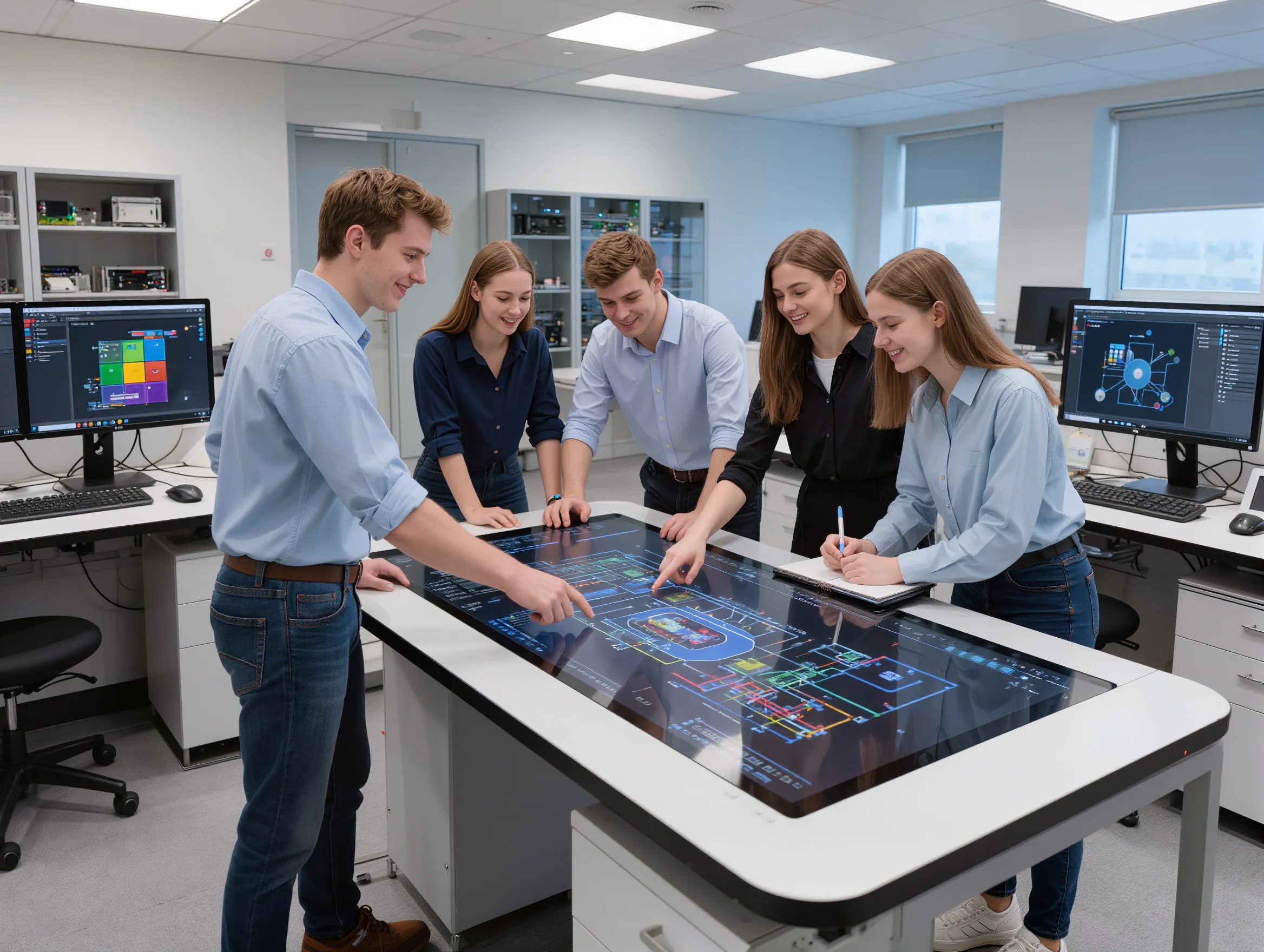
Ufa State Petroleum Technological University has launched Russia’s first multivendor IT laboratory designed to train students in deploying domestic software through real-world projects.

A Vision of the Future
“Many companies work with universities, offer grants, support faculty and provide student scholarships – in that sense, we are not unique. What truly sets Gazprom Neft apart is the systematic shaping of a vision of the future. We communicate how life and business will change over the next several years, and which technologies and specialists will be needed,” explained Ilya Dementyev, rector of Gazprom Neft’s corporate university, in an interview. The university’s latest initiative is the launch of a unique multivendor IT laboratory at Ufa State Petroleum Technological University (USPTU).
The laboratory’s core mission is to train highly qualified specialists in Russian-developed software. The project is backed by major domestic vendors, including Astra Group, BPMSoft, and R7.
The initiative was designed in response to growing demand for professionals capable of integrating Russian IT solutions into enterprise systems, as well as the broader need to replace foreign technologies in industrial environments.

Ideas Worth Millions
At this stage, the project is primarily focused on meeting domestic market needs. The USPTU laboratory trains students to work with advanced local technologies that are already being deployed across energy, industry and public-sector services.
But how can the effectiveness of such an educational partnership between industry and academia be measured? According to Gazprom Neft’s corporate university rector, the best metric is the real-world impact of individual specialists.
“For example, a graduate of our corporate master’s program at St. Petersburg Polytechnic developed software for well modeling. Even at the pilot stage, the economic effect is estimated at around 500 million rubles (approximately $6 million). And there are many such talented young professionals,” Dementyev says.

Russian Tech Stacks for Russian Specialists
Between 2019 and 2025, Gazprom Neft awarded students more than 1,000 scholarships and grants totaling over 110 million rubles (about $1.3 million) under its Mathematical Progression program alone. The company actively supports young specialists, viewing them as both its own future and the future of the country – especially as technological independence and digital security have become national priorities in recent years.
In 2021, amid sanctions and rising geopolitical pressure, Russia began accelerating the development of IT training programs focused on domestic technology stacks. By 2022, major industrial players had sharply increased the pace of their transition to Russian software, further driving demand for specialists in this area.
USPTU is not the first university to launch IT laboratories centered on domestic technologies. Starting in 2023, projects integrating Russian platforms into educational curricula began gaining momentum nationwide. Interest in local solutions continues to grow, alongside deeper collaboration between universities and Russian technology companies.
Graduate Programs and Laboratories
The shift by large corporations and the public sector toward Russian software requires specialists who are ready not only to deploy these systems but also to evolve them. The project launched at USPTU represents an important step in strengthening Russia’s IT ecosystem.
Looking ahead, similar laboratories are likely to appear at universities across the country. Broader participation by domestic vendors will give students access to the most advanced and in-demand technologies.


Over time, new qualification standards for working with Russian software may emerge and become mandatory across multiple industries. This is more than a step toward digital sovereignty – it is the creation of a full-fledged infrastructure for training new generations of professionals who will shape the future of Russia’s IT market.