Russia Unveils a 70-Qubit Quantum Computer Built on Trapped Ions
Researchers at the P. N. Lebedev Physical Institute of the Russian Academy of Sciences have demonstrated what they describe as the most powerful quantum computer yet developed in Russia – a 70-qubit system based on a chain of trapped ions. The architecture uses 35 ytterbium ions, each with four controllable states, equivalent to two qubits per ion.
Beyond a Laboratory Prototype
Russian researchers have built the country’s first ion-based quantum computer that relies on a new class of quantum units operating across seven energy levels.
Maxim Ostras, head of Rossiyskiy kvantovyy tsentr (Russian Quantum Center), said the team began testing this multilevel approach in 2021 on a much smaller system. Most quantum computers today rely on qubits, the quantum analog of classical bits. A standard qubit has two possible energy levels, similar to an artificial atom.
Scientists are now exploring more complex quantum units, including three- and four-level systems, and even higher-level architectures. These systems can store and process more information using fewer physical particles, potentially increasing computational density. The tradeoff is greater engineering complexity and more demanding control requirements.
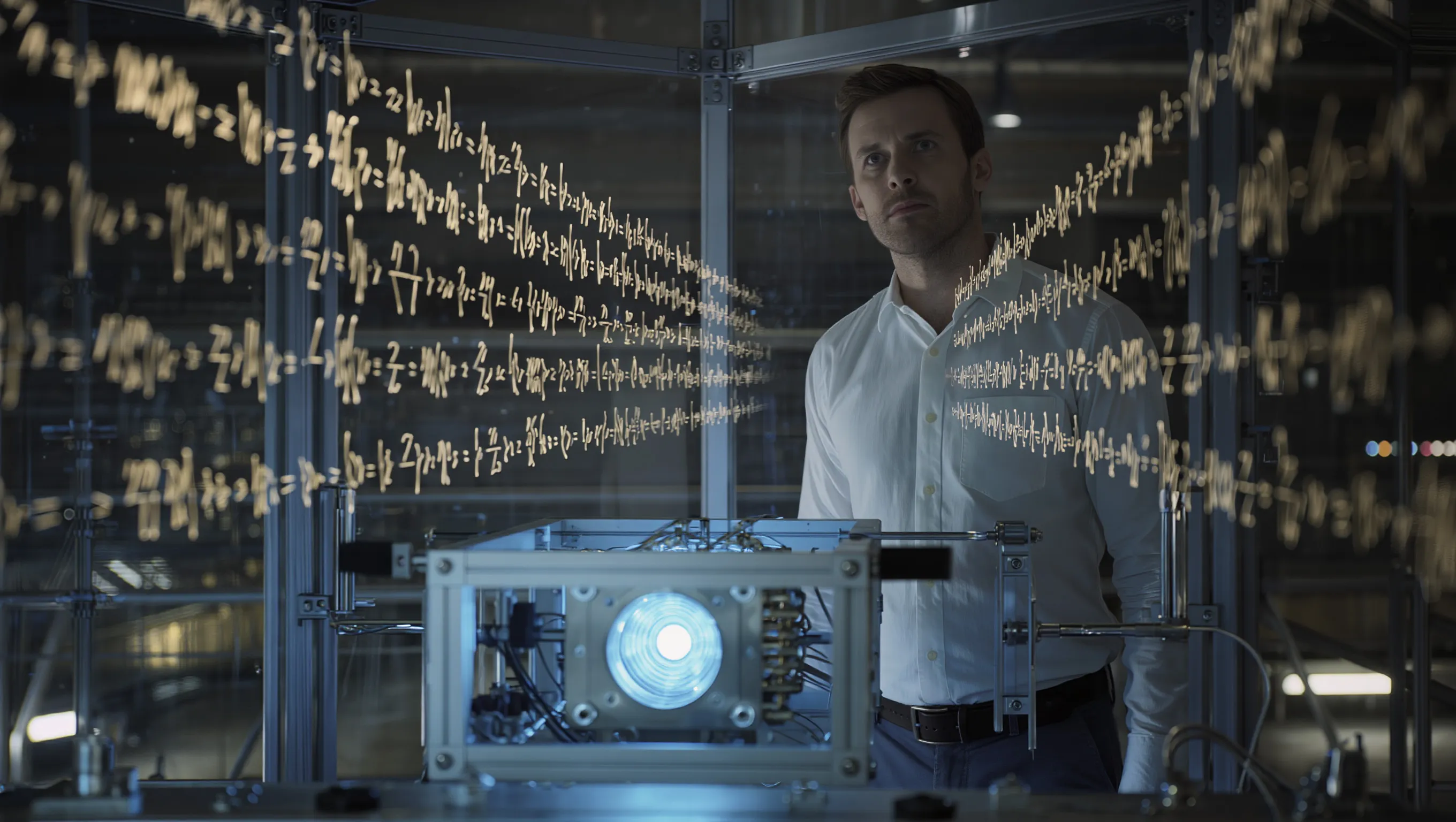
The new Russian quantum computer employs 26 calcium ions, with each ion functioning as a seven-level quantum unit capable of assuming values from zero to six. To build the system, a research team led by Russian Quantum Center scientist Kirill Lakhmansky developed specialized laser hardware and an advanced optical architecture that enables precise manipulation of quantum states and the execution of key logical operations.

Algorithmic Benchmarks at Scale
In its 70-qubit configuration, the system executed several quantum algorithms across the full register, including database search using Grover’s algorithm, the Bernstein–Vazirani algorithm and preparation of a GHZ state. Developers emphasize that the platform is designed not as a demonstration piece but as an environment for practical testing and optimization of quantum algorithms.
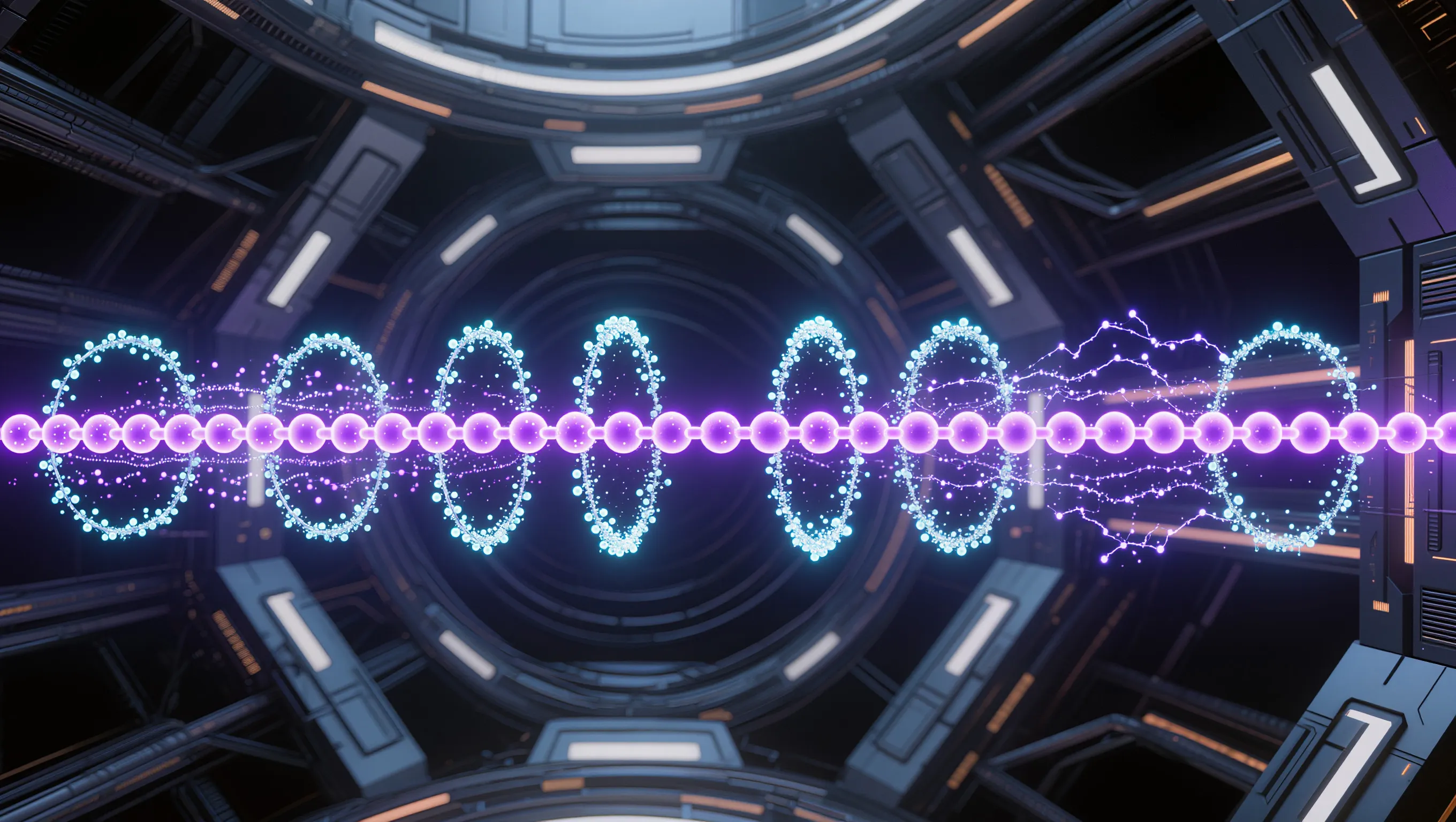
Benchmarking results indicate that the processor performs single-qubit operations with 99.92 percent fidelity and two-qubit operations with 96.5 percent fidelity. For a quantum system of this size, those figures represent a record level of operational accuracy within Russia’s research ecosystem.
The computer has already been integrated into a cloud platform, allowing researchers from other institutions to submit computational tasks remotely. This infrastructure enables experimental validation of quantum algorithms in areas such as chemical modeling, logistics chain optimization and materials science simulations.
Developers describe the 70-qubit system not as a final achievement but as a starting point. The next objectives include improving operational stability, scaling the architecture toward hundreds of qubits and implementing error correction protocols. A key milestone is that the Russian quantum platform has moved beyond a proof-of-concept prototype and begun addressing real computational workloads.

Kirill Lakhmansky noted that the team plans to deploy combinatorial optimization algorithms in the near future. Such algorithms are widely used in network design and complex planning tasks, areas where quantum acceleration could offer measurable advantages.