A Digital Network for Fusion Research: From Student Experiment to National Scientific Infrastructure
Fusion – the process of merging light atomic nuclei, typically hydrogen isotopes such as deuterium and tritium, into heavier ones at temperatures of millions of degrees Celsius – releases enormous amounts of energy, similar to the reactions inside the Sun. That promise of virtually limitless, carbon-free power has made controlled thermonuclear fusion one of the most ambitious scientific pursuits of the 21st century.
Building a Unified Information Space for Fusion Science
State Atomic Energy Corporation Rosatom is building a unified information environment for experiments in controlled thermonuclear fusion. In 2024, National Research Nuclear University MEPhI became the first university in Russia to gain the ability to conduct experiments remotely on large tokamaks and to provide partner institutions with access to its own installation.
What Is a Tokamak?
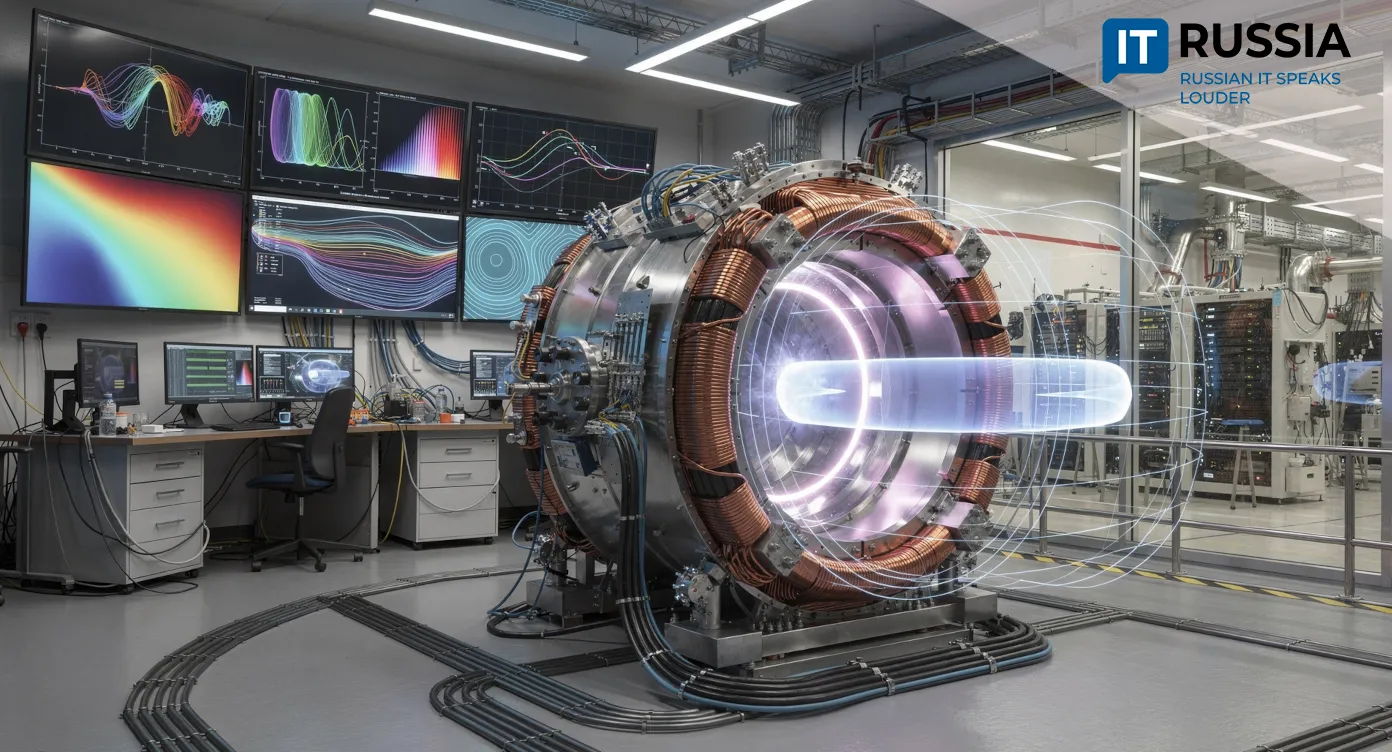
A tokamak is a toroidal device designed for magnetic plasma confinement in pursuit of controlled thermonuclear fusion, first proposed in the 1950s by Soviet physicists. The name stands for “toroidal chamber with magnetic coils.” Magnetic fields confine plasma in a ring-shaped configuration, heating it to millions of degrees. This concept remains one of the leading designs for future fusion power plants.
A Historic Milestone at MEPhI
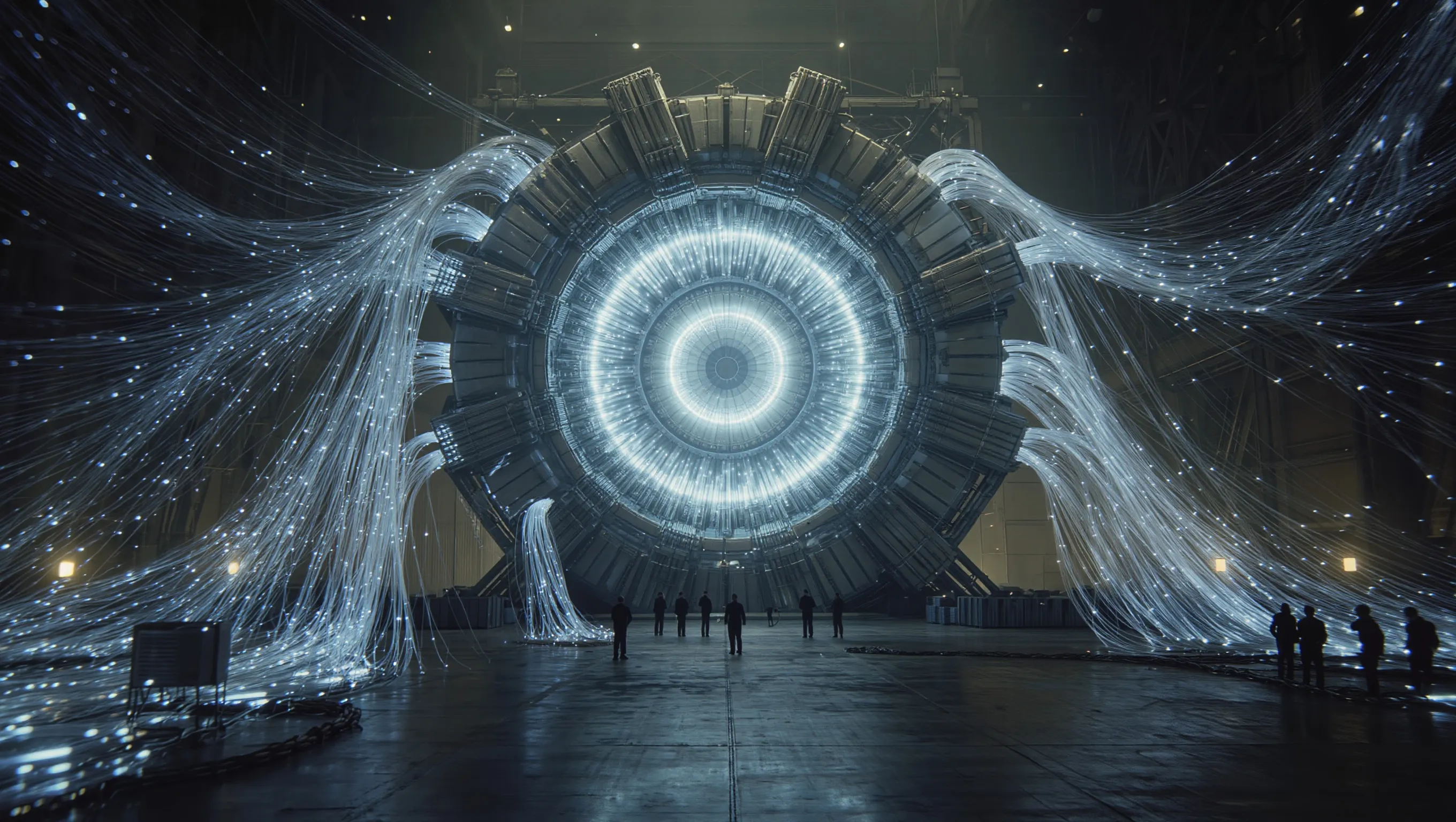
In November 2024, National Research Nuclear University MEPhI, the flagship university of Rosatom, inaugurated its Center for Remote Participation, or TsDU (Tsentr distantsionnogo uchastiya – Center for Remote Participation). The center functions as one of the communication nodes in Rosatom’s Unified Information Space for Fusion Research. At the same time, the MIFIST-0 tokamak was connected to the unified network.
During the launch event, plasma current ignited in the working chamber within approximately one millisecond and lasted 20 milliseconds. Plasma temperature reached 500,000 degrees Celsius. Spectral radiation data in the soft X-ray and optical ranges appeared immediately on large screens at the TsDU, demonstrating real-time data acquisition and transmission.
TsDU: How the New Infrastructure Works
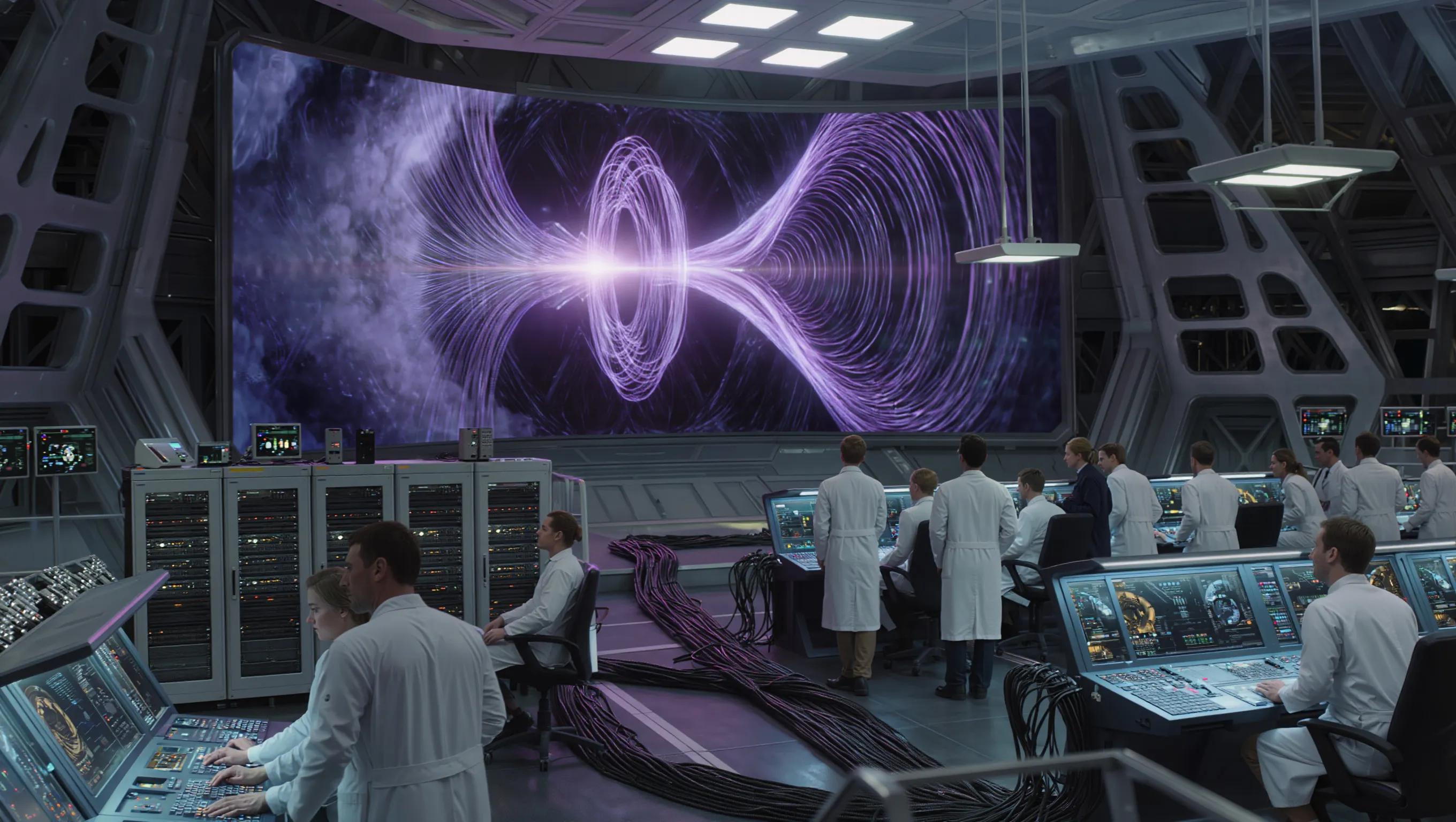
TsDU serves as a communication hub within the Unified Information Space for Fusion Research. It forms part of a nationwide digital network linking key scientific centers engaged in controlled thermonuclear fusion studies.
Each research organization connected to the unified space operates its own TsDU node, providing participants with access to experimental results across the network and the ability to take part remotely in experiments conducted on major scientific installations.
Science Without Borders
Scientists in Moscow, Saint Petersburg, Novosibirsk and France observed the first remote pulse of the university tokamak in real time. Experimental results were immediately available for analysis.
Russian researchers participate in ITER tokamak experiments through similar digital mechanisms, while students gain hands-on experience in international-scale research.
The importance of launching the tokamak lies in the fact that MEPhI students, starting from their first year, can now participate directly in implementing one of the largest scientific projects on the planet.

From Physical Presence to Digital Access
Previously, working with such installations required researchers to be physically present near the reactor. The new digital platform enables real-time observation of experiments, remote participation in operational control and collaborative data processing with colleagues in other cities.
Today, TsDU functions as an entry point for scientists, students and research teams from across Russia. A talented student in Siberia can conduct experiments on a Moscow-based installation without leaving their home region.
Strategic Impact: Talent and Cooperation
The project directly strengthens the country’s human capital pipeline. Accelerated training of highly qualified specialists through hands-on work with real experimental data reinforces Russia’s position in international controlled fusion physics programs. The network also deepens scientific collaboration among Rosatom organizations, the Russian Academy of Sciences and leading universities, reducing institutional and geographic fragmentation.
MIFIST-0: from student initiative to research instrument
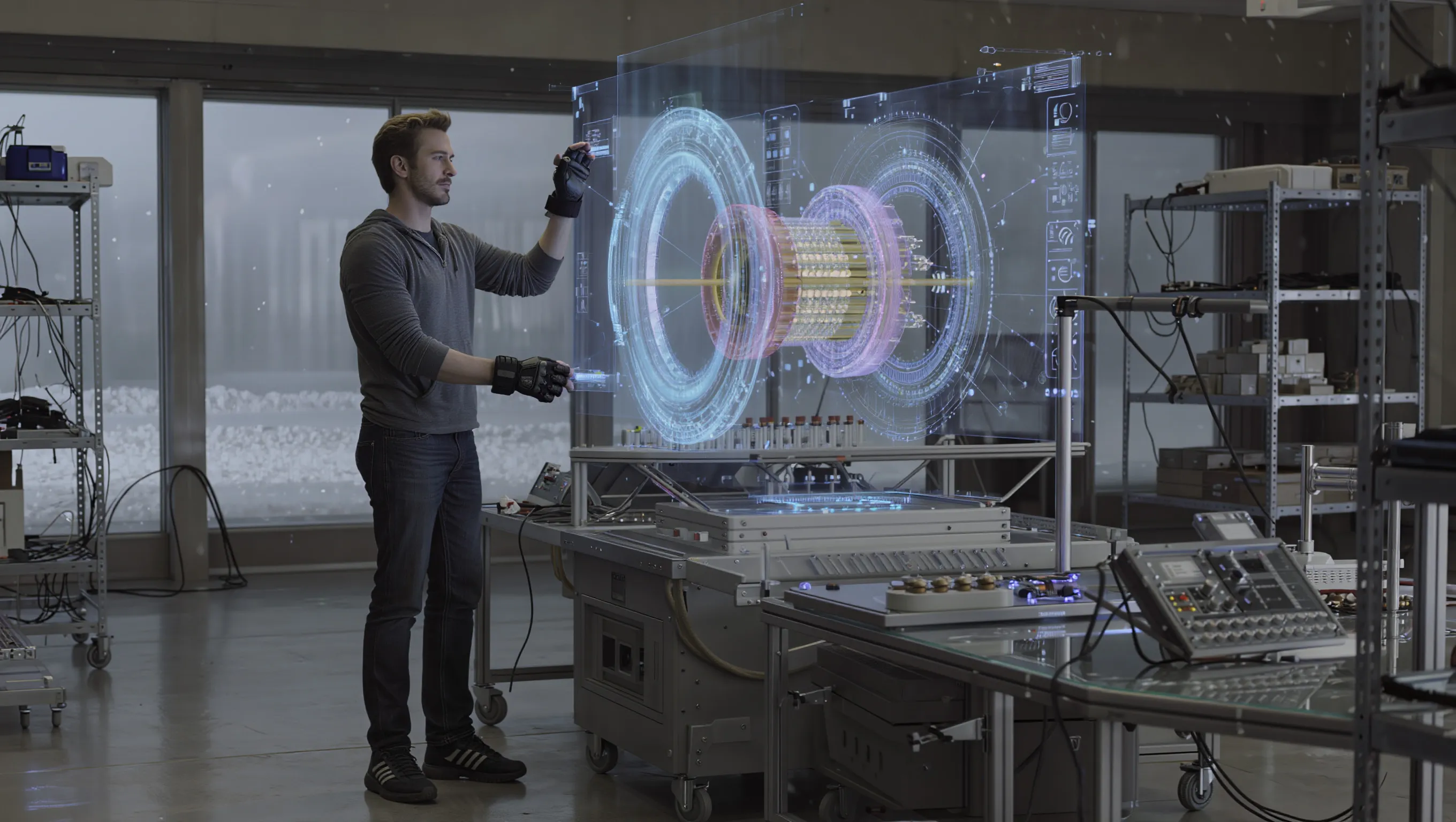
The MIFIST-0 tokamak has transformed the educational process. Previously, lectures and seminars on controlled thermonuclear fusion lacked laboratory components. Building this tokamak provided researchers with invaluable experience and enabled its integration into the academic curriculum.
From concept to implementation, the first university tokamak in Russia and the broader post-Soviet region took six years to complete. Initially, students assembled the installation from improvised materials as a purely educational and demonstration device. Magnetrons were salvaged from household microwave ovens, with eight old units dismantled. Undergraduate students cut toroidal coils from copper sheets using templates and scissors, while poloidal coils were wound manually.
Many faculty members and fellow students initially viewed the project with skepticism. Today, thanks to the persistence of those early pioneers, two laboratory courses based on the tokamak are part of the senior-year curriculum. The original student developers are now graduate researchers at MEPhI and work in leading Russian research centers. Egor Vinetsky works on the T-15MD tokamak at the Kurchatov Institute, and Maksim Grishaev works on the spherical tokamak Globus-M2 at the Ioffe Institute.
Support, Scaling and National Strategy
Recognizing the scale and importance of the project, MEPhI allocated funding from its youth scientific and technical creativity budget and from the federal university support program Prioritet-2030 (Priority 2030). MIFIST-0 later became part of Rosatom’s federal project Termoyadernye i plazmennye tekhnologii (Thermonuclear and Plasma Technologies), and the corporation incorporated it into its unified industry research plan.
Russian Fusion: Strengths and Outlook
Fusion has the potential to reshape the world as profoundly as aviation, automobiles, space exploration or computing. Energy scarcity underlies many global challenges, from food and water insecurity to geopolitical conflicts over resources.
Russia’s strengths in fusion research include a strong mathematical tradition, accumulated experimental experience and a robust educational culture. MEPhI’s Department of Plasma Physics is internationally recognized for experimental work on reactor first walls, materials science and diagnostics. Its graduates work around the world, sustaining knowledge continuity and reinforcing the global reputation of the Russian scientific school. For the university, it is essential not only to train specialists capable of operating installations such as tokamaks but also to cultivate developers of fundamentally new fusion devices.