Integrated Security Platform Deployed at Major Ural Sports Arena
A 15,000-seat ice arena in Yekaterinburg has transitioned to a unified security architecture built on Russian-developed technologies. The move consolidates surveillance, monitoring and response systems into a centrally managed network, reflecting a broader push toward digital sovereignty and hardened protection of critical infrastructure.
Consolidating Security Into a Single Digital Ecosystem
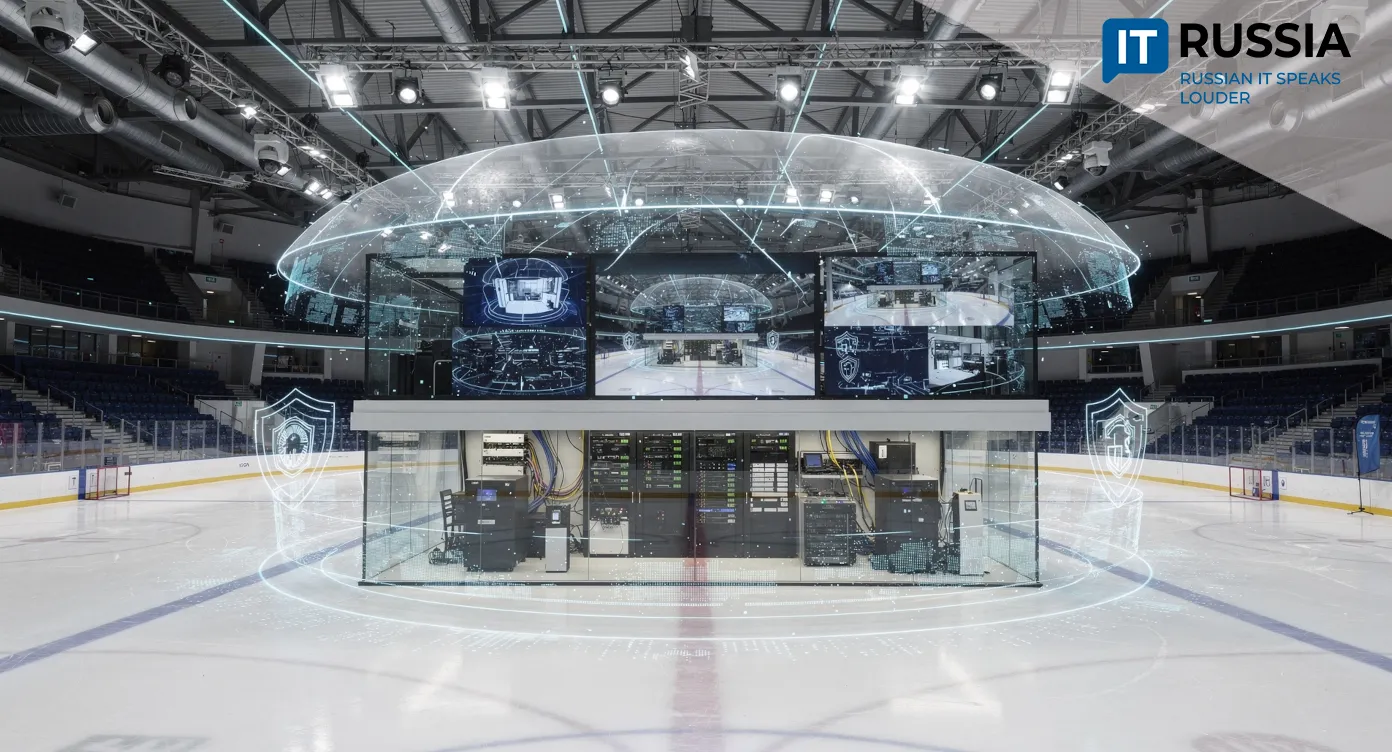
The UGMK-Arena ice arena in Yekaterinburg, one of the largest sports venues in the Ural region, has implemented a comprehensive security system developed by UCSB and GK Rubezh and built on the integration platform R-PLATFORMA. The deployment brings previously separate protection components into a single managed network, enabling centralized operational control over the stadium’s infrastructure.
At the facility, a unified digital ecosystem now links disparate security subsystems under centralized governance. This architecture accelerates incident detection and response. It also allows automation of routine procedures, reducing the volume of manual intervention required from staff during emergency scenarios.
The project represents a large-scale use case for domestic integration platforms at technically complex sites. Its scale strengthens confidence among major customers in locally developed technologies and aligns with Russia’s broader strategy of digital sovereignty and import substitution in the protection of critical infrastructure.
By introducing the solution, operators are setting new benchmarks for security in high-density public venues. The technology is designed to be universal and adaptable for deployment across other industries.

Supporting Domestic Cyber and Infrastructure Vendors
The project positions Russian-built systems as an alternative to foreign security solutions. Logistics, education and healthcare are among the sectors where platforms similar to R-PLATFORMA can be adapted.


Within Russia, authorities are evaluating integration with municipal security systems and expansion to other sports and cultural venues. The technology is also applicable to shopping centers, entertainment complexes and large industrial enterprises. However, risk management remains central. For successful operation, the platform must demonstrate resilience against cyberattacks. It must undergo certification, prove compliance with national security requirements and compete with established international vendors.
At a national scale, the case signals support for domestic IT manufacturers and the emergence of new security standards. It also illustrates successful integration of Russian-developed software into complex operational environments.
Video Analytics and Data Enrichment Drive the Next Phase
According to analysts at Grand View Research, the global video surveillance market is projected to reach $147.66 billion by 2030, up from $73.75 billion in 2024. Computer vision–based solutions are a focal point for developers worldwide, and artificial intelligence is becoming a core component of security management systems.
Key trends include embedding AI directly into edge devices, intelligent recognition of objects and actions, contextual awareness and behavioral analysis. For example, the company Hi-TechSecurity has developed a video analytics system capable of detecting individuals carrying weapons within camera frames.
Integration of Russian software into critical transport and energy systems is already underway. As part of import substitution efforts in the power sector, eight software projects are being developed, including Mobilny obkhodchik (Mobile Inspector) for the Aurora operating system, a predictive analytics system for nuclear power plants and an information and diagnostics system for hydraulic structures. Russian companies engaged in replacing foreign software include OVEN, RZVA and Tekon.
Demand for IT-driven enterprise and service management continues to grow as business digitalization accelerates. Among the projected trends for 2026 are expansion of B2B service platforms, AI security frameworks and advanced data integration and enrichment capabilities. Organizations often operate with fragmented data sources. To extract value, those data sets must be consolidated, cleansed and normalized into unified formats.
Toward a National Security Standard
The UGMK-Arena case demonstrates the formation of a full-scale security ecosystem under centralized control. Implementation of projects of this kind reinforces the position of domestic systems integrators in the segment of critical facility protection. The system is functioning effectively, contributing to increased trust among large state and corporate customers in Russian IT solutions.
Over the next two years, similar technologies are expected to see broader deployment at facilities developed under public–private partnership models. By 2030, accumulated experience may support export of such systems to countries seeking alternatives to Western technologies. In the longer term, Russia could establish a unified national standard for digital protection systems built on sovereign IT platforms.